Compressor Replacement: When Your Fridge or Freezer Needs a New One
When your fridge stops cooling or your freezer turns into a warm box, the compressor, the heart of your refrigerator or freezer that circulates refrigerant to keep things cold. Also known as the refrigeration pump, it’s the part that does the heavy lifting—literally. Without it, no matter how good the seals or how clean the coils, your appliance won’t work. Most people don’t think about the compressor until it fails. But when it does, you’re faced with a big decision: fix it or replace the whole unit.
Compressor failure doesn’t happen overnight. It’s usually the result of years of wear, dust buildup, power surges, or poor ventilation. If your fridge is older than 8 years and the compressor is going out, repair might not make financial sense. New models are up to 40% more energy efficient. But if your fridge is under 5 years old and the rest of it’s in good shape, a compressor replacement, a targeted repair that swaps out the faulty motor and pump system. Often called refrigerant system repair, this fix can extend your appliance’s life by another 5 to 10 years. The same goes for freezers—especially chest freezers, which are built to last and often worth repairing.
Not every cooling problem means you need a new compressor. A faulty thermostat, clogged condenser coil, or bad start relay can mimic compressor failure. That’s why it’s smart to get a professional diagnosis before spending hundreds on a part that might not be the real issue. In Glastonbury, many local technicians will test the compressor’s pressure, check for refrigerant leaks, and measure amperage draw before recommending a replacement. If the compressor is truly dead, the cost to replace it usually runs between £300 and £600, depending on the model and labor. That’s a lot—but still less than buying a whole new fridge.
Some people try to DIY a compressor replacement. Don’t. It’s not just risky—it’s illegal in the UK without proper refrigerant handling certification. Refrigerant gases are tightly regulated. Messing with them can hurt the environment, violate the law, and void your warranty. Plus, compressors are heavy, delicate, and require vacuuming the system before refilling. One mistake and you’re looking at another repair bill.
What you’ll find in the posts below are real stories from people who’ve been there: the strange noises, the rising energy bills, the panic when food starts spoiling. You’ll see how to tell if it’s really the compressor, what questions to ask a repair tech, and when it’s smarter to walk away. Some posts compare compressor costs across brands. Others show how to spot early warning signs before the big failure. And a few even explain why some repair shops charge more—and whether it’s worth it.
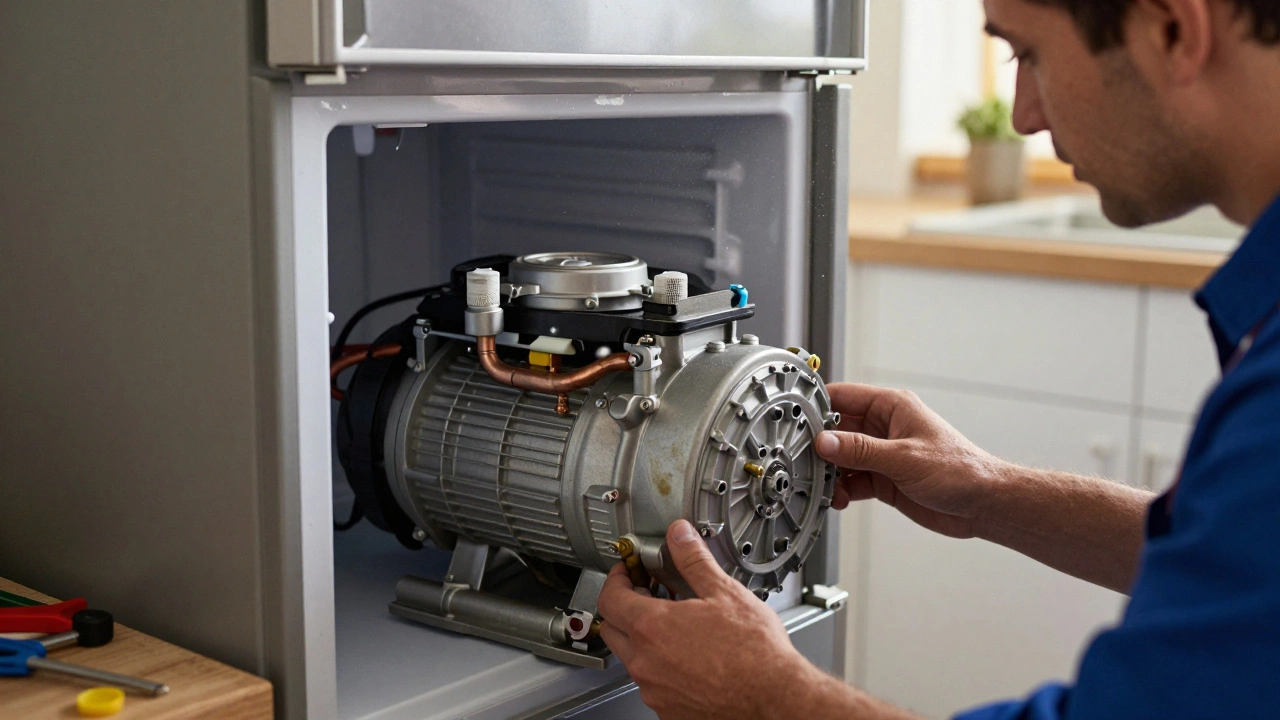
What Is the Most Expensive Thing to Fix on a Refrigerator?
The most expensive repair on a refrigerator is usually the compressor replacement, costing $800 to $1,500. Learn why it fails, how to spot early warning signs, and when to replace the whole unit instead.