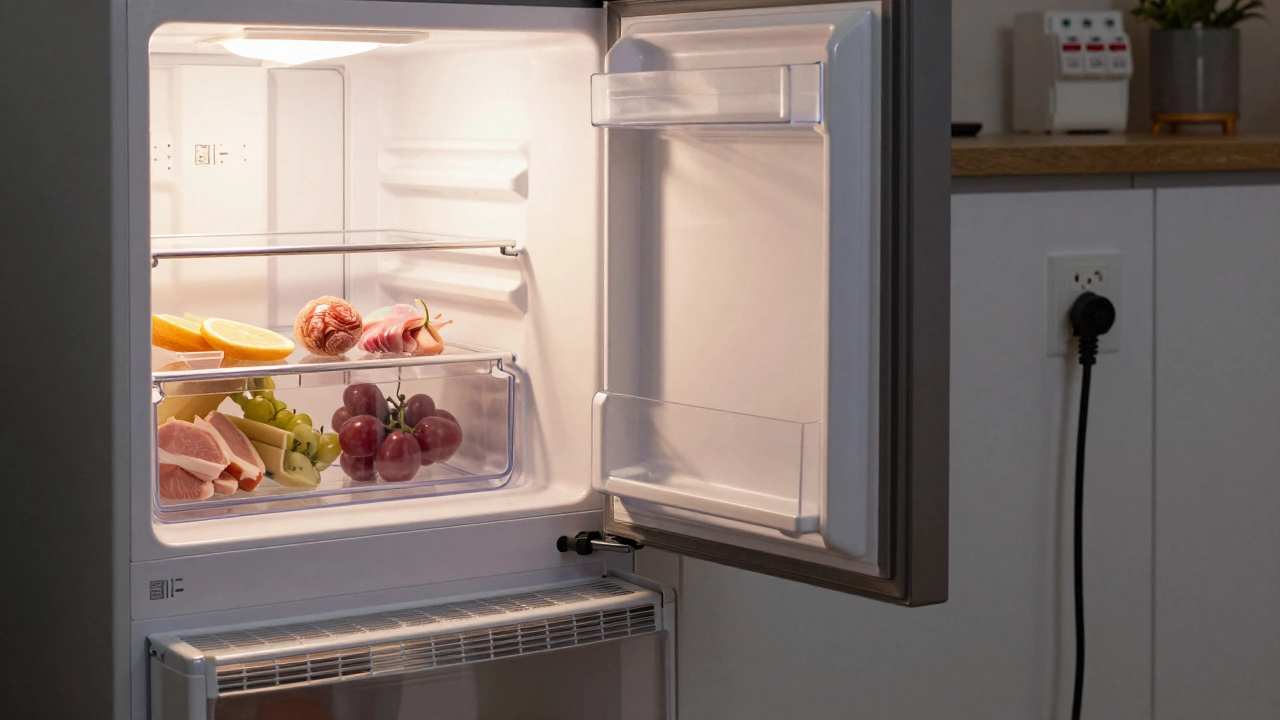
If your freezer suddenly stopped working, you’re not alone. It’s one of the most common appliance emergencies, especially in places like Brisbane where summer heat can push systems to their limits. One minute your frozen veggies are solid, the next they’re thawing out. No warning. No error code. Just cold air turning warm. This isn’t just about spoiled food-it’s about money, stress, and the real risk of foodborne illness if you don’t act fast.
Power Issues Are the Most Common Culprit
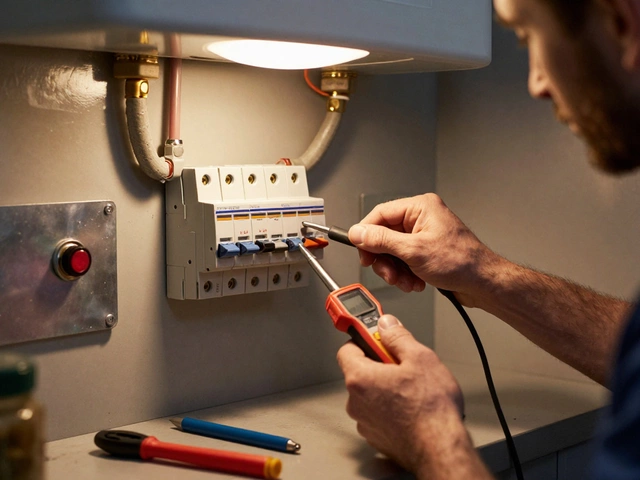
Before you start pulling apart your freezer, check the obvious: is it even getting power? A tripped circuit breaker, a blown fuse, or a loose plug can make it look like the freezer died when it’s just sitting idle. In older homes, especially those with outdated wiring, the freezer circuit might be overloaded. If you’ve got a fridge, microwave, and toaster all on the same outlet, that’s a recipe for trouble.
Test it yourself. Unplug the freezer. Wait 30 seconds. Plug it back in. Listen. If you hear a faint hum or click, power is reaching it. If you hear nothing, check the outlet with another device-like a phone charger. If that doesn’t work, go to your breaker box. Look for a switch that’s flipped halfway. Reset it. If it trips again right away, don’t keep resetting it. That’s a sign of a deeper electrical fault.
The Compressor Isn’t Running
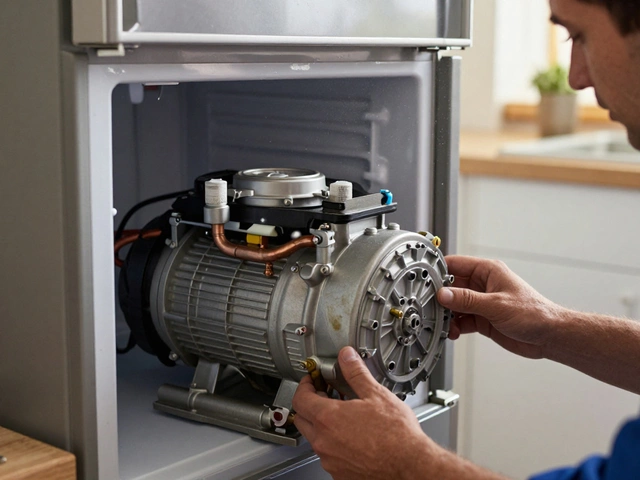
The compressor is the heart of your freezer. It pumps refrigerant through the system to keep things cold. If it’s dead, the freezer won’t cool-not even a little. You can often tell if the compressor has failed by listening. When the freezer should be running, you’ll hear a low hum or a soft click as the thermostat turns it on. If there’s total silence, the compressor might be dead.
But here’s the catch: a silent compressor doesn’t always mean it’s broken. It could be the start relay. That’s a small, cheap part that gives the compressor the initial jolt to kick in. If it’s faulty, the compressor won’t start, even though it’s still good. You can test this by unplugging the freezer, removing the back panel, and shaking the start relay. If you hear rattling inside, it’s bad. Replacing it costs under $20 and takes 15 minutes. Many DIYers fix this themselves.
Condenser Coils Are Clogged with Dust
Freezers need airflow to work. The condenser coils-usually at the back or bottom-release heat from inside the unit. If they’re covered in dust, pet hair, or lint, the freezer can’t shed heat. It overheats. Then it shuts down to protect itself. This is especially common in homes with pets or in dusty environments.
Look for a thick layer of gray fuzz on the coils. If you see it, unplug the freezer and clean it with a coil brush or vacuum attachment. Do this every six months. It’s the single best maintenance habit you can adopt. I’ve seen freezers that hadn’t been cleaned in five years. They were running at 70% efficiency. After a quick clean, they worked like new.
The Thermostat Is Stuck or Broken
The thermostat controls when the freezer turns on and off. If it’s stuck in the “off” position, the compressor never gets the signal to run. Some freezers have mechanical dials you can turn. Others have digital panels. If your freezer has a dial, try turning it to the coldest setting. Wait 10 minutes. If nothing happens, the thermostat might be faulty.
Digital thermostats can fail silently. The display might still light up, but the internal sensor could be sending the wrong signal. If your freezer is more than 8 years old and the temperature setting feels unresponsive, the thermostat is a likely suspect. Replacement costs between $50 and $120, depending on the model. You can test it with a multimeter if you’re comfortable with basic electronics.

Evaporator Fan Has Stopped
The evaporator fan circulates cold air from the freezer compartment into the fridge and back again. If it stops, the freezer might still be cold inside the evaporator coil, but the cold air never reaches the rest of the unit. You’ll notice the freezer feels warm, but the back wall is icy or frost-covered.
To check the fan, unplug the freezer and remove the back panel inside the freezer compartment. Look for ice buildup around the fan blades. If it’s frozen solid, that’s your problem. The defrost system isn’t working, and ice is blocking airflow. If the fan spins freely when you turn it by hand, it’s probably the motor. If it’s noisy or doesn’t spin at all, the fan motor needs replacing. It’s a $40 part. Easy to swap.
Defrost System Failure
Every freezer goes through a defrost cycle every 6 to 12 hours. It melts the ice that builds up on the evaporator coil. If this system fails, ice builds up over time and eventually blocks airflow. The freezer keeps running but stops cooling because cold air can’t move.
Signs? Thick ice on the back wall. The freezer runs constantly. The fridge side is warm. The defrost system has three parts: the heater, the thermostat, and the timer. One of them has likely failed. You can test the heater with a multimeter. If it shows no continuity, it’s dead. The defrost thermostat is often the culprit-it’s a small cylinder clipped to the evaporator coil. If it’s stuck closed, the heater never turns on. Replacing it fixes the issue in most cases.
Refrigerant Leak
This is the worst-case scenario. If your freezer is losing refrigerant, it won’t cool, no matter what you do. Signs? The compressor runs nonstop. The coils are warm but not cold. You might notice an oily residue near the tubing. Refrigerant leaks are rare in modern freezers, but they happen, especially if the unit was moved roughly or has old, corroded lines.
Here’s the hard truth: fixing a refrigerant leak isn’t a DIY job. It requires certification, special tools, and EPA-compliant handling. Plus, if the freezer is over 10 years old, the cost to repair it-$300 to $600-often exceeds the value of the unit. In Brisbane, where new energy-efficient freezers start at $450, it’s usually smarter to replace it.
Age and Wear Are Real Factors
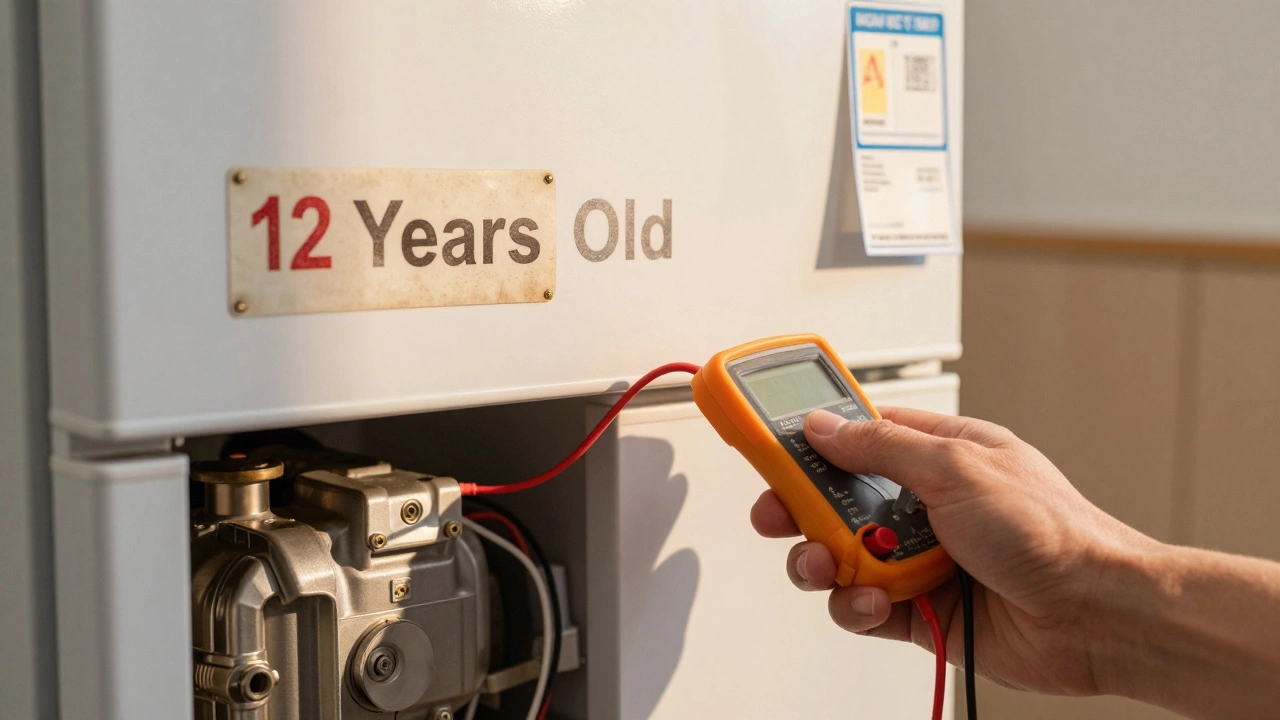
Most freezers last 10 to 15 years. If yours is older than 12, sudden failure isn’t a coincidence-it’s expected. Components wear out. Seals dry out. Wiring degrades. Electronics become obsolete. A repair that works today might fail again in three months. That’s why many repair technicians won’t fix freezers older than 10 years unless the problem is clearly a single part.
Ask yourself: Is the freezer energy efficient? Does it have a frost-free feature? Is it loud? If you answered no to any of those, it’s probably time to upgrade. Modern freezers use 40% less power than models from 2010. You’ll save money every month on your electricity bill.
What to Do Right Now
If your freezer just stopped working, here’s what to do in the next 30 minutes:
- Unplug it. Wait 5 minutes. Plug it back in. Listen for a click or hum.
- Check the circuit breaker. Reset if needed.
- Feel the back of the freezer. Is it hot? That means the compressor is running but can’t cool.
- Look inside. Is there thick frost on the back wall? That’s a defrost issue.
- Check the door seal. Can you pull a dollar bill out easily? If yes, the seal is worn and letting cold air escape.
- Move food to a cooler with ice packs. Don’t open the freezer again until you’ve diagnosed the issue.
If none of these steps help, and your freezer is under warranty or less than 8 years old, call a repair technician. If it’s older, compare the cost of repair to the price of a new unit. Most of the time, replacement is the smarter choice.
Prevention Is Cheaper Than Repair
Here’s how to avoid this mess next time:
- Clean the condenser coils every 6 months.
- Keep the door seal clean and check for gaps monthly.
- Don’t overload the freezer. Air needs to circulate.
- Set the temperature to -18°C. Anything colder wastes energy.
- Don’t leave the door open longer than 30 seconds.
- Replace the water filter if your freezer has an ice maker.
These habits extend your freezer’s life by years. And they cost nothing but a few minutes of your time.