Ventilation Solution Finder
Select the primary problem you are facing to see the most effective non-extractor solution.
Excess Moisture
Foggy mirrors, damp walls, or ceiling condensation.
Lingering Smells
Cooking smells or stuffy air in the room.
Quick fixes for moisture and odors
- Cross-Ventilation: Open two windows or a door and window to create a wind tunnel.
- Dehumidifiers: Machines that pull water directly from the air.
- Hygroscopic Absorbers: Chemical tubs (like calcium chloride) that soak up humidity.
- Air Purifiers: HEPA and carbon filters that scrub smells and particles.
- Active Air Circulation: Using floor or oscillating fans to push air toward exits.
Mastering the art of cross-ventilation
If you have windows, you have the most powerful tool available. But just opening one window often isn't enough because the air just swirls around the same spot. You need a pressure difference to move air. This is where Cross-Ventilation is the process of using two or more openings in a building to allow air to flow through the interior space.
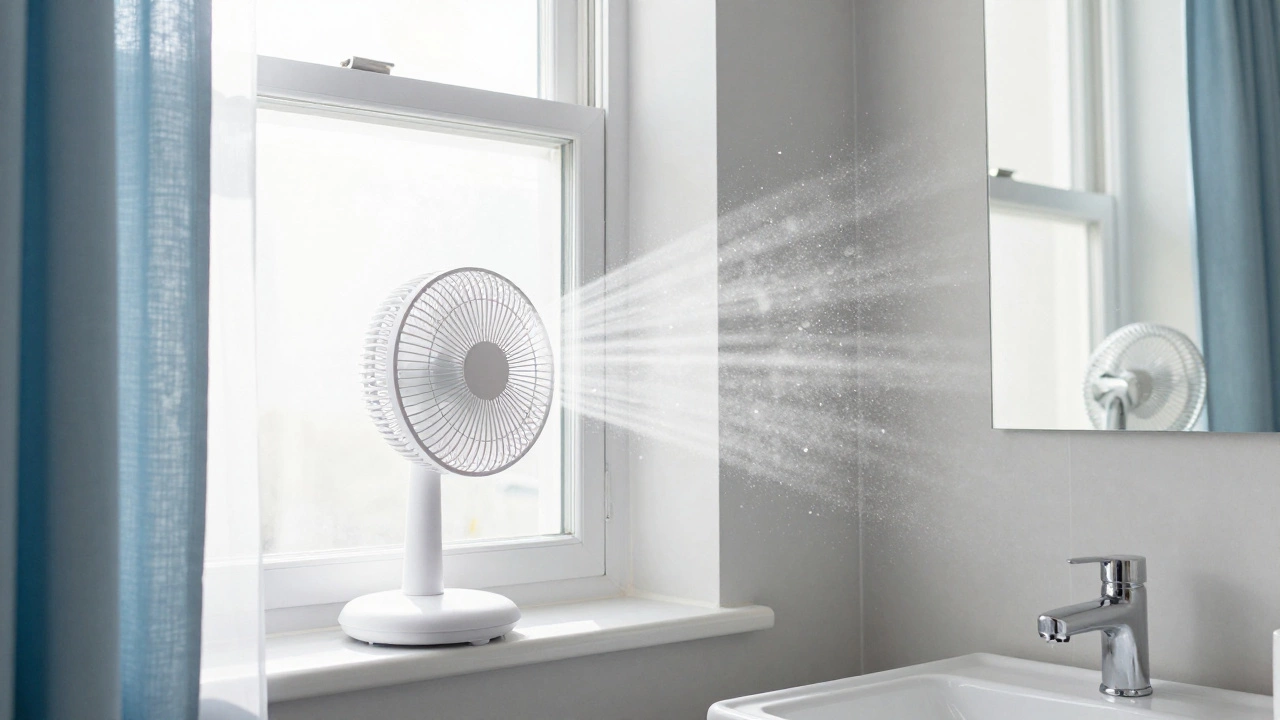
To make this work, open a window on the side of the house where the wind is hitting (the windward side) and another on the opposite side (the leeward side). If you're in a bathroom with only one small window, open the bathroom door and a window in the hallway. This creates a vacuum effect that drags the steamy air out of the room. If the air is still, place a small desk fan facing the window, blowing outward. This mimics the action of an extractor fan by physically forcing the moist air outside, rather than just hoping it drifts out.
Using dehumidifiers for long-term dryness
When you can't move air out of the room, you have to treat the air inside. A Dehumidifier is an electrical appliance that reduces and maintains the level of humidity in the air. Unlike a fan, it doesn't just move the dampness around; it removes it.
For a small bathroom, a peltier-effect mini dehumidifier is a common choice, though they are relatively weak. If you're dealing with a kitchen that gets incredibly steamy during a Sunday roast, a compressor-based unit is far more effective. These units can pull liters of water from the air per day. For example, a mid-sized 20-liter unit can drop the humidity of a standard room from 80% down to a comfortable 45% in a couple of hours. The trade-off is the noise and the need to empty a water tank, but it's a lifesaver for preventing mold on the ceiling.
Fighting smells with air purifiers
Moisture is one problem, but grease and cooking smells are another. A dehumidifier won't stop your house from smelling like garlic. This is where Air Purifiers come in. Specifically, you want a unit that uses Activated Carbon. While a HEPA filter catches dust and pet dander, the carbon layer acts like a chemical sponge, trapping volatile organic compounds (VOCs) and odors.
If you're using this in a kitchen, place the purifier near the source of the smell but not directly in the path of grease splatters, as oil can clog the filters quickly. A high-CADR (Clean Air Delivery Rate) purifier can refresh the air in a kitchen several times an hour, effectively neutralizing smells that would usually be sucked out by a range hood.
Passive moisture absorbers and chemical solutions
For those who want a "set it and forget it" approach, especially in small closets or tiny bathrooms, passive absorbers are the way to go. These usually consist of a plastic tub filled with Calcium Chloride, a salt that is extremely hygroscopic, meaning it attracts water from the air. As the salt absorbs moisture, it turns into a liquid brine that collects at the bottom of the container.
| Method | Best For | Effectiveness | Ongoing Cost |
|---|---|---|---|
| Cross-Ventilation | Fast moisture clear | High (with wind) | Zero |
| Compressor Dehumidifier | Preventing mold | Very High | Electricity |
| Air Purifier | Cooking odors | High | Filter replacement |
| Chemical Absorbers | Small, enclosed spaces | Low to Medium | Refill costs |
Managing the source of the problem
If you can't extract the air, the best strategy is to produce less of it. In the kitchen, this means using lids on your pots. A simmering pot of pasta releases a massive amount of steam; simply putting a lid on it can reduce the moisture released into the room by up to 70%. Also, consider using a toaster oven or an air fryer instead of a full-sized oven for smaller meals, as they generate less ambient heat and humidity.
In the bathroom, the goal is to stop the steam from hitting the walls. Keep the shower curtain closed tightly to keep the steam inside the tub area. After showering, wipe down the walls with a squeegee. It takes thirty seconds, but it removes the majority of the water that would otherwise have to evaporate into your room, drastically reducing the need for an extractor fan.
When these alternatives aren't enough
While these methods help, they are stopgaps. If you notice black spots appearing on your ceiling or a musty smell that won't go away, you're dealing with a serious humidity issue. Prolonged high humidity can lead to structural rot and respiratory issues. If you are renting, documented evidence of mold can often force a landlord to install proper ventilation. If you own the home, investing in a Heat Recovery Ventilator (HRV) or a simple wall-mounted fan is the only permanent fix. These alternatives are great for maintenance, but they don't replace the physics of moving air from point A to point B.
Will a dehumidifier actually replace an extractor fan?
Not entirely. An extractor fan removes both odors and moisture by replacing old air with new air. A dehumidifier only removes the water. You'll still have the smells from cooking or the lack of fresh oxygen in the room, but the walls will stay dry.
Are chemical moisture absorbers safe for bathrooms?
Yes, they are generally safe. However, keep them out of reach of pets and children because the concentrated brine that forms in the bottom of the container can be an irritant if ingested or touched.
How often should I change the filter on an air purifier used in a kitchen?
In a kitchen environment, carbon filters clog much faster due to grease. While the manual might say six months, you should check the filter every 2-3 months if you do a lot of frying or sautéing.
Can I use a regular floor fan instead of an extractor?
Yes, but only if the fan is positioned to push air out of a window. Simply blowing air around the room doesn't remove the moisture; it just moves it to the walls faster, which can actually encourage condensation in some corners.
What is the best way to stop a bathroom from smelling without a fan?
Combine cross-ventilation (open window and door) with a small carbon-filter air purifier. The ventilation clears the bulk of the air, and the carbon filter scrubs the remaining organic odors.