Water Heater Thermostat Diagnostic Tool
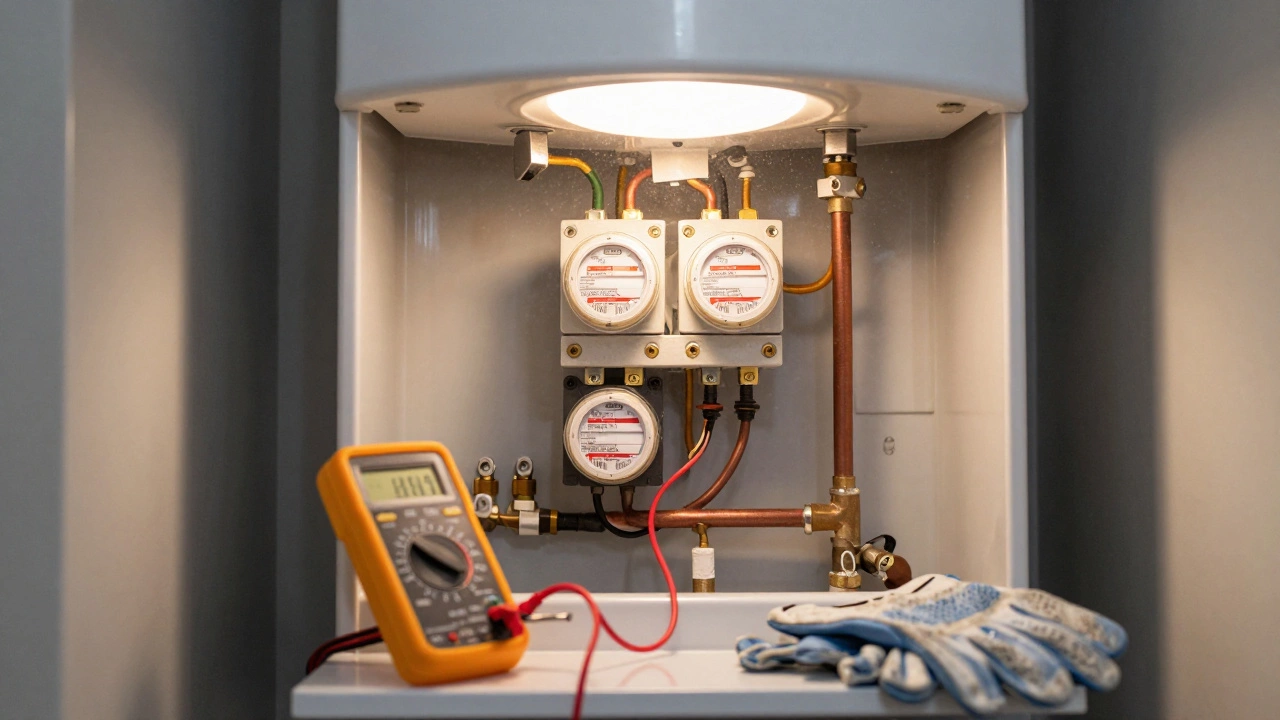
This tool helps determine if your electric water heater thermostat might be faulty based on your symptoms. Remember: Always turn off power at the circuit breaker before testing.
If your hot water heater isn’t delivering hot water like it used to, or if you’re getting cold showers even when the tank is supposed to be full, the thermostat might be the culprit. It’s not always the heating element or the pilot light - sometimes, it’s just a simple thermostat that’s gone bad. And the good news? You don’t need to be a plumber to check it. With a few basic tools and some patience, you can diagnose the problem yourself.
What a Water Heater Thermostat Does
The thermostat in your electric water heater controls when the heating elements turn on and off. Most standard electric tanks have two thermostats: one for the upper element and one for the lower. The upper thermostat kicks in first to heat the top portion of the tank. Once it reaches the set temperature, it passes power to the lower thermostat to heat the rest. If either one fails, you’ll notice problems - like lukewarm water, no hot water at all, or water that gets too hot.
Gas water heaters have a single thermostat, usually located near the bottom, built into the gas control valve. It’s harder to test without professional tools, so we’ll focus on electric models - the most common type where homeowners can do their own diagnostics.
Signs Your Thermostat Is Bad
Here are the most common red flags:
- You get cold water even after waiting hours for the tank to heat up.
- Hot water runs out faster than usual - like within 10 minutes of showering.
- Water is scalding hot, even when the thermostat is set to low.
- The upper tank is hot, but the lower tank is cold - or vice versa.
- You hear clicking sounds from the tank, but no water heats up.
These aren’t just random issues - they point directly to thermostat failure. A broken thermostat can’t signal the heating element to turn on. Or worse, it keeps the element running nonstop, overheating the water.
How to Test the Thermostat (Step-by-Step)
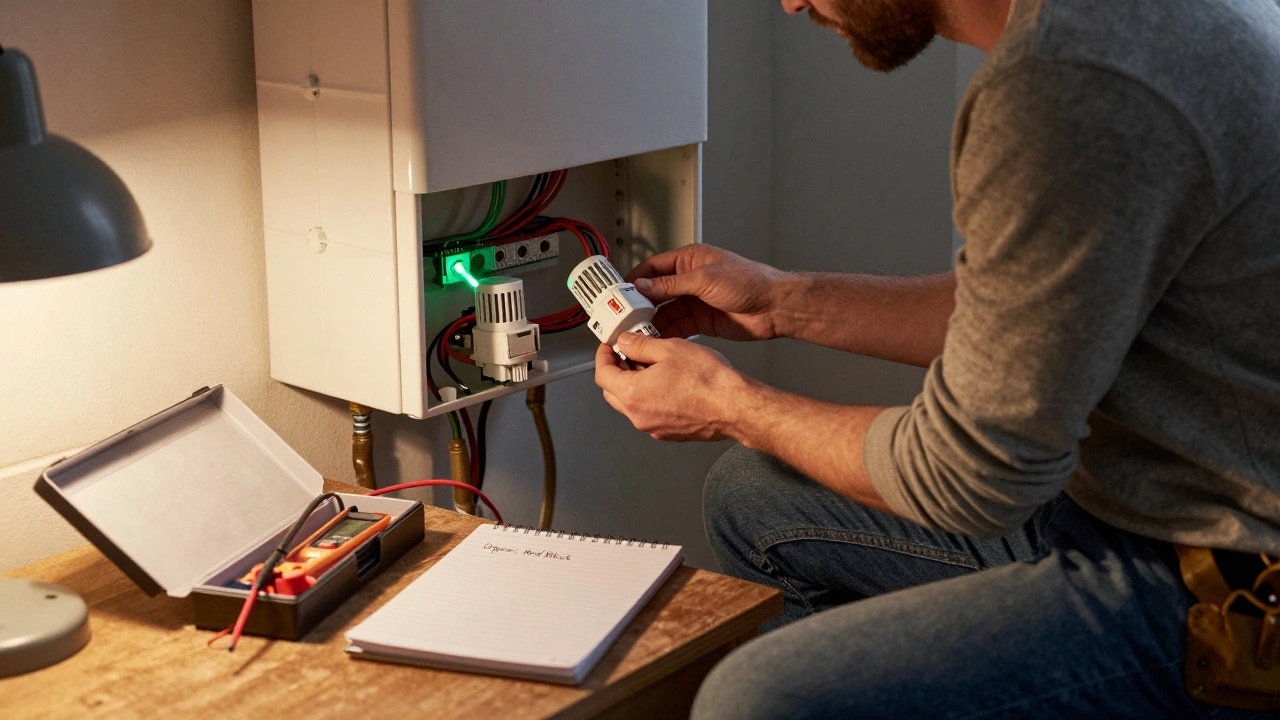
Before you call a pro, try this simple test. You’ll need a multimeter (a basic one costs under $20) and a screwdriver. Turn off the power at the circuit breaker first. Water and electricity don’t mix - safety first.
- Remove the access panels on the front of the water heater. There are usually two - one for each thermostat.
- Take off the insulation behind the panels. Be careful not to tear it - you’ll need to put it back.
- Set your multimeter to ohms (Ω) or continuity mode.
- Locate the thermostat terminals. You’ll see two or three metal posts. The top and bottom terminals connect to the heating element.
- Touch one probe to each terminal. If the multimeter shows no reading (infinite resistance) or a very high number, the thermostat is dead. A working thermostat should show a low resistance reading - typically under 50 ohms.
- Repeat for both upper and lower thermostats.
Here’s what to look for:
- No reading → Thermostat is open (broken).
- Low reading → Thermostat is working.
- Intermittent reading → It’s failing - replace it anyway.
If both thermostats test fine but you still have no hot water, the issue is likely with the heating elements themselves. But if one shows no continuity, that’s your culprit.
Thermostat vs. Heating Element: How to Tell the Difference
People often confuse thermostat failures with bad heating elements. Here’s how to tell them apart:
| Issue | Thermostat Failure | Heating Element Failure |
|---|---|---|
| Hot water from upper tank? | No - thermostat controls power flow | Yes - if upper element works |
| Hot water from lower tank? | No - thermostat won’t activate it | No - element is dead |
| Water too hot? | Yes - thermostat stuck in "on" position | No - element can’t heat |
| Can you test with multimeter? | Yes - check continuity | Yes - check resistance across terminals |
| Cost to replace | $15-$30 | $20-$50 |
Key takeaway: If only one part of the tank is hot, the thermostat is the likely issue. If neither part heats up, check both the thermostat and elements.
What Happens If You Ignore a Bad Thermostat?
It’s tempting to shrug it off - "I’ll just take shorter showers." But a failing thermostat can cause bigger problems:
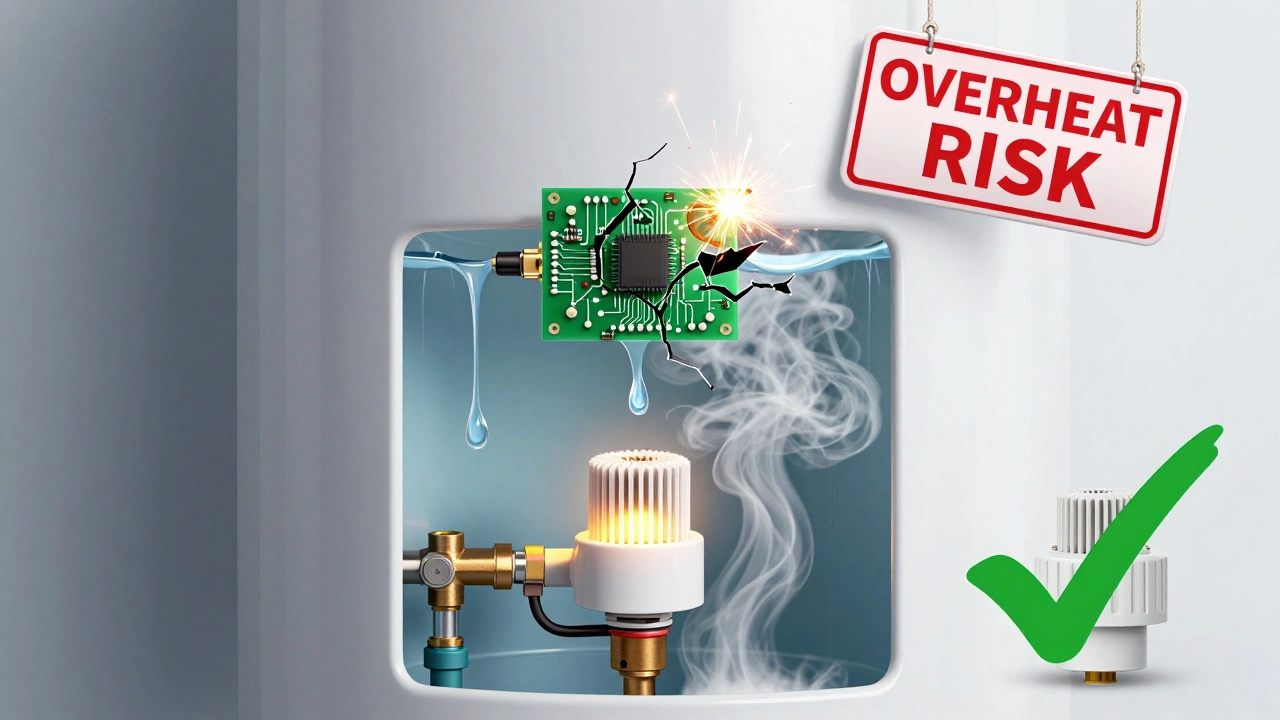
- Overheating - If the thermostat sticks on, water can reach 180°F or higher. That’s enough to scald skin in seconds.
- Pressure buildup - Hot water expands. If the pressure relief valve can’t keep up, the tank could rupture.
- Higher bills - A stuck thermostat keeps the element running 24/7. You could be paying $50 extra a month without knowing why.
- Damage to other parts - Constant overheating wears out the tank lining, leading to rust and leaks.
Replacing a thermostat is cheap and fast. Ignoring it? That’s when you end up with a flooded basement.
How to Replace a Thermostat
If your test confirms a bad thermostat, replacement is straightforward. Buy a universal replacement kit - they’re designed to fit most 240V electric tanks. Brands like Honeywell, Robertshaw, and Kenmore have reliable models.
- Turn off power at the breaker - double-check with a voltage tester.
- Take a photo of the wiring before disconnecting anything. Label wires if needed.
- Unscrew the old thermostat and unplug the wires.
- Install the new one. Match the wire positions exactly.
- Reattach insulation and panels.
- Turn the power back on. Wait an hour and test the water.
You’ll need about 30 minutes and no special skills. Most homeowners do this themselves. The cost? Under $40 total.
When to Call a Pro
You should call a technician if:
- You’re not comfortable working with electricity.
- The tank is gas-powered - testing the gas valve requires special tools.
- You’ve replaced the thermostat and elements, but still have no hot water.
- You see rust, leaks, or strange smells - those point to tank failure.
Older tanks (over 10 years) often need full replacement, not just parts. If your unit is from before 2015, consider upgrading to a more efficient model. Newer tanks use 20-30% less energy and last longer.
Preventing Future Problems
Thermostats don’t usually fail out of nowhere. Here’s how to extend their life:
- Set your thermostat to 120°F. That’s hot enough for showers, safe for kids, and reduces stress on components.
- Flush the tank annually. Sediment buildup makes elements work harder, overheating the thermostat.
- Check the pressure relief valve every 6 months. A clogged valve increases risk of overheating.
- Install a water softener if you have hard water. Minerals accelerate corrosion in both elements and thermostats.
Most thermostat failures happen because the unit was forced to work too hard. Keep it cool, clean, and calm - and it’ll last 10 years or more.
Can a bad thermostat cause no hot water at all?
Yes. If the upper thermostat fails, the lower one never gets power, so the entire tank stays cold. If the lower thermostat fails, you might get a little hot water from the top, but not enough for a full shower. Either way, no hot water means one or both thermostats are faulty.
Is it safe to test a thermostat myself?
Yes - if you turn off the power at the circuit breaker first. Never work on a live water heater. Use a non-contact voltage tester to confirm the power is off before touching any wires. If you’re unsure, hire a licensed electrician.
Why does my water heater make clicking noises?
Clicking is normal - it’s the thermostat switching the heating element on and off. But if the clicking happens and no water heats up, the thermostat is likely stuck. The relay is trying to activate, but the circuit isn’t completing. That’s a sign it needs replacement.
Can I bypass a bad thermostat to get hot water?
No. Bypassing a thermostat is dangerous and illegal in most places. It removes temperature control, which can cause the water to boil inside the tank. That leads to pressure buildup and potential explosion. Never attempt this.
How often should I test my water heater thermostat?
You don’t need to test it regularly - only when you notice problems like inconsistent water temperature or no hot water. If your heater is over 8 years old and you’re having issues, assume the thermostat is aging and plan for replacement soon.
If your hot water heater is acting up, don’t panic. Most of the time, it’s not a full tank replacement - just a $25 thermostat that needs swapping. Test it, fix it, and get back to warm showers. It’s one of the easiest and most cost-effective fixes in home maintenance.