Extractor Fan Size Calculator
How Big Should Your Extractor Fan Be?
Calculate the correct airflow capacity (m³/h) for your bathroom or kitchen based on room size and usage. Proper sizing prevents mold, noise, and ineffective ventilation.
Most people think installing an extractor fan is just a matter of drilling a hole and plugging it in. But if you’ve ever tried it, you know it’s not that simple. One wrong cut, a miswired cable, or a poorly sealed duct, and you’re left with mold, noise, or worse - a fire hazard. In Brisbane’s humid climate, a working extractor fan isn’t a luxury. It’s what keeps your bathroom walls from turning into a mushroom farm and your kitchen from smelling like last night’s stir-fry. So can you do it yourself? The short answer: yes, but only if you know what you’re doing.
What You’re Really Up Against
Extractor fans aren’t like changing a lightbulb. They connect to your home’s electrical system and exhaust air through walls or roofs. That means you’re dealing with live wires, structural framing, and building codes. In Queensland, the Electrical Safety Act 2002 says any fixed electrical installation - including extractor fans - must be done by a licensed electrician if it’s connected to the main power. But here’s the catch: if the fan runs on low voltage (like 12V) and plugs into a standard outlet, you’re in the clear. Most bathroom fans, however, are hardwired. That’s where things get tricky.
Even if you’re just replacing an old fan, you’re not just swapping parts. You’re dealing with ducting that may be crushed, blocked with lint, or improperly sloped. Old ducts often run through ceiling cavities and terminate at the wrong spot - like inside the roof space instead of outside. That’s a recipe for condensation and rot. And if your new fan is more powerful than the old one, the existing duct might not handle the airflow. A 100m³/h fan needs a 100mm duct. A 150m³/h fan? You’ll need 125mm. Most DIYers don’t check this. Then they wonder why the fan’s loud and doesn’t pull air.
When DIY Is a Good Idea
You can safely install an extractor fan yourself if:
- You’re replacing an existing fan in the exact same location
- The old fan was hardwired, and you’re using the same wiring route
- You’re using a fan with the same or lower power rating
- You’re not moving the ducting or cutting through new walls
- You have basic electrical skills - you know how to turn off the circuit breaker, test for live wires, and connect wires with terminal blocks
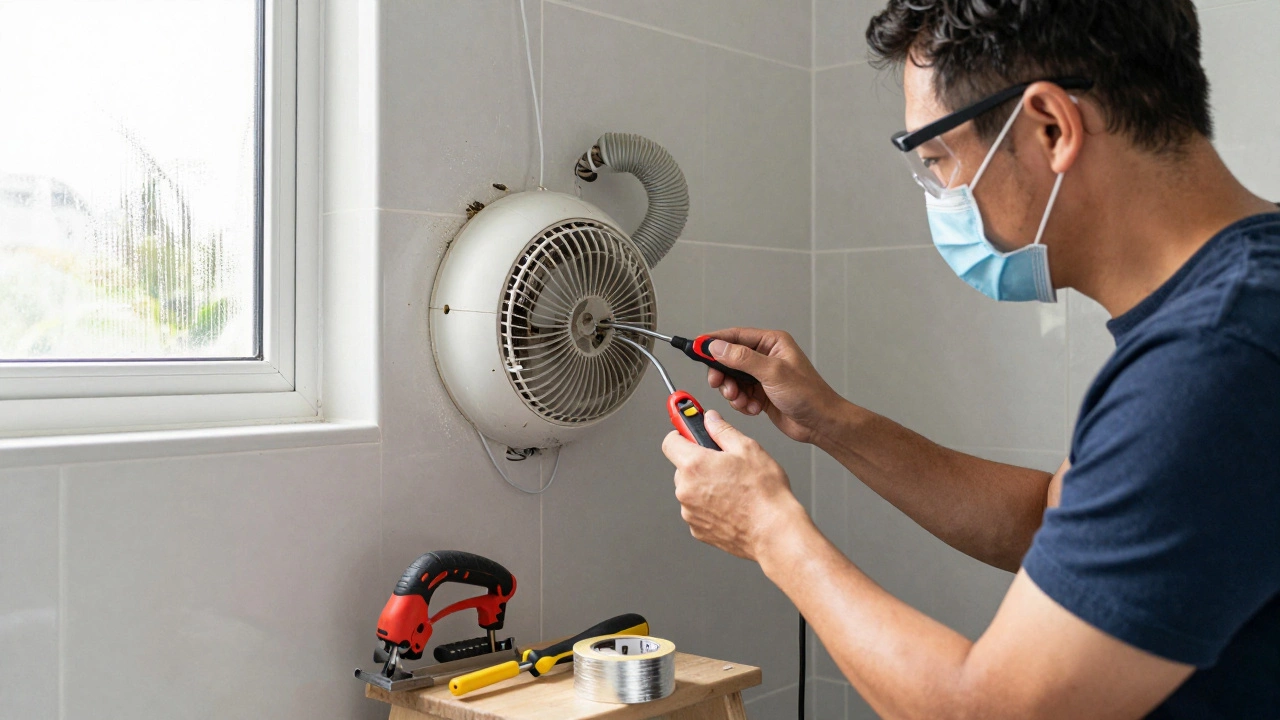
For example, if your old 80m³/h bathroom fan died and you’re putting in a new 80m³/h model, and the duct runs straight out the back wall, you’re in a good spot. You just need the right tools: a stud finder, a jigsaw, a screwdriver set, wire strippers, and a voltage tester. That’s it.
But if you’re adding a fan where there wasn’t one before - say, in a new ensuite or a windowless laundry - you’re entering professional territory. You’ll need to cut through ceiling joists, run new wiring from the switchboard, and install a new duct through the roof or external wall. That’s not just risky. It’s against building codes unless done by a licensed tradesperson.
What You’ll Need to Get Started
If you’ve decided to go ahead, here’s what you need to buy or borrow:
- Extractor fan (match the CFM or m³/h rating to your room size - 10m² bathroom needs at least 80m³/h)
- Wall or ceiling mounting kit (usually comes with the fan)
- Flexible or rigid ducting (rigid is better - less noise, less lint trap)
- Duct tape (aluminum-backed, not regular duct tape)
- Sealant (silicone for waterproofing around the wall penetration)
- Stud finder
- Drill and hole saw (for duct opening - 100mm or 125mm depending on fan)
- Wire strippers and terminal blocks
- Voltage tester (non-contact is fine)
- Face mask and safety glasses
Don’t skip the voltage tester. Even if you flipped the breaker, wires can be mislabeled. I’ve seen cases where someone turned off the light switch, but the fan was wired straight from the power point. That’s how people get shocked.
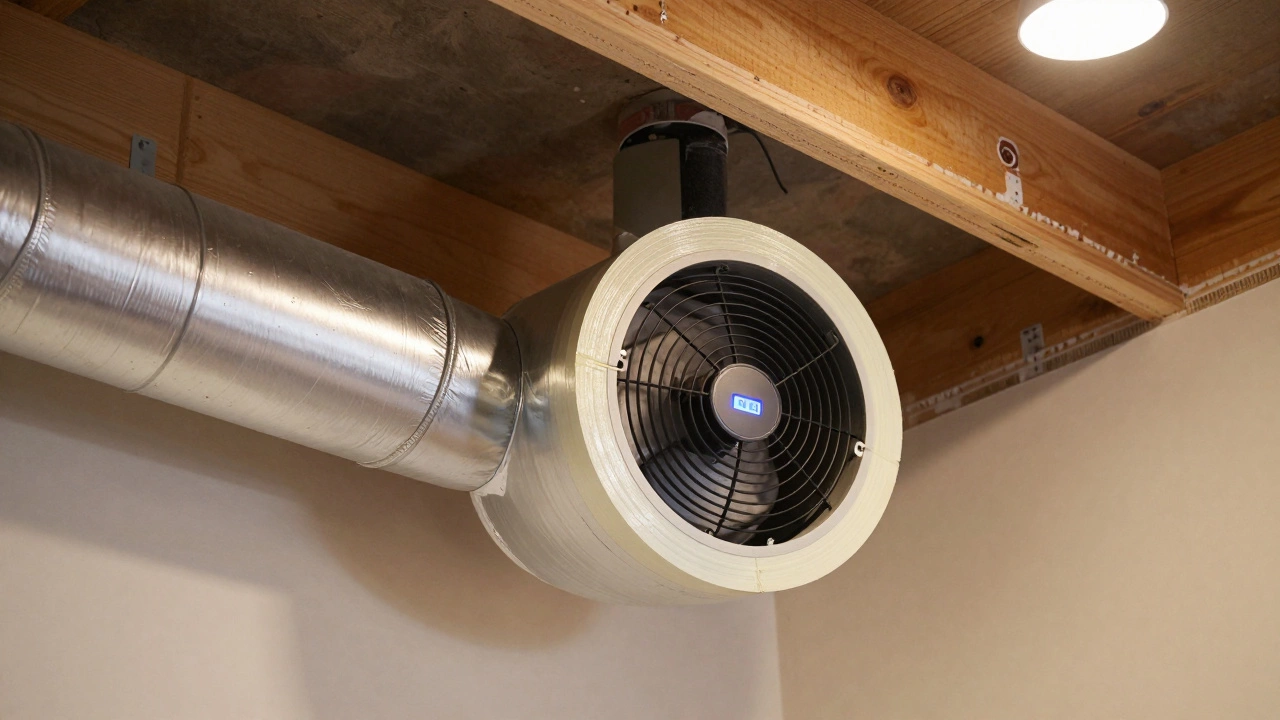
Step-by-Step: Replacing an Existing Fan
Let’s say you’re swapping out an old fan in the bathroom. Here’s how to do it right:
- Turn off the power at the circuit breaker. Double-check with your voltage tester at the fan’s wires.
- Remove the fan cover and unplug or disconnect the wires. Take a photo before you disconnect anything - wiring can be confusing.
- Unscrew the mounting frame. If it’s stuck, use a flathead screwdriver to gently pry it loose.
- Inspect the duct. Is it full of dust? Is it kinked? If it’s old and brittle, replace it now. Don’t reuse it.
- Measure the hole. If the new fan is a different size, you may need to cut the opening bigger or smaller. Use a jigsaw for clean cuts.
- Install the new fan. Secure it to the frame with the screws provided. Make sure it’s level.
- Connect the wires: live to live, neutral to neutral, earth to earth. Use terminal blocks - don’t just twist wires together.
- Attach the duct. Use aluminum duct tape to seal the joint. Don’t over-tighten - it can crush the duct.
- Seal the wall penetration with silicone. Moisture gets in through gaps, and that’s how rot starts.
- Turn the power back on. Test the fan. Listen for wobbling or rattling. If it sounds wrong, turn it off and check the mounting.
Pro tip: Run the fan for 15 minutes after installation. Check the outside vent. You should see air blowing out clearly. If not, your duct is blocked or too long. A 3-meter duct with two bends is fine. A 6-meter duct with four bends? You need a stronger fan or shorter path.
Common Mistakes (And How to Avoid Them)
Most DIY extractor fan jobs fail because of three things:
- Using the wrong ducting - Flexible plastic ducts collapse, trap lint, and create noise. Use rigid aluminum or PVC.
- Not sealing the duct - Air leaks mean your fan is working harder and pulling in moist air from the roof space.
- Ignoring the fan’s rating - A 50m³/h fan in a 15m² bathroom won’t cut it. Use 10m³/h per square meter as a rule.
Another big one: installing the fan above the shower without a humidity sensor. In Queensland, fans in bathrooms must have a timer or humidity control if installed after 2010. If yours doesn’t, you’re not compliant. You can buy a fan with a built-in humidity sensor for under $100. It turns on automatically when the air gets steamy. Worth every cent.
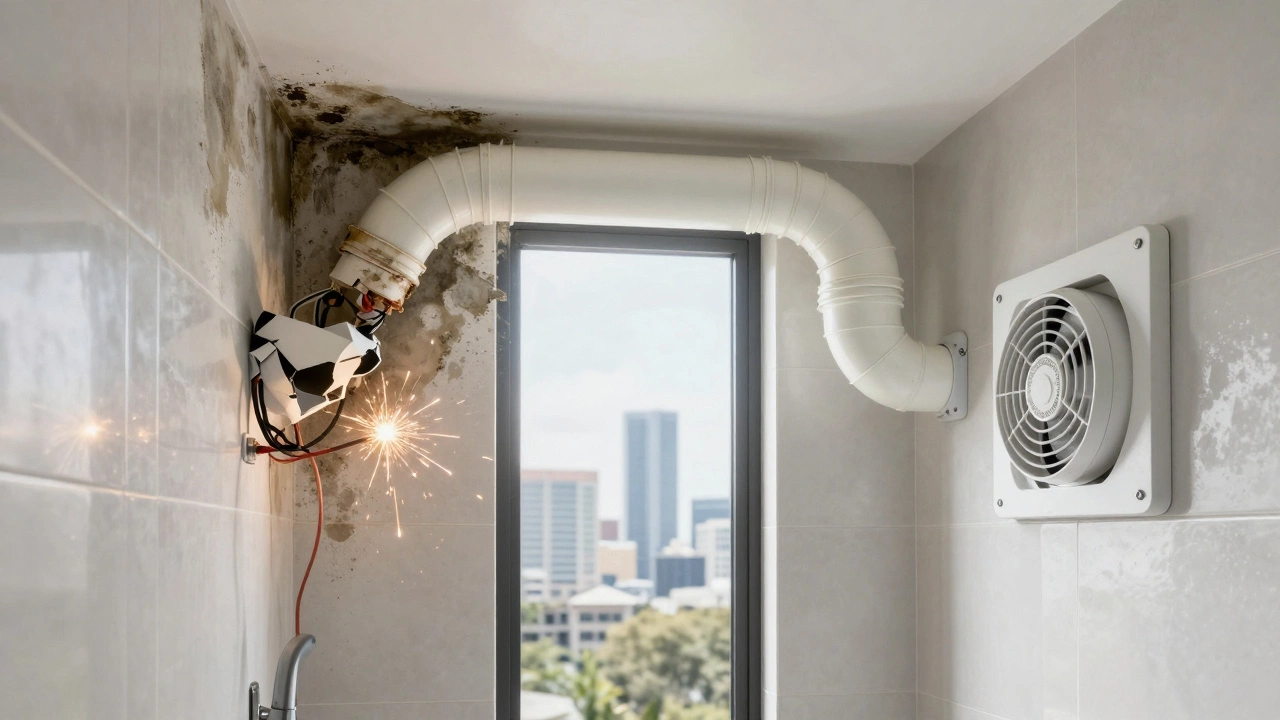
When to Call a Pro
Call a licensed electrician if:
- You need to run new wiring from the switchboard
- You’re cutting through roof rafters or external walls
- You’re unsure about your home’s electrical system
- You’re installing a fan in a new room with no existing switch
- You’re replacing a fan in a rental property - landlords are legally responsible for electrical work
And if you’re in a strata building? You’ll need approval from the body corporate before making any holes in common walls or roofs. I’ve seen people get fined $500 for installing a fan without permission. It’s not worth the risk.
What Happens If You Do It Wrong
Bad extractor fan installation doesn’t just mean a noisy fan. It can lead to:
- Mold growth on walls and ceilings - which triggers asthma and allergies
- Rot in timber framing - which costs thousands to fix
- Electrical fires - from loose wires or overloaded circuits
- Insurance claims denied - if damage is caused by unlicensed work
Insurance companies in Australia don’t cover damage from DIY electrical work that breaks codes. If your ceiling collapses because a fan duct leaked moisture into the roof space, and they find out you installed it yourself without a permit - you’re out of luck.
Final Verdict: Should You Do It?
If you’re replacing a fan in the exact same spot, with the same wiring, and you’re comfortable with basic tools and electricity - go for it. It’s a $150 fan and a few hours of work. You’ll save $300-$500.
If you’re adding a fan, moving ducts, or running new wires - hire a licensed electrician and ducting specialist. It’s not expensive. In Brisbane, a full installation runs $400-$700, including materials. That’s less than one month’s mold remediation bill.
And remember: a working extractor fan isn’t just about comfort. It’s about protecting your home. In a place like Brisbane, where humidity never really leaves, your fan is the silent hero keeping your walls dry and your air clean. Don’t risk it with half-done work.
Can I install an extractor fan without an electrician?
You can replace an existing extractor fan yourself if you’re keeping the same location, wiring, and power rating - and you know how to safely turn off and test electrical circuits. But if you’re adding a new fan, running new wires, or cutting through walls or roofs, you must hire a licensed electrician. Queensland law requires this for fixed electrical installations.
What’s the best type of ducting for an extractor fan?
Rigid aluminum or PVC ducting is best. It’s quieter, resists lint buildup, and doesn’t sag or kink like flexible plastic ducts. Flexible ducts are only okay for short, straight runs, and even then, they reduce airflow by up to 30%. Always use aluminum-backed duct tape to seal joints - regular duct tape melts and fails over time.
How do I know what size extractor fan I need?
Multiply the room’s area in square meters by 10. For example, a 12m² bathroom needs a fan rated for at least 120m³/h. For kitchens, aim for 15m³/h per square meter. If your room has a shower or heavy cooking, add 20% extra capacity. Always check the fan’s specifications - some list CFM (cubic feet per minute). Multiply CFM by 1.7 to get m³/h.
Can I install an extractor fan in a windowless bathroom?
Yes, but it’s more complex. You’ll need to duct the air through the ceiling or wall to the outside. Never vent into the roof space - that causes condensation and rot. You’ll likely need to cut through a roof rafter or external wall, which requires a licensed tradesperson. Also, the fan must have a timer or humidity sensor to meet Australian building codes for bathrooms without windows.
Why is my new extractor fan so loud?
Loudness usually means the ducting is wrong. Flexible ducts, sharp bends, or a duct that’s too narrow create turbulence and noise. Also, if the fan isn’t mounted securely, it vibrates against the frame. Check that the duct is rigid, straight, and properly sealed. Make sure the fan is screwed tightly to the mounting frame. If it’s still noisy, you might have bought a low-quality fan - look for models with a noise rating under 1.0 sone.
Do extractor fans need to be on their own circuit?
Not necessarily. Most extractor fans are wired into the bathroom lighting circuit, which is allowed under Australian standards. But if you’re installing a high-powered fan (over 150m³/h) or adding multiple fans, it’s better to give it its own circuit. This prevents overloading and ensures it runs reliably when needed. A licensed electrician can advise based on your home’s load.