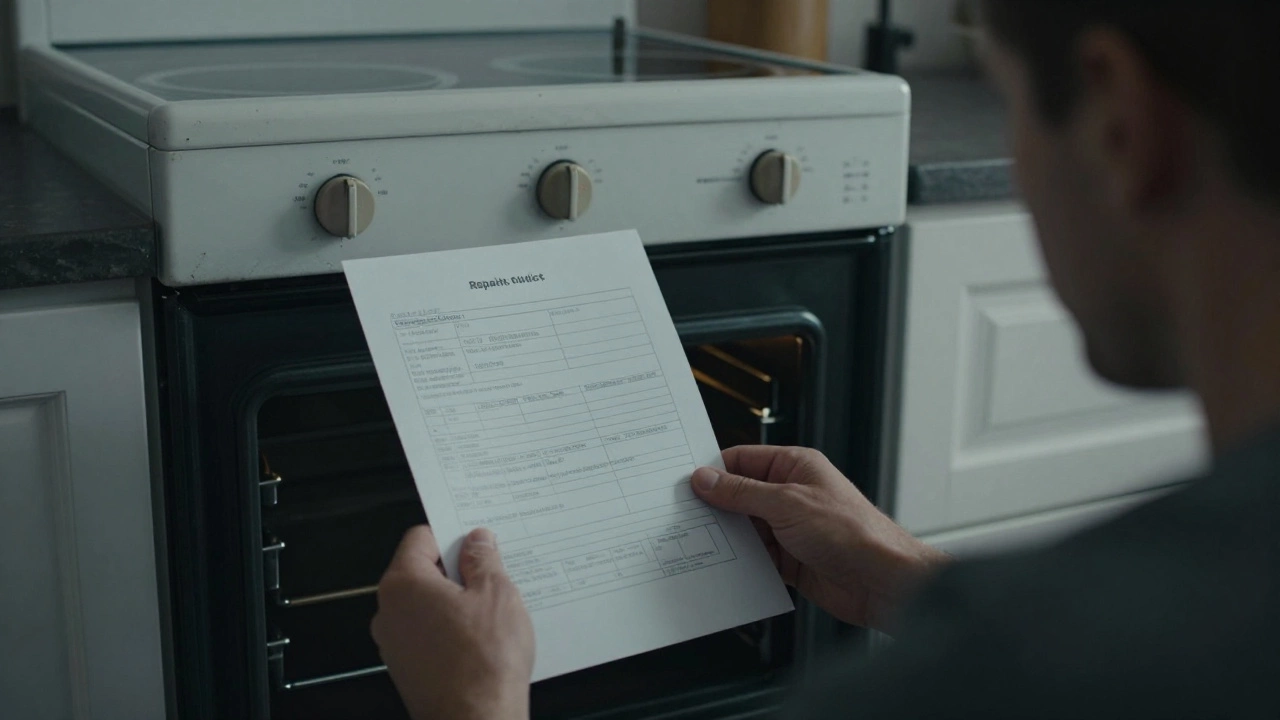
Repair vs. Replace Calculator
Enter Your Details
Analysis Result
Based on the 50% Rule & Safety Factors.
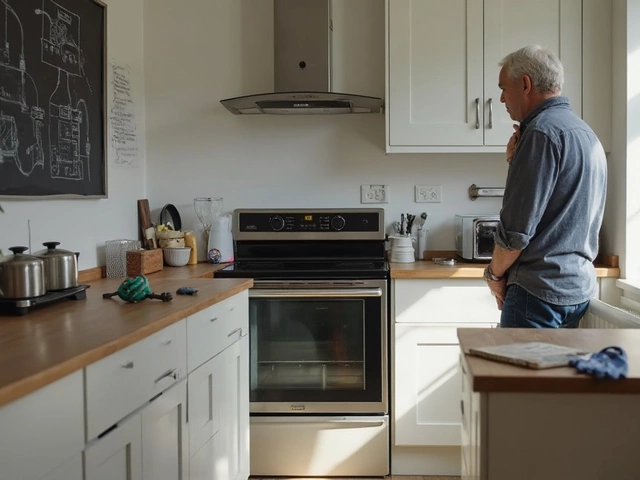
You open the oven door, and instead of a warm glow, you see darkness. Or maybe the burners are sputtering like a dying engine. Your range has been the workhorse of your kitchen for a decade. Now it’s acting up, and the repair quote on your desk feels heavy. The big question isn’t just technical; it’s financial. Is it worth repairing a 10-year-old range, or is it time to let go?
This is one of those moments where gut instinct often clashes with logic. You’ve grown attached to that specific heating pattern. You know exactly how long it takes to roast a chicken. But appliances don’t care about nostalgia. They care about thermodynamics and wear-and-tear. To make the right call, we need to look past the immediate fix and examine the total cost of ownership, safety risks, and the hidden value of modern technology.
The 50% Rule: A Simple Financial Heuristic
When deciding whether to repair or replace an appliance, technicians often use a rule of thumb known as the 50% rule. If the cost of the repair exceeds 50% of the price of a new, comparable unit, replacement is usually the smarter financial move. However, this rule needs nuance when applied to a ten-year-old machine.
A decade-old range has likely seen significant internal degradation. Even if you fix the current issue-say, a faulty igniter or a broken thermal fuse-the clock is ticking on other components. Consider the heating elements, the door seals, and the electronic control board. These parts age simultaneously. Fixing one symptom doesn’t reset the aging process for the rest of the machine.
Let’s break down the numbers. A mid-range electric range today costs between $600 and $900. Installation might add another $100 to $200 depending on your local labor rates and electrical requirements. So, a brand-new setup sits around $800 to $1,100. If a technician quotes you $400 for a repair, you’re at the 50% threshold. But here’s the catch: that $400 fix might only buy you six months before another component fails. In that scenario, you’ve spent half the cost of a new range for a temporary band-aid.
| Factor | Repair (Estimated) | Replace (Estimated) |
|---|---|---|
| Initial Cost | $200 - $500 (parts + labor) | $700 - $1,200 (unit + install) |
| Warranty Coverage | 90 days - 1 year (labor/parts) | 1 - 5 years (manufacturer warranty) |
| Energy Efficiency | Same as current (likely inefficient) | 10-20% more efficient (newer models) |
| Risk of Future Failure | High (aging components) | Low (fresh start) |
| Resale Value Impact | Negative (old, repaired appliance) | Positive (modern feature set) |
Safety First: The Hidden Risks of Age
Money matters, but safety matters more. A range is not just a cooking tool; it’s a high-voltage electrical device that generates intense heat. Over ten years, insulation degrades, wires become brittle, and connections loosen. This creates potential fire hazards that aren’t always visible during a standard diagnostic.
Consider the power cord and the terminal block where the range connects to your home’s electrical panel. Heat cycles cause expansion and contraction. After a decade, these metal connections can corrode or overheat. A repair might fix the oven light, but it won’t address a frayed wire behind the back panel that could spark under load. Electric shock and electrical fires are real risks with aging appliances, especially if they’ve been subjected to heavy daily use.
Gas ranges have additional concerns. Gas valves and lines can develop micro-leaks over time. While a professional inspection can detect major leaks, the integrity of older gas components is harder to guarantee. If your range is gas-powered, the threshold for replacing rather than repairing should be even lower due to the catastrophic potential of gas leaks.
Efficiency Gains: Saving Money on Utilities
Appliance efficiency standards have tightened significantly in the last decade. A range manufactured in 2016 was built to different energy guidelines than one made in 2026. Newer models are designed to heat up faster, maintain temperature more precisely, and cool down more efficiently. This translates directly to lower electricity bills.
Modern electric ranges often feature convection fans that circulate hot air, allowing you to cook at lower temperatures or for shorter times. Some newer models have self-cleaning ovens that operate at higher, more consistent temperatures, reducing the need for manual scrubbing and harsh chemicals. While the upfront cost of a new range is higher, the cumulative savings on energy usage over five to seven years can offset a portion of that investment.
Think about it this way: every time you bake a cake or boil water, your old range is working harder than necessary. That wasted energy adds up. In regions with high electricity rates, the payback period for a more efficient model can be surprisingly short. You’re not just buying convenience; you’re buying operational efficiency.
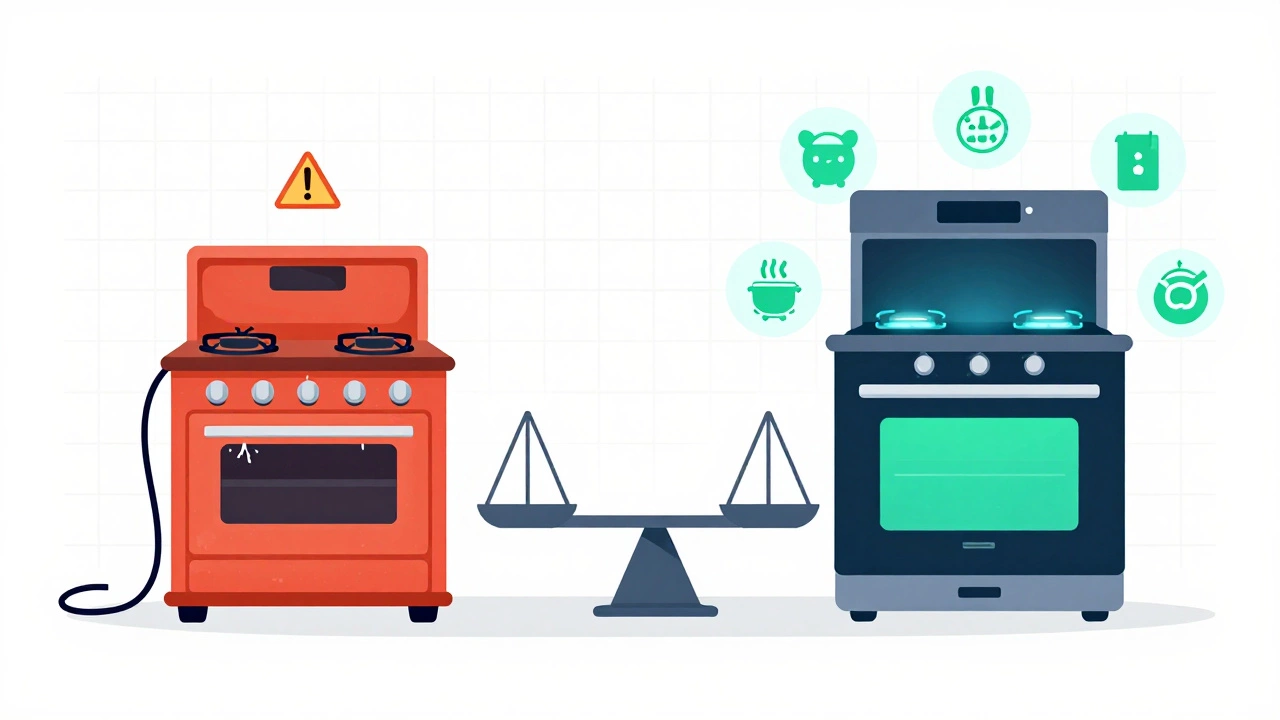
Parts Availability and Obsolescence
Here’s a practical headache many homeowners face: finding parts for older models. Appliance manufacturers typically support their products with spare parts for about seven to ten years after production ends. For a ten-year-old range, you might be hitting the wall of obsolescence.
If your range is a common brand like Whirlpool, GE, or Samsung, parts might still be available through third-party suppliers. But if it’s a lesser-known brand or a discontinued model, you could be waiting weeks for a single thermostat. During that wait, you’re either cooking on the stovetop only or relying on takeout. Time is money, and downtime is costly.
Moreover, even if parts are available, they might be aftermarket replacements rather than original equipment manufacturer (OEM) parts. Aftermarket parts can vary in quality. An OEM part guarantees compatibility and performance, but an aftermarket alternative might fit poorly or fail prematurely. This uncertainty adds risk to the repair decision.
Technological Upgrades: More Than Just Looks
Technology in kitchen appliances has evolved beyond simple heating elements. Modern ranges offer features that enhance both safety and culinary precision. Self-diagnostic systems can alert you to issues before they become catastrophic failures. Touch controls are easier to clean than mechanical knobs, which accumulate grease and grime in hard-to-reach crevices.
Consider the user experience. Newer ovens often have better insulation, meaning the exterior stays cooler to the touch-a critical safety feature for households with children or pets. Interior lighting is brighter, making it easier to monitor food without opening the door and losing heat. Some models even include Wi-Fi connectivity, allowing you to preheat the oven from your phone while you’re still at the grocery store.
These aren’t just gimmicks. They represent a shift toward smarter, safer, and more user-friendly cooking environments. Sticking with a ten-year-old range means missing out on these quality-of-life improvements. It’s like driving a car with no anti-lock brakes because the engine still runs fine. The core function works, but the supporting technology is outdated.

Environmental Impact: Repair vs. Replace
From an environmental perspective, repairing an appliance seems like the obvious green choice. Manufacturing a new range requires raw materials, energy, and transportation. Extending the life of your current unit avoids that initial carbon footprint. However, the equation changes when you factor in efficiency and eventual disposal.
An inefficient appliance consumes more energy throughout its remaining life. If your old range uses 20% more electricity than a new model, that extra consumption accumulates over time. Additionally, if the repair fails and you end up replacing it anyway within a year, you’ve incurred the environmental cost of both the repair and the new unit, plus the waste of the discarded old one.
Responsible disposal is key. When you replace your range, ensure it’s recycled properly. Many retailers offer haul-away services that send old appliances to recycling centers where metals and plastics are recovered. This mitigates the environmental impact of disposal. Choosing a repairable, durable new model also contributes to a longer lifecycle, balancing the initial manufacturing impact.
When Repair Makes Sense
Despite the arguments for replacement, there are scenarios where repairing a ten-year-old range is the right call. If the issue is minor and inexpensive-such as a broken glass top seal, a faulty door latch, or a clogged burner port-the cost might be under $100. In these cases, the repair extends the appliance’s life without significant financial risk.
Another factor is budget constraints. If you simply cannot afford a new range right now, a repair might be a necessary stopgap. Just be realistic about the timeline. Treat the repair as a temporary solution, not a long-term strategy. Start saving for a replacement immediately after the fix.
Finally, consider the sentimental or aesthetic value. If your range is a custom-built unit that matches your kitchen’s unique design, or if it’s a high-end commercial-grade model that performs exceptionally well, the replacement cost might be prohibitive. In these niche cases, maintaining the existing unit preserves both functionality and interior design integrity.
Making the Final Decision
Deciding whether to repair or replace a ten-year-old range requires balancing cost, safety, efficiency, and personal circumstances. Use the 50% rule as a starting point, but dig deeper. Ask your technician about the overall condition of the appliance. Request a detailed diagnosis that includes potential future failures. Compare the repair quote against the price of a new, energy-efficient model.
If the repair is expensive, the range has multiple issues, or safety is a concern, lean toward replacement. If the fix is cheap, the range is otherwise solid, and budget is tight, repair might be viable. Ultimately, your kitchen is the heart of your home. Ensure your appliances support that role safely and efficiently.
How long do electric ranges typically last?
Electric ranges generally last between 10 to 15 years with regular use. However, frequent heavy cooking or lack of maintenance can shorten this lifespan. Signs of impending failure include inconsistent heating, strange noises, and error codes.
What is the most common reason to replace a 10-year-old range?
The most common reasons are safety concerns due to aging electrical components, high repair costs relative to the appliance's value, and improved energy efficiency in newer models. Frequent breakdowns also signal the end of the appliance's useful life.
Can I repair my range myself to save money?
Minor issues like cleaning burner ports or replacing a glass cooktop cover can be DIY projects. However, electrical repairs involving the control board, heating elements, or wiring should be left to professionals due to the risk of shock and fire. Always disconnect power before attempting any repair.
Are newer ranges significantly more energy efficient?
Yes, modern ranges are designed to meet stricter energy standards. Features like convection fans, better insulation, and precise temperature controls reduce energy consumption by 10-20% compared to models from a decade ago. This can lead to noticeable savings on utility bills over time.
What questions should I ask my technician?
Ask for a complete assessment of the appliance's condition, not just the current fault. Inquire about the likelihood of other components failing soon. Request a written estimate for the repair and compare it to the cost of a new unit. Also, ask about warranty coverage for the repair work.