Blown Oven Element: Signs, Fixes, and When to Replace
When your oven won’t heat up, the blown oven element, the heating coil inside your oven that glows red when working. Also known as oven heating element, it’s one of the most common points of failure in electric ovens. It’s not always a sign your oven is dead—sometimes it’s just one part that gave out. And fixing it can save you hundreds compared to buying a whole new appliance.
Most ovens have two elements: one on top for broiling and one on the bottom for baking. The bottom element takes the most abuse—it turns on and off dozens of times a day, heats to over 500°F, and gets splattered with food debris over the years. That’s why it’s the one that usually blows. You’ll know it’s gone if your oven doesn’t heat at all, or if only the top element works. Visually, a blown element often looks bubbled, cracked, or has dark spots where the metal has burned through. If you see that, it’s not just worn out—it’s done.
Before you call a technician, you can test it yourself. Turn off the power at the breaker, pull the oven out, and remove the back panel to access the element’s wiring. Use a multimeter to check for continuity. No reading? The element is dead. If you get a reading, the issue might be with the thermostat, control board, or wiring—not the element itself. Many people skip this step and replace the element unnecessarily. But testing takes five minutes and costs nothing.
Replacing a blown oven element isn’t hard if you’re comfortable with basic tools. You’ll need a screwdriver, a new element (make sure it matches your model), and maybe a wrench. Unplug the oven, disconnect the wires, unscrew the old element, and swap it in. Most replacements cost under £50, and labor from a pro is usually £80–£120. Compare that to a new oven, which starts at £400. If your oven is under 10 years old and otherwise works fine, replacing the element makes perfect sense.
But here’s the catch: if your oven is older than 12 years, or if you’ve replaced the element more than once, it’s probably time to think about a new one. Older ovens waste energy, have outdated controls, and are more likely to have other failing parts. A blown element in a 15-year-old oven isn’t just a repair—it’s a warning. You’ll save more in the long run by upgrading to an energy-efficient model.
Don’t ignore a blown element just because the oven still turns on. Even if the broil element works, your baking will be uneven, your food will take longer to cook, and your electricity bill will creep up. And if you keep using it, you risk damaging the control board or wiring—which could turn a £50 fix into a £300 repair.
The posts below cover everything you need to know: how to test your oven element, what else could be wrong when the oven won’t heat, when repair makes sense, and when it’s better to walk away. You’ll find real-life cost comparisons, DIY steps that actually work, and signs you’ve been ignoring that mean your oven is on its last legs. No fluff. Just what you need to fix it right—or know when to replace it.
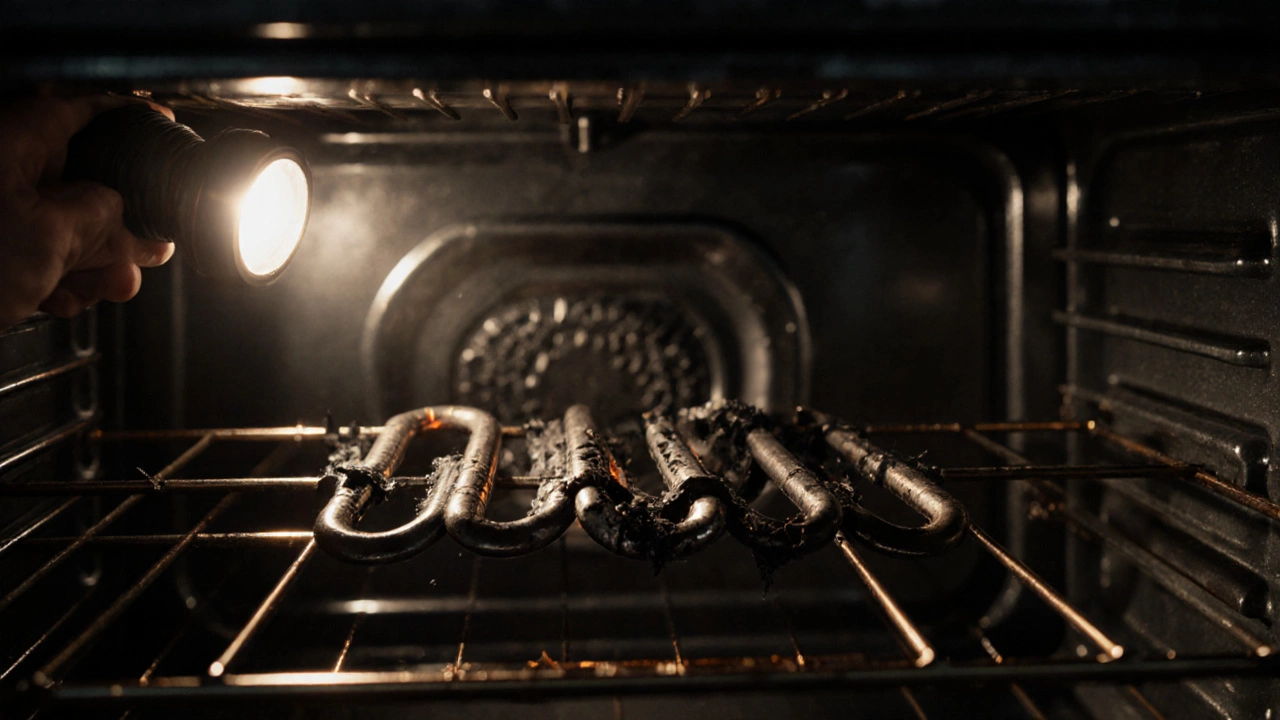
How to Tell If Your Oven Element Is Blown
Learn how to tell if your oven element is blown using simple visual checks, a multimeter test, and common signs like no glow or uneven heating. Fix it yourself or know when to call a pro.