Boiler Troubleshooter & Expert Finder
Select the symptoms you are experiencing with your boiler to get an immediate recommendation on who to call.
How this works
This tool analyzes common boiler symptoms to recommend the right licensed professional. Remember: In Australia, only licensed Gas Fitters can legally touch gas connections.
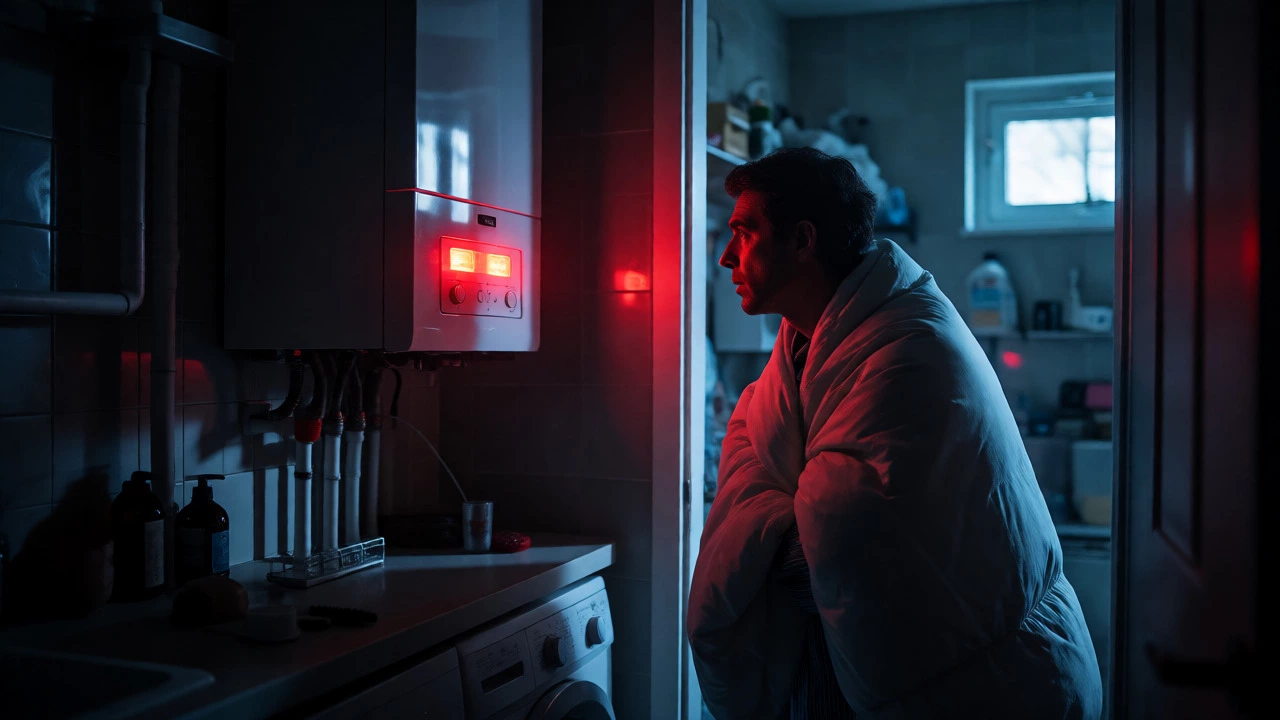
It’s 2 AM. The house is freezing, the radiators are cold as ice, and that little red light on your boiler is blinking like it’s trying to tell you something urgent but refuses to speak English. You’re staring at it, wondering if you should call a plumber, a gas fitter, or maybe just cry into your duvet. Here’s the truth: knowing who to call depends entirely on what’s actually wrong with your system. It’s not always one person’s job.
Most homeowners assume all heating issues fall under "plumbing." That’s a dangerous assumption. While plumbers handle water flow, gas fitters hold the legal license in Australia to touch anything involving natural gas or LPG connections. Messing with a gas leak without the right certification isn’t just risky; it’s illegal. So, before you dial a number from a phone book, let’s break down exactly who fixes what, so you don’t waste money on the wrong expert.
The Golden Rule: Gas vs. Water
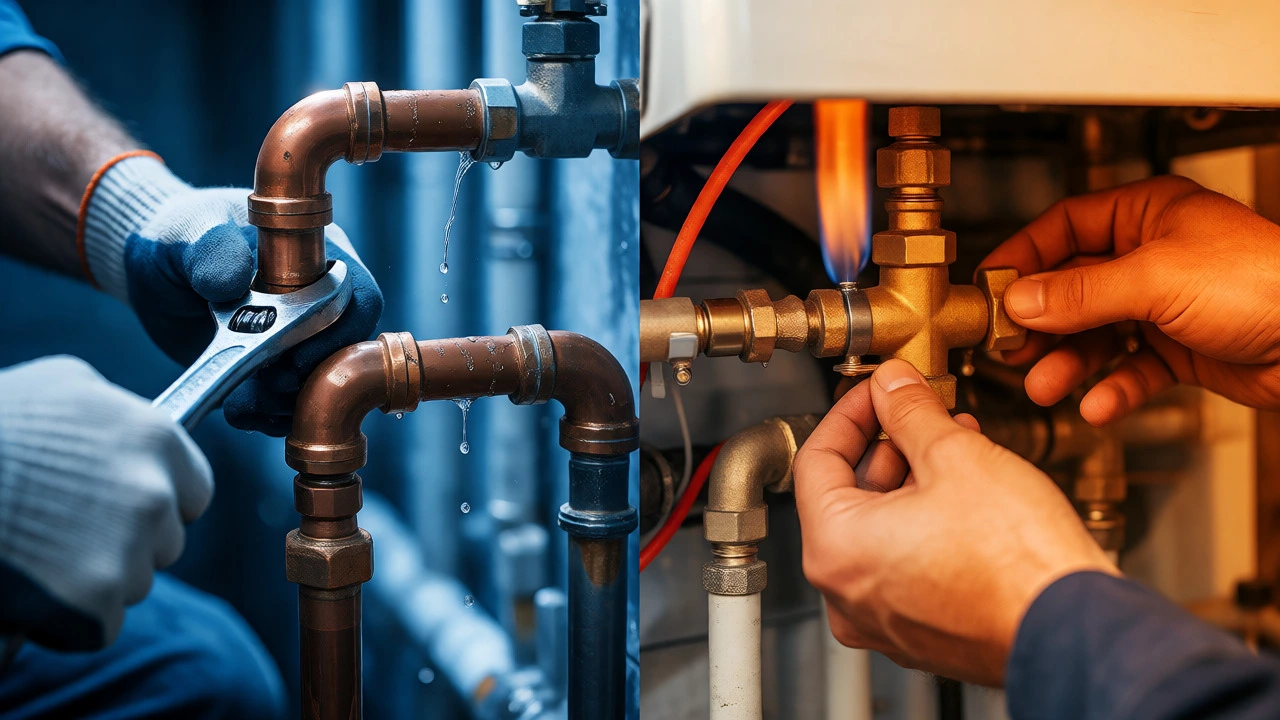
Here is the simplest way to decide who to call. If the problem involves the flame, the gas supply, or the internal combustion of the unit, you need a licensed Gas Fitter. If the problem involves water pressure, leaks, pipes, or radiators, you generally need a Plumber.
Wait, isn’t there overlap? Yes. Many professionals in Australia are dual-licensed. They can fix the water pipe leaking onto your floor and relight the pilot assembly inside the boiler. But if you hire a standard plumber for a complex gas valve failure, they might have to subcontract the work anyway, which means you pay double. Always check credentials first.
When to Call a Gas Fitter
- No Flame: Your boiler tries to ignite but fails repeatedly.
- Smell of Gas: Even a faint rotten egg smell near the unit requires immediate attention.
- Boiler Lockout: The unit shuts down completely due to ignition failure or sensor errors related to combustion.
- Annual Service: Legal requirements in many states mandate annual gas safety checks by a certified professional.
When to Call a Plumber
- Water Leaks: Puddles under the boiler usually mean a cracked heat exchanger or loose joint.
- Low Pressure: If your gauge reads below 1 bar and topping it up doesn’t help, there’s likely a leak in the closed loop.
- Cold Radiators: If some radiators are hot and others are cold, you have an airlock or sludge issue, not a gas problem.
- Noisy Pipes: Banging or knocking sounds (water hammer) are hydraulic issues.
| Symptom | Likely Cause | Professional Required |
|---|---|---|
| Red Light / Error Code | Ignition fault, fan failure, or sensor error | Gas Fitter (or Dual-Licensed Engineer) |
| Water Dripping | Leaking seal, cracked component, high pressure | Plumber |
| Hot Water Only, No Heating | Diverter valve stuck or pump failure | Plumber or Heating Engineer |
| Banging/Knocking Noise | Airlocks, limescale, or loose pipes | Plumber |
| Smell of Gas | Leak in connection or burner assembly | Emergency Gas Fitter |
What About "Heating Engineers"?
You’ll often see ads for "Heating Engineers." Think of them as specialists who focus exclusively on HVAC (Heating, Ventilation, and Air Conditioning) systems. In Brisbane, where winters are mild but damp, having a specialist who understands hydronic heating or ducted reverse-cycle units alongside traditional boilers is valuable.
A good heating engineer will usually be both a licensed plumber and a registered gas fitter. This is your best bet for comprehensive repairs because they can diagnose the entire ecosystem. If your boiler works fine but your house still feels cold, the issue might be insulation, radiator sizing, or thermostat calibration-areas a general plumber might overlook. For older systems, especially those over 10 years old, a specialist is worth the premium. They know the specific quirks of brands like Rinnai, Bosch, and Viessmann.
Emergency Situations: When to Call the Utility Provider
There is one scenario where you don’t call a private contractor first. If you smell a strong, pervasive odor of gas throughout your home-not just near the boiler-do not touch any electrical switches. Leave the house immediately. Call your local gas distribution network provider. In Queensland, this is typically Queensland Gas Networks (formerly part of Ergon Energy or similar entities depending on your specific region). They handle the infrastructure up to your meter. If the leak is after the meter, they will guide you to a licensed gas fitter. Never attempt to tighten a gas fitting yourself with a wrench unless you know exactly what you’re doing; overtightening can crack brass fittings.
DIY Checks Before You Dial
Before you spend $150 on a call-out fee, run through these five checks. Surprisingly, about 40% of "broken" boilers are just user-error or minor resets.
- Check the Power: Is the boiler plugged in? Has the circuit breaker tripped? Sometimes the whole house loses power, but you only notice when the lights stay off in the utility room.
- Check the Gas Supply: Is the gas valve open? If you have other gas appliances (like a cooktop), do they work? If yes, the supply is fine. If no, check your main gas tap.
- Check the Pressure Gauge: Most modern boilers have a water pressure gauge. It should read between 1.0 and 1.5 bar when cold. If it’s at zero, try repressurizing the system using the filling loop. If you don’t know how to do this, stop. Don’t guess.
- Reset the Boiler: Look for a reset button. Hold it for 3-5 seconds. Wait ten minutes. Does it fire up? If it resets and stays on, great. If it locks out again immediately, you have a hardware fault.
- Check Thermostat Settings: Is the thermostat turned up? Are the batteries dead? A simple AA battery swap has saved many people a hefty service bill.
Choosing the Right Professional in Brisbane
Not all tradespeople are created equal. In Australia, licensing is strict, but quality varies. Here is how to vet someone quickly.
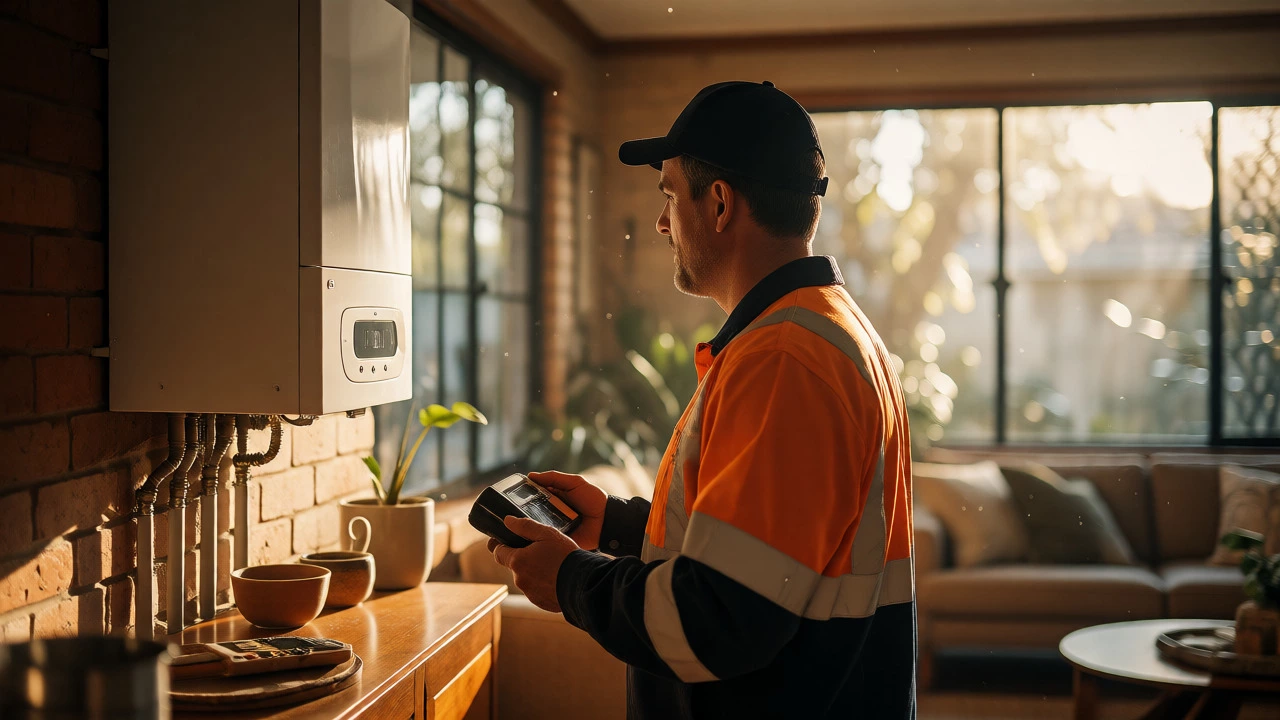
First, ask for their license number. Every licensed gas fitter in Queensland must display their QBCC (Queensland Building and Construction Commission) license number. You can verify this online. Second, ask if they are authorized by your boiler manufacturer. Authorized agents have access to genuine parts and technical support lines that independent operators don’t. If your boiler is under warranty, calling an unauthorized technician can void that warranty instantly.
Third, get quotes in writing. Avoid anyone who gives a vague estimate over the phone without seeing the unit. A fair structure usually includes a call-out fee plus labor and parts. Ask explicitly: "Does this quote include VAT/GST?" and "What happens if the diagnosis changes once you open the unit?" Transparency here saves arguments later.
Cost Expectations for 2026
Prices fluctuate, but here are realistic benchmarks for Brisbane homeowners. A standard annual service ranges from $180 to $250. A basic repair, such as replacing a diverter valve or a pump, might cost between $300 and $600 including parts. Complex issues, like replacing a heat exchanger, can exceed $1,000. At that point, you need to weigh repair costs against replacement. If your boiler is over 15 years old and inefficient, putting $800 into it might be throwing good money after bad. Modern condensing boilers are significantly more efficient, potentially saving you enough on energy bills to offset the installation cost within a few years.
Preventative Maintenance: The Best Insurance
Waiting until your boiler breaks in winter is stressful. In Brisbane, we don’t face extreme cold, but our humidity and dust levels can clog filters and sensors. Schedule a service every spring. Technicians can clean the burners, check flue integrity, and test safety devices. It takes an hour, costs less than a nice dinner out, and ensures you aren’t shivering while waiting for an emergency slot that might take two days to fill.
Remember, your boiler is the heart of your home’s comfort. Treat it with respect, keep it serviced, and know exactly who to call when it skips a beat. Don’t let a blinking light panic you into hiring the first name you find on social media. Verify, diagnose, and then act.
Can I fix my boiler myself?
You can perform basic checks like resetting the unit, checking the pressure gauge, or bleeding radiators. However, opening the boiler casing to inspect internal components is generally restricted to licensed professionals, especially regarding gas components. DIY repairs on gas parts can void warranties and create safety hazards.
How long does a typical boiler repair take?
Simple repairs like replacing a fuse or resetting a sensor can be done in under an hour. More complex jobs, such as replacing a pump or heat exchanger, may take 2-4 hours. If parts need to be ordered, the total time could extend to several days depending on supplier availability.
What is the difference between a plumber and a gas fitter?
A plumber specializes in water systems, drainage, and fixtures. A gas fitter is specifically licensed to install and repair gas lines and appliances. Many professionals hold both licenses, but legally, only a licensed gas fitter can connect or disconnect gas pipework and appliances in most Australian jurisdictions.
Should I replace or repair my old boiler?
If the repair cost exceeds 50% of the price of a new, high-efficiency model, replacement is usually better. Additionally, if your boiler is over 15 years old, newer models offer significant energy savings that can pay for themselves over time. Check for government rebates for upgrading to energy-efficient models.
Why is my boiler making a banging noise?
This is often caused by "kettling," which occurs when limescale builds up on the heat exchanger, causing overheating and steam bubbles. It can also be due to airlocks in the system or loose pipes vibrating against walls. Bleeding radiators may help, but persistent kettling requires a professional descaling or flush.