Electric Oven Troubleshooting Wizard
Follow these steps in order. Check off each step as you verify it to narrow down the problem.
1. The "Stupid Simple" Checks
Is the clock flashing? Did the breaker trip? Is the door switch stuck?
2. Visual Element Inspection
Look for blisters, holes, or orange spots on top/bottom elements. Check for continuity with a multimeter (10-50 Ohms).
3. Thermal Fuse Test
If oven heats then stops, or works intermittently, test the thermal fuse for continuity. Replace if blown ($15-$25 AUD).
4. Selector Switch & Control Board
Do knobs wiggle and cause flickering? Are touch buttons unresponsive? Try a hard reset (breaker off for 5 mins). Look for error codes (F1, E0).
5. Temperature Sensor
Does food take too long to cook or burn quickly? Measure sensor resistance at room temp (~1080 Ohms). Replace if incorrect ($20-$40 AUD).
Diagnostic Summary
You’re prepping a Sunday roast or trying to bake cookies for the kids, you turn the dial, and... nothing. No glow from the element, no hum from the fan, just cold silence. It’s frustrating, especially when you know it worked perfectly yesterday. The good news is that electric ovens are surprisingly robust machines. When they fail suddenly, it’s rarely because the whole unit has died. It’s usually one specific component giving up the ghost.
Before you call a technician (which can cost $150-$300 in Brisbane depending on the time of day), let’s walk through the most common reasons your oven stopped working. We’ll go from the easiest fixes you can do yourself to the ones that need a pro. Safety first: always unplug the oven or switch off the circuit breaker before poking around inside.
Is It Actually Broken? Check These First
Sometimes, the problem isn’t the oven at all. It’s something stupidly simple that we overlook when we’re stressed about dinner.
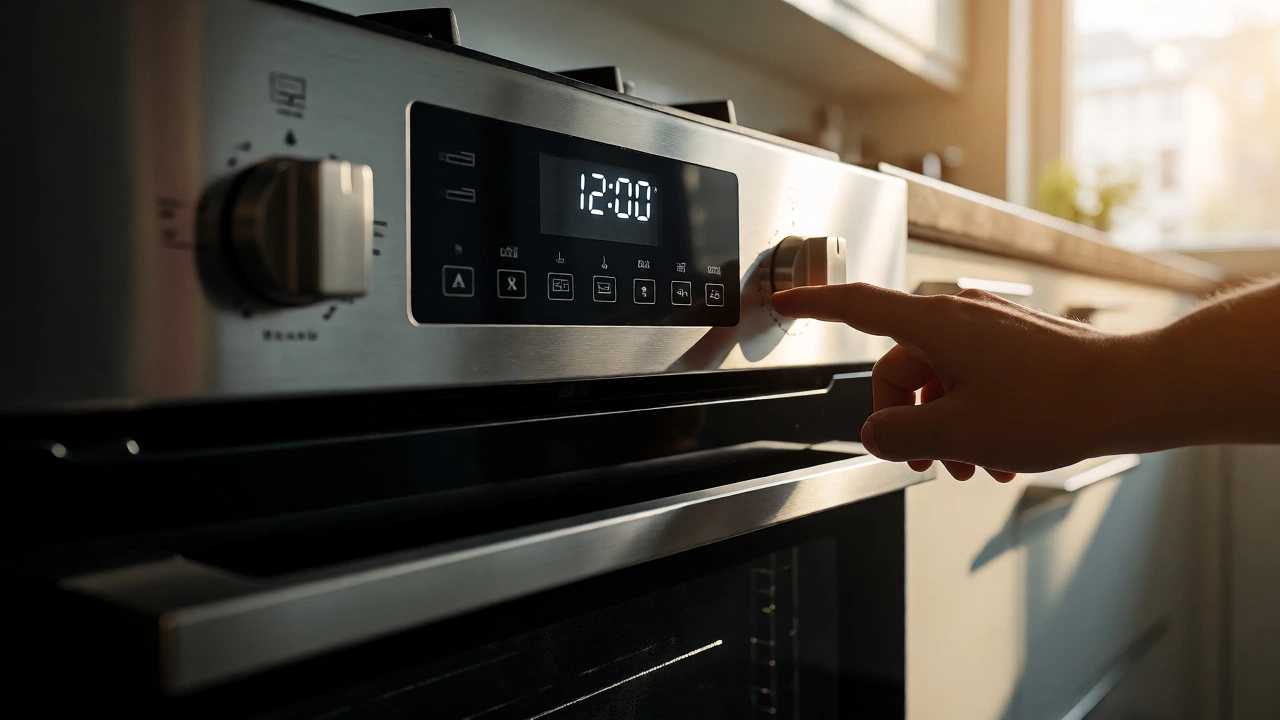
- The Clock: If your oven has a digital display and the power went out briefly (maybe a storm knocked out the grid), the clock might have reset. Many modern electric ovens won’t heat up if the clock isn’t set. Try pressing the "clock" button and setting the time. Then try turning the oven on again.
- The Circuit Breaker: Head to your switchboard. Look for the switch labeled "Oven" or "Kitchen." If it’s tripped (flipped down), flip it back up. If it trips again immediately, you have an electrical fault, likely a short circuit in the wiring or element. Don’t keep resetting it; call an electrician.
- The Door Switch: Ovens have a safety switch that cuts power to the heating elements when the door is open. If this switch is stuck or broken, the oven thinks the door is always open. Open and close the door firmly a few times. Listen for a click. If the light inside doesn’t turn off when you push the latch with your finger, the switch might be faulty.
The Heating Element Has Burned Out
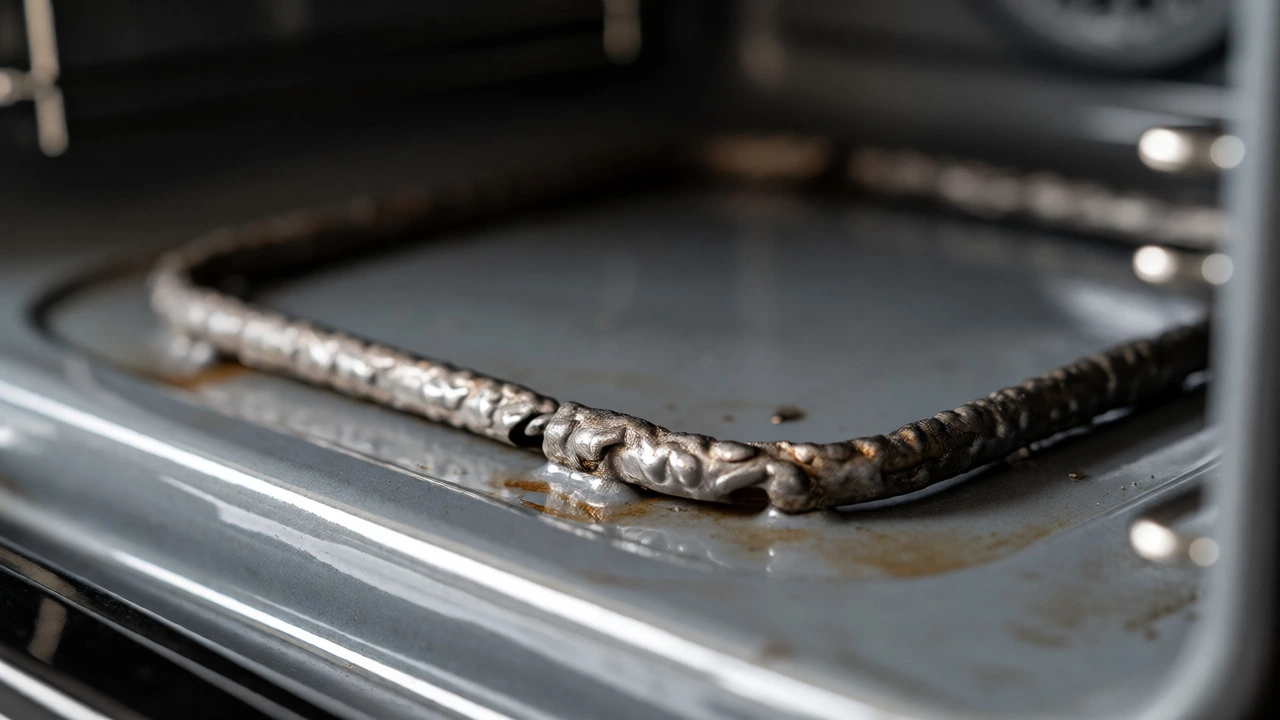
This is the most common culprit for "oven not heating" complaints. An heating element is a coil of metal that gets hot when electricity flows through it. Over years of use, these coils can develop weak spots where the resistance changes, causing them to overheat and break.
How do you spot a bad element?
- Visual Inspection: Turn off the power. Pull out the racks. Look at the top (grill) and bottom (bake) elements. Do you see any blisters, holes, or bright orange spots? A healthy element looks uniform and dark grey/black. A dead one often looks blistered or has a visible gap.
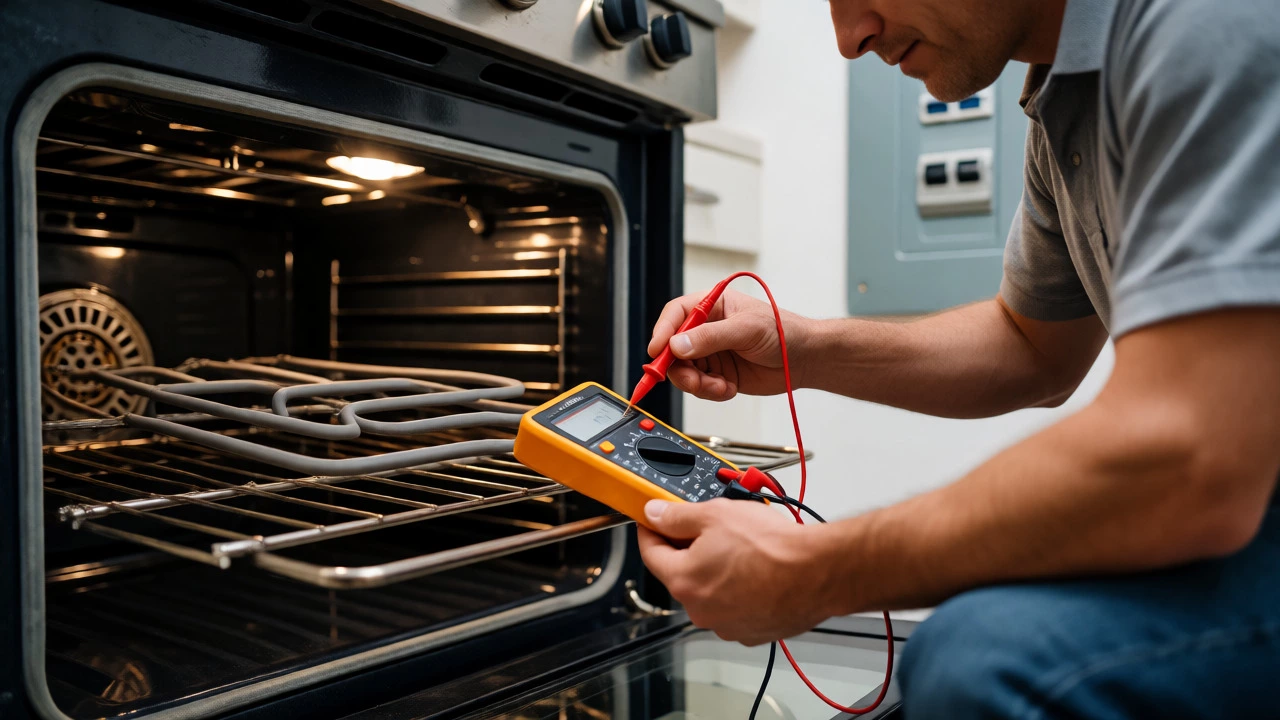
- The Multimeter Test: If you’re comfortable using a multimeter, check for continuity. Set it to Ohms (Ω). Touch the probes to the terminals of the element. You should get a reading between 10 and 50 Ohms, depending on the wattage. If it reads "OL" (Open Loop) or infinity, the circuit is broken. The element needs replacing.
Replacing an element is usually a DIY job. Most models have two screws holding the element in place and two wire connectors. Take a photo before disconnecting wires so you know which goes where. Parts typically cost $40-$80 AUD.
The Thermal Fuse Blew
If your oven heats up but then stops completely, or if it works intermittently, suspect the thermal fuse. This is a small safety device designed to cut power if the oven overheats. Once it blows, it’s done for good-it doesn’t reset.
Where is it? Usually behind the back panel of the oven cavity or near the motor. Why did it blow? Often, it’s due to blocked vents. Did you recently clean the oven and block the air intake? Or maybe the cooling fan failed, letting heat build up until the fuse sacrificed itself to save the control board.
To test it, remove the fuse and use your multimeter for continuity. No continuity means it’s blown. Replacing it costs about $15-$25 AUD. But here’s the catch: if you don’t fix the root cause (like a broken fan), the new fuse will blow again within weeks.
Faulty Selector Switch or Control Board
If the oven lights come on but nothing else happens, the issue might be the selector switch. This is the knob or touchpad you use to choose "Bake," "Grill," or "Fan Forced." Inside, there are contacts that wear out over time. Carbon buildup can prevent electricity from reaching the element.
Try wiggling the knob while the oven is on. Does it flicker on and off? That’s a classic sign of a worn switch. For touch panels, look for unresponsive buttons. Sometimes, a hard reset (turning off the breaker for 5 minutes) clears a glitch in the control board, which is the computer brain of the oven.
If the control board is fried, you might see error codes like F1, E0, or F6 on the display. These vary by brand (Whirlpool, Bosch, Samsung, etc.), so check your manual. Replacing a control board is expensive ($200+ AUD) and usually requires a professional.
Temperature Sensor Gone Wrong
Your oven uses a temperature sensor (a thermistor) to tell the control board how hot the cavity is. If this sensor fails, the oven might think it’s already at temperature when it’s cold, so it never turns on the heat. Or it might think it’s too hot and shut down prematurely.
Signs include food taking twice as long to cook or burning quickly. To test it, measure its resistance at room temperature (25°C). It should read around 1080 Ohms (this varies by model, check your service sheet). If it reads zero or infinite, replace it. They’re cheap parts ($20-$40 AUD) and easy to swap.
When to Call a Professional
Not every fix is a weekend project. Here’s when you should stop and pick up the phone:
| Symptom | Likely Cause | DIY Difficulty | Action |
|---|---|---|---|
| Oven doesn’t turn on at all | Power supply, main fuse, control board | Medium-High | Check breaker first. If fine, call tech. |
| Element glows red but no heat | Bad element connection | Low | Tighten terminals (power off!). |
| Fan makes loud grinding noise | Seized fan motor | High | Call tech. Motor replacement is tricky. |
| Burning smell + smoke | Wiring short or grease fire | Immediate | Turn off power. Inspect for scorch marks. |
| Error code on display | Sensor or Board failure | Medium | Look up code. Replace sensor if easy. |
In Australia, gas and electrical work must be done by licensed professionals if you’re touching mains voltage inside sealed units. However, replacing a plug-in element or a clip-on sensor is generally safe for homeowners who follow instructions carefully.
Preventing Future Breakdowns
You’ve fixed it once-now keep it running. Electric ovens hate sudden temperature shocks and dirty fans. Wipe spills immediately after baking. Grease splatters onto the fan blades can cause imbalance and eventual motor failure. Also, avoid using harsh oven cleaners on the heating elements; they can corrode the metal. Stick to warm soapy water for the glass and enamel.
If you live in a humid area like Brisbane, moisture can creep into electrical connections during storms. Running the oven on low heat for 10 minutes occasionally helps dry out internal components.
Why did my oven stop working after a power outage?
Most modern ovens have a safety feature that prevents heating if the clock is reset to default settings (often showing 12:00 flashing). Simply set the current time on the display, and the oven should resume normal operation. If it still doesn’t work, check the circuit breaker, as surges can trip it.
Can I drive my car if my oven is broken?
Yes, obviously! But joking aside, can you use the oven if the grill element is broken? Yes, you can usually still use the bake function if only the grill element is faulty. Conversely, if the bake element is dead, the grill might still work. Just avoid modes that require both elements simultaneously, like Fan Bake, unless you confirm the fan is operational.
How much does it cost to fix an electric oven in Australia?
Call-out fees typically range from $90 to $150 AUD. Labor rates are often $100-$150 per hour. Parts vary: heating elements cost $40-$80, thermal fuses $15-$25, and control boards $200+. A typical minor repair (element or fuse) totals $200-$300. Major repairs involving control boards or motors can exceed $400.
Is it worth repairing an old oven?
If the oven is under 10 years old and the repair cost is less than 50% of the price of a new unit, yes. For older ovens (15+ years), consider energy efficiency. Newer models are significantly more efficient. However, high-end built-in ovens are expensive to replace ($1,500+), so even older premium units are often worth fixing.
What does a burnt smell mean when I turn on the oven?
A faint plastic smell might indicate new insulation burning off (common in new ovens). A strong acrid smell suggests electrical wiring melting or a short circuit. Turn it off immediately. Check for visible scorch marks on the element or wiring. If the smell persists after cleaning, stop using it and call an electrician to prevent a fire hazard.