Microwave Failure Diagnostic Tool
Issue Identified
Description of the problem.
Likely Component:
Difficulty to Fix:
Recommendation:
That sudden silence when your dinner stops heating is frustrating. You press start, the turntable spins, but after a few seconds, nothing happens. Or worse, you hear a loud pop followed by a burnt smell. Before you toss that expensive appliance into the trash bin, consider this: the most common cause of microwave failure is rarely the complex electronics or the expensive magnetron tube itself. In over 90% of cases where a microwave runs but doesn't heat, the culprit is a small, inexpensive component called the triac. Understanding this can save you hundreds of dollars in unnecessary replacement costs.
Microwave ovens are surprisingly robust machines. They have been around since the 1960s, yet their core technology hasn't changed much. This consistency means that when they break, it’s usually due to wear and tear on specific high-stress components. If you’re trying to figure out why your microwave died, you need to look at the power delivery system. The microwave isn’t just a box with lights; it’s a high-voltage generator. When one part of that chain breaks, the whole system halts for safety reasons.
The Silent Killer: Triac Failure Explained
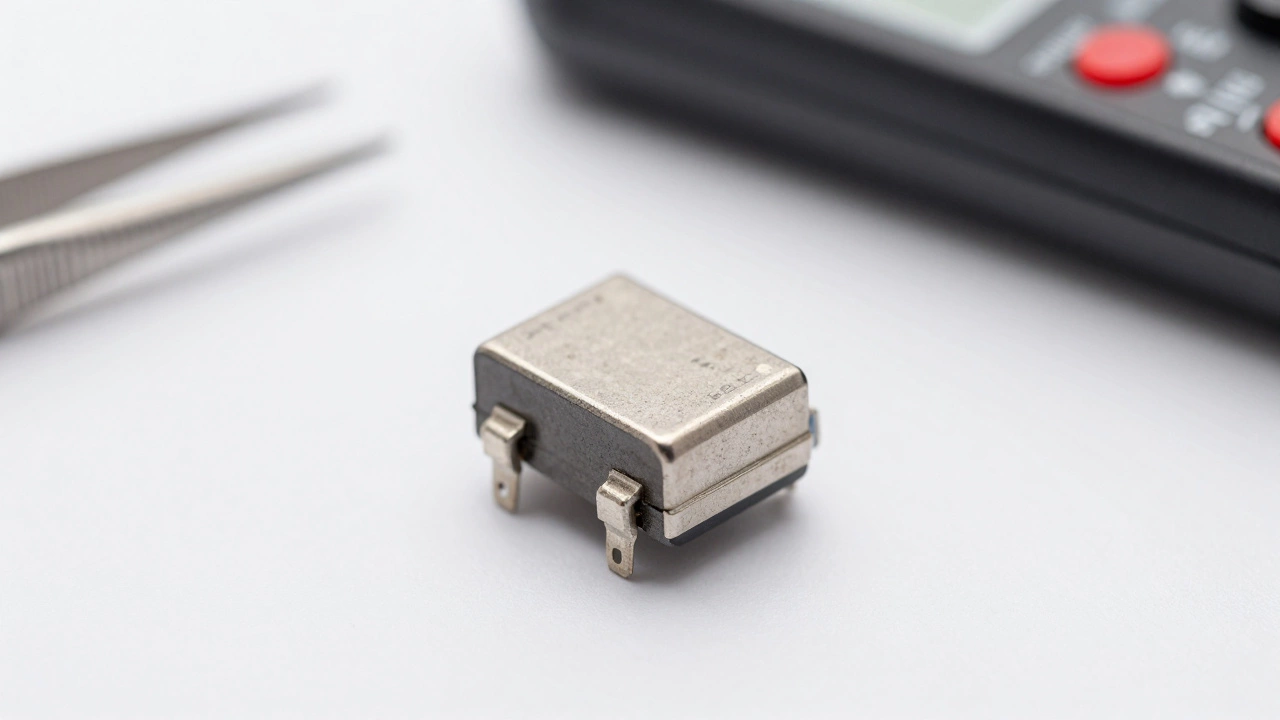
If your microwave turns on, the light works, the fan runs, and the plate rotates, but the food stays cold, the problem is almost certainly in the power switching circuit. The heart of this issue is the triac, which is a semiconductor device used to control high-power electrical loads. Think of the triac as a heavy-duty switch. Its job is to take the standard household electricity (240V in Australia) and chop it up to regulate the power sent to the magnetron-the part that actually generates microwaves.
Over time, the internal connections within the triac degrade. Heat cycles from turning the microwave on and off thousands of times cause microscopic cracks in the silicon chip. Eventually, the triac fails to conduct electricity properly. It might let through a tiny trickle of current, enough to keep the control board happy, but not enough to fire up the magnetron. This is why the microwave appears to work perfectly fine, except for the actual heating function.
The beauty of the triac is its affordability. A replacement triac costs less than $10 AUD. However, replacing it requires opening the unit, which voids warranties and carries significant risk if you don’t know what you’re doing. For many people, the convenience of buying a new microwave outweighs the effort of sourcing parts. But if you enjoy DIY repairs, identifying a bad triac is the first step toward saving your appliance.
When the Magnetron Goes Bad
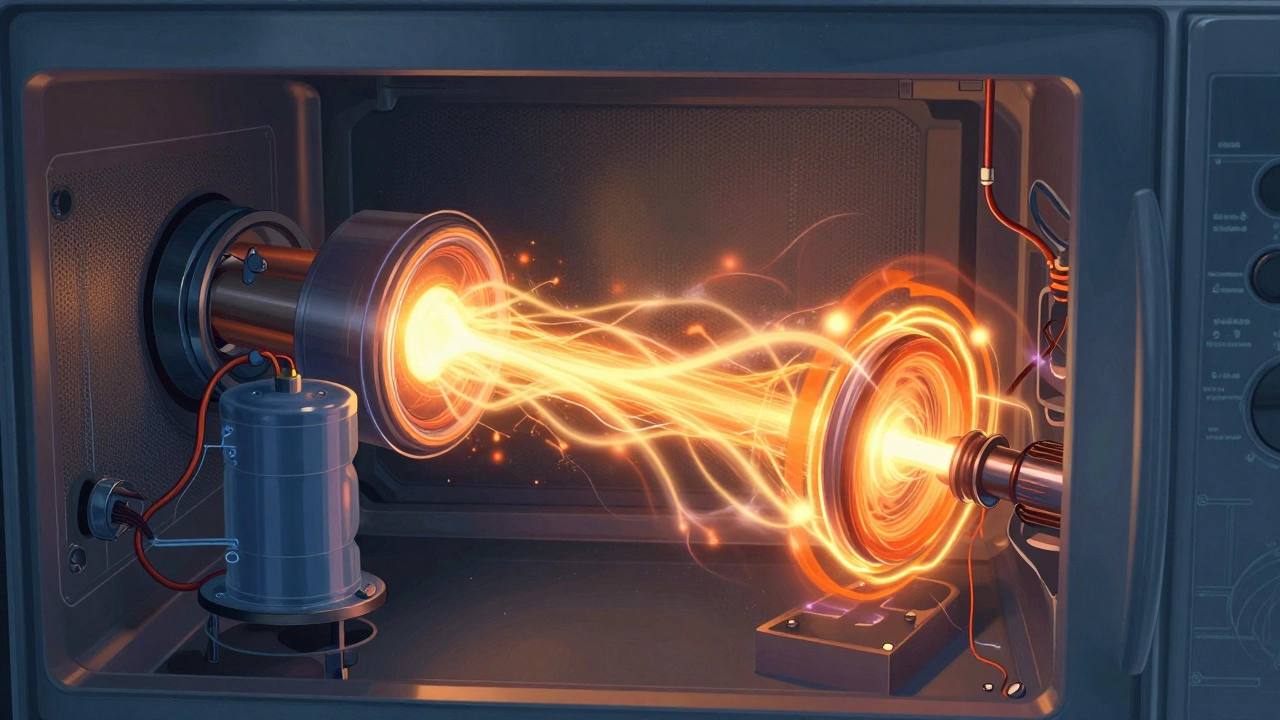
While the triac is the most common point of failure, the second biggest suspect is the magnetron, which is the vacuum tube that generates microwave radiation. The magnetron is the engine of the microwave. It converts electrical energy into electromagnetic waves. These waves agitate water molecules in your food, creating heat through friction.
Magnetrons are designed to last for years, often exceeding 10,000 hours of use. However, they are sensitive to arcing. If you run a microwave empty, even for a few seconds, the energy has nowhere to go. Instead of being absorbed by food, the microwaves bounce around inside the cavity, reflecting back into the magnetron. This causes intense heat buildup and can damage the cathode inside the tube. Once a magnetron starts failing, it usually does so gradually. You might notice that it takes longer to heat soup than it used to, or that the heating is uneven.
Signs of magnetron failure include:
- A humming noise without any heating occurring.
- Visible sparks or arcing inside the oven chamber (not caused by metal utensils).
- A burning smell coming from the waveguide cover.
- The microwave stopping mid-cycle unexpectedly.
Unlike the triac, magnetrons are not cheap. They can cost between $50 and $150 AUD depending on the model. Furthermore, installing a new magnetron requires precise alignment and torque specifications. If you tighten the mounting bolts too much, you can crack the ceramic insulator, leading to immediate failure. For most homeowners, a dead magnetron signals the end of the microwave’s life.
The High Voltage Danger Zone: Capacitors and Diodes
To understand why microwaves fail, you must understand the danger involved. Inside every microwave is a high voltage capacitor, which stores electrical charge at lethal voltages. Even when the microwave is unplugged, this capacitor can hold a charge of over 2,000 volts. This is more than enough to stop a human heart instantly. This is why professional technicians always discharge the capacitor before touching any internal components.
Alongside the capacitor sits the high voltage diode, which rectifies alternating current (AC) to direct current (DC) for the magnetron. These two components work together to boost the voltage from the transformer to the levels required by the magnetron. Over time, the dielectric material inside the capacitor can dry out or leak, causing it to lose its ability to store charge. Similarly, the diode can develop internal shorts due to thermal stress.
If either the capacitor or the diode fails, the magnetron won’t receive the correct voltage. The result is similar to a triac failure: the microwave runs, but no heat is produced. Testing these components requires a multimeter capable of measuring capacitance and diode continuity. A good technician will check the diode first because it’s easier to test and cheaper to replace than the capacitor. If the diode shows infinite resistance or zero resistance in both directions, it’s dead.
Door Switches and Safety Interlocks
Sometimes the problem isn’t with the heating elements at all. Your microwave has multiple door switches that ensure the unit cannot operate while the door is open. This is a critical safety feature mandated by law. There are usually three switches: two that cut power to the magnetron and one that signals the control board that the door is closed.
If one of these micro-switches wears out, the microwave may refuse to start entirely. You’ll press the start button, but nothing happens. No lights, no fan, no spin. This is often mistaken for a main control board failure, but the reality is much simpler. The plunger that actuates the switch can bend, or the contacts inside the switch can oxidize. Cleaning the contacts with electrical contact cleaner sometimes resolves the issue, but often the switch needs replacement.
Another common symptom of door switch failure is the microwave running continuously. If the "door closed" switch gets stuck in the closed position, the microwave might think the door is shut even when it’s open. This is extremely dangerous and requires immediate attention. Never attempt to bypass door switches. Always replace them with OEM (Original Equipment Manufacturer) parts to ensure proper safety ratings.
Control Board Malfunctions
In modern digital microwaves, the brain of the operation is the control board, which manages user inputs, timing, and power distribution. While less common than triac or magnetron failures, control boards do fail. Moisture, steam, and grease can seep into the vents and corrode the solder joints on the circuit board. You might see green or white crusty residue on the board if you open it up.
Symptoms of a failing control board include unresponsive buttons, erratic display behavior, or the microwave starting randomly. Sometimes, simply cleaning the board with isopropyl alcohol can restore functionality. However, if the integrated circuits (ICs) themselves are damaged, the board is likely beyond repair. Replacing a control board is straightforward if you can find an exact match for your model number. Be careful-there are often dozens of slight variations for the same microwave model.
How to Diagnose Microwave Issues Safely
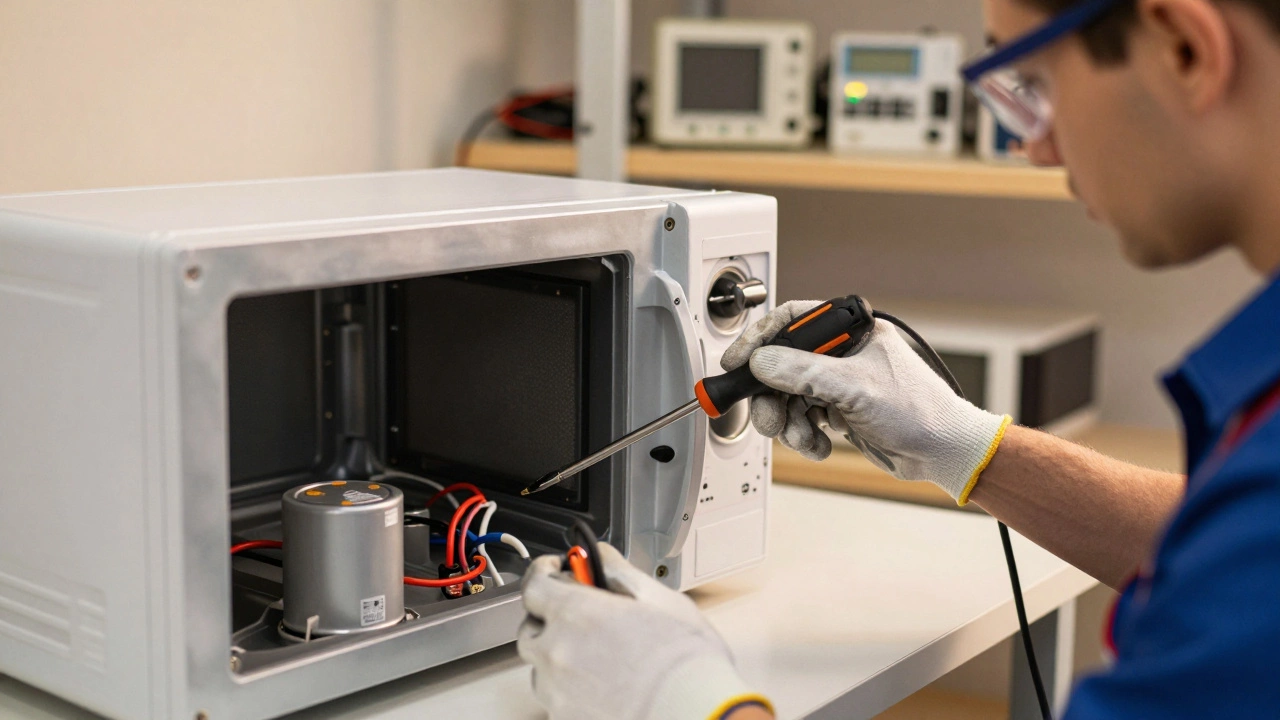
Before you decide whether to repair or replace, you need to diagnose the issue correctly. Here is a simple checklist to help you narrow down the problem:
- Does the microwave power on? If the display lights up, the main fuse and door switches are likely working.
- Does the turntable spin and the fan run? If yes, the control board is sending signals correctly.
- Is there any heat? Place a cup of water inside and run it for two minutes. Touch the cup carefully. If it’s cold, the heating circuit is broken.
- Do you hear a hum? A loud hum without heat suggests the magnetron is receiving power but failing to generate waves, or the high voltage components are shorted.
- Are there sparks? Arcing indicates a problem with the waveguide cover, the cavity lining, or the magnetron itself.
If you identify a triac or diode issue, and you have experience with electronics, you might attempt a repair. Buy the exact part number listed on your old component. Do not guess. Using a generic substitute can lead to further damage or fire hazards. If you are unsure, call a professional. In Brisbane, local appliance repair services can often fix these issues for less than the cost of a new unit, especially for high-end models.
Prevention Tips to Extend Microwave Life
You can significantly reduce the risk of premature failure by following a few simple habits. First, never run the microwave empty. Always put a cup of water inside if you’re testing it or defrosting something small. Second, clean the interior regularly. Grease buildup on the walls can absorb microwaves, causing hot spots and damaging the enamel coating. Third, check the door seals. Wipe them down with a damp cloth to remove food particles that might prevent the door from closing tightly.
Finally, avoid using metal containers. Aluminum foil, silverware, and containers with metallic trim can cause arcing. This arcing damages the interior paint and can eventually puncture the waveguide cover, leading to magnetron failure. By treating your microwave with care, you can extend its lifespan well beyond the typical five-to-seven-year average.
| Symptom | Most Likely Cause | Difficulty to Fix | Estimated Part Cost (AUD) |
|---|---|---|---|
| No heat, but fan/light work | Triac failure | Moderate | $5 - $15 |
| Loud hum, no heat | Magnetron or High Voltage Capacitor | Hard | $50 - $150 |
| No power at all | Door Switch or Thermal Fuse | Easy | $10 - $30 |
| Sparks inside cavity | Damaged Waveguide Cover or Cavity | Easy | $10 - $25 |
| Unresponsive controls | Control Board | Moderate | $40 - $80 |
When to Call a Professional
Repairing a microwave involves working with high voltage. If you are not comfortable discharging capacitors or using a multimeter, do not attempt this yourself. The risk of electrocution is real and severe. Professional technicians in Brisbane have the tools and training to handle these risks safely. They also have access to genuine replacement parts that ensure long-term reliability.
Consider calling a pro if:
- The microwave is under warranty (DIY repairs void coverage).
- You see signs of internal arcing or burning smells.
- The repair involves the magnetron or high voltage transformer.
- You lack basic electrical safety knowledge.
A professional diagnosis can save you money in the long run. They can quickly identify whether the issue is a simple triac swap or a more complex magnetron failure. This prevents you from buying unnecessary parts or making mistakes that could worsen the damage.
Is it worth repairing an old microwave?
It depends on the age and type of the microwave. If it’s less than 7 years old and the repair cost is under $100, it’s usually worth fixing. For older models, especially basic countertop units, buying new might be more economical. However, high-end built-in models often justify repair costs due to their higher initial price and installation complexity.
Can I replace the triac myself?
Yes, if you have basic electrical skills and safety equipment. You must discharge the high voltage capacitor before touching any components. Use an insulated screwdriver to short the capacitor terminals. Wear rubber-soled shoes and work on a dry surface. If you feel unsure, hire a professional.
Why does my microwave spark?
Sparking is usually caused by metal objects inside the cavity, such as aluminum foil or silverware. It can also indicate a damaged waveguide cover or peeling paint on the interior walls. Stop using the microwave immediately if you see sparks, as this can damage the magnetron or start a fire.
How long do microwaves typically last?
The average lifespan of a microwave is between 7 and 10 years with regular use. Commercial microwaves may last longer due to heavier-duty components, but they are also used more frequently. Proper maintenance, such as cleaning and avoiding empty runs, can extend this lifespan.
What is the safest way to dispose of a broken microwave?
Do not throw a microwave in the regular trash. They contain hazardous materials like lead and mercury in the electronics, as well as high-voltage capacitors. Take it to a local e-waste recycling center or arrange for a bulk waste pickup through your council. In Brisbane, many hardware stores accept old appliances for recycling.