Boiler Troubleshooting Decision Tool
Answer the questions below to see if you can safely handle the issue yourself or if you need to call a pro.
Action Required
Select your boiler type and symptom above to get personalized advice.
Quick Reference Legend
You come home to a freezing house. The shower is lukewarm at best, and that familiar clunking noise from the utility room has turned into a full-blown rattle. Your first instinct? Grab a screwdriver and try to fix it yourself. It’s tempting, especially when you see quotes for professional boiler repair starting at $150 just for a call-out. But here is the hard truth: boilers are not like leaking taps or flickering lightbulbs. They involve high-pressure water, electricity, and often combustible gas. One wrong move doesn’t just void your warranty; it can turn your utility room into a hazard zone.
So, where do you draw the line between "I can handle this" and "Call a pro immediately"? This guide breaks down exactly what you can safely tackle, what you absolutely shouldn't touch, and how to avoid expensive mistakes in Brisbane's specific regulatory landscape.
The Golden Rule: Gas vs. Water
If your boiler runs on natural gas or LPG, there is one non-negotiable rule in Australia: you cannot legally work on the gas side of things unless you are licensed. In Queensland, under the Queensland Building and Construction Commission (QBCC), only licensed gas fitters can install, repair, or modify gas appliances. This isn't just bureaucratic red tape; it's about preventing carbon monoxide poisoning and explosions.
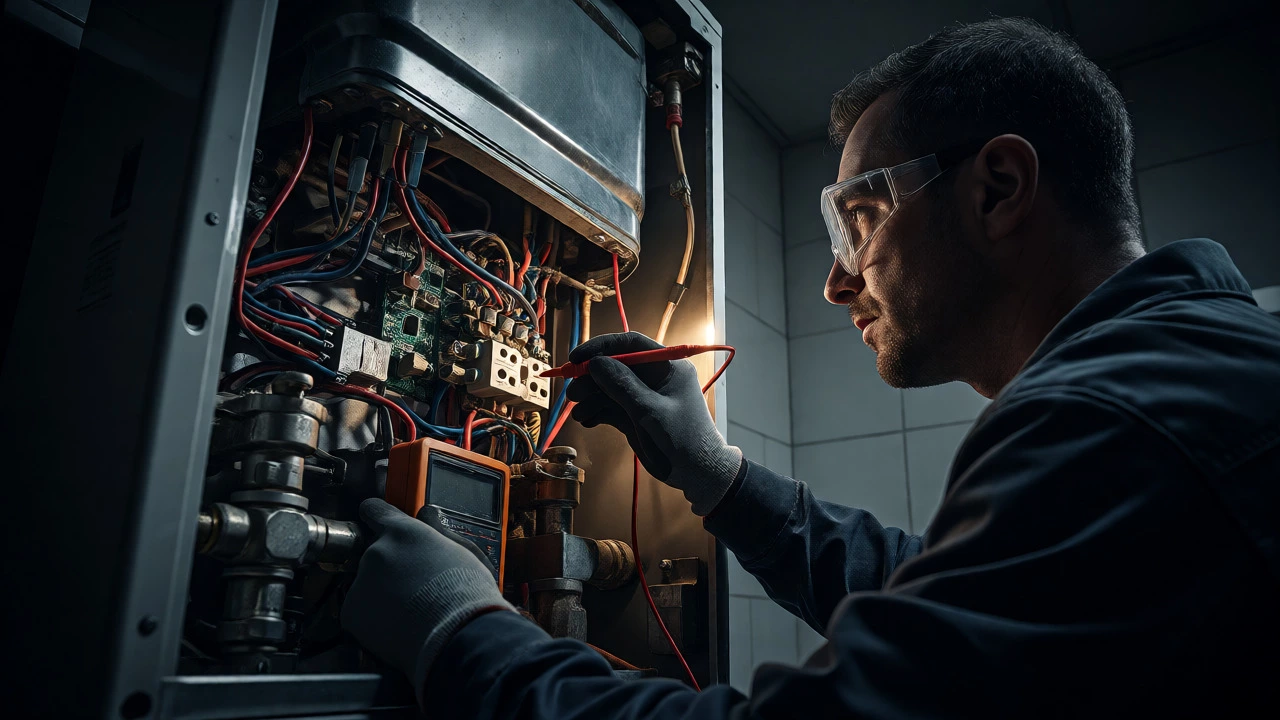
Electric boilers are slightly more forgiving, but they still carry a risk of electrocution if you don't know how to isolate the circuit properly. If you aren't comfortable using a multimeter to check for live voltage, you're already out of your depth. Before you even think about opening a panel, ask yourself: Is this a plumbing issue, an electrical reset, or a mechanical failure? Plumbing issues are often DIY-friendly. Electrical resets are gray areas. Mechanical and gas failures are strictly for professionals.
What You Can Safely Fix Yourself
There are actually several common boiler problems that have simple, safe solutions. These usually involve user errors, minor blockages, or pressure adjustments. If you hit any of these snags, you might save yourself a hefty service fee.
Low System Pressure
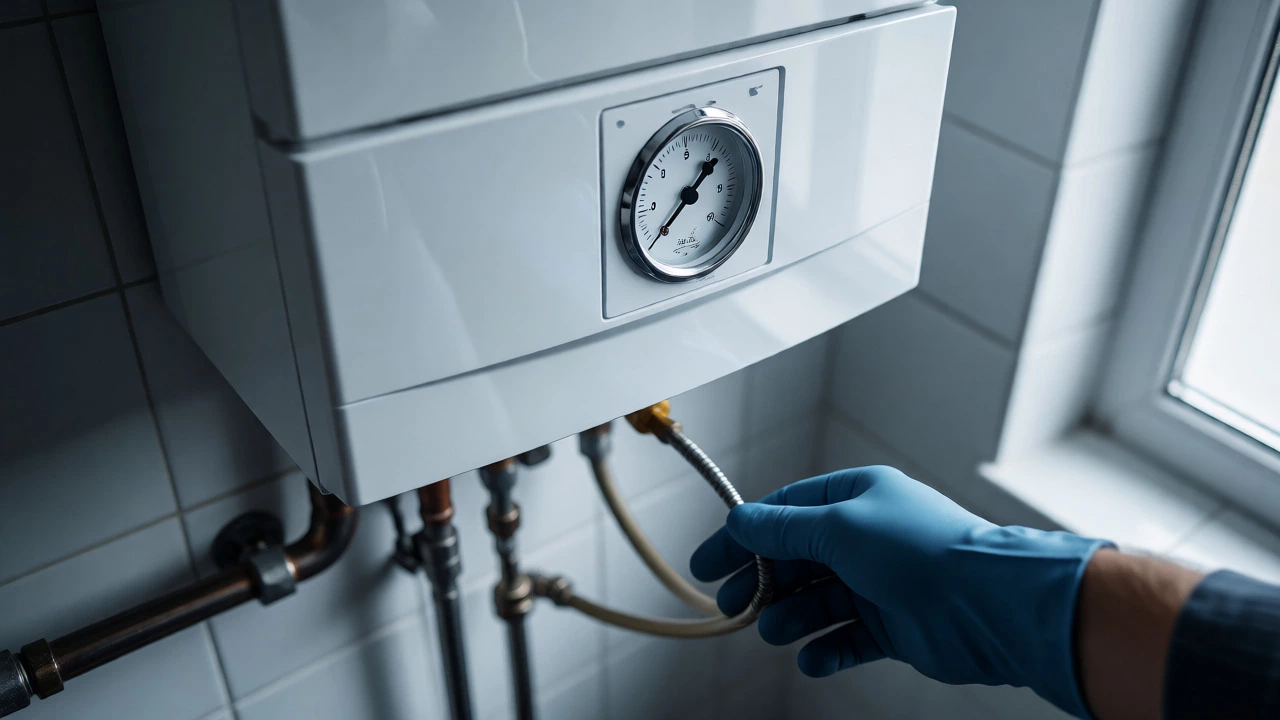
This is the number one reason people call plumbers unnecessarily. Most modern combi boilers operate best between 1 and 1.5 bar of pressure. If the gauge reads below 1 bar, the boiler will lock out to protect itself.
- The Fix: Locate the filling loop (usually two flexible hoses with valves underneath the boiler). Open both valves slowly until the needle hits 1.2 bar. Close them tightly. Done.
- The Risk: Overfilling. If you go above 2.5 bar, the pressure relief valve will discharge hot water outside your property. Watch the gauge closely.
Bleeding Radiators
If some radiators are cold at the top but warm at the bottom, air is trapped inside. This stops hot water from circulating properly, forcing your boiler to work harder than it needs to.
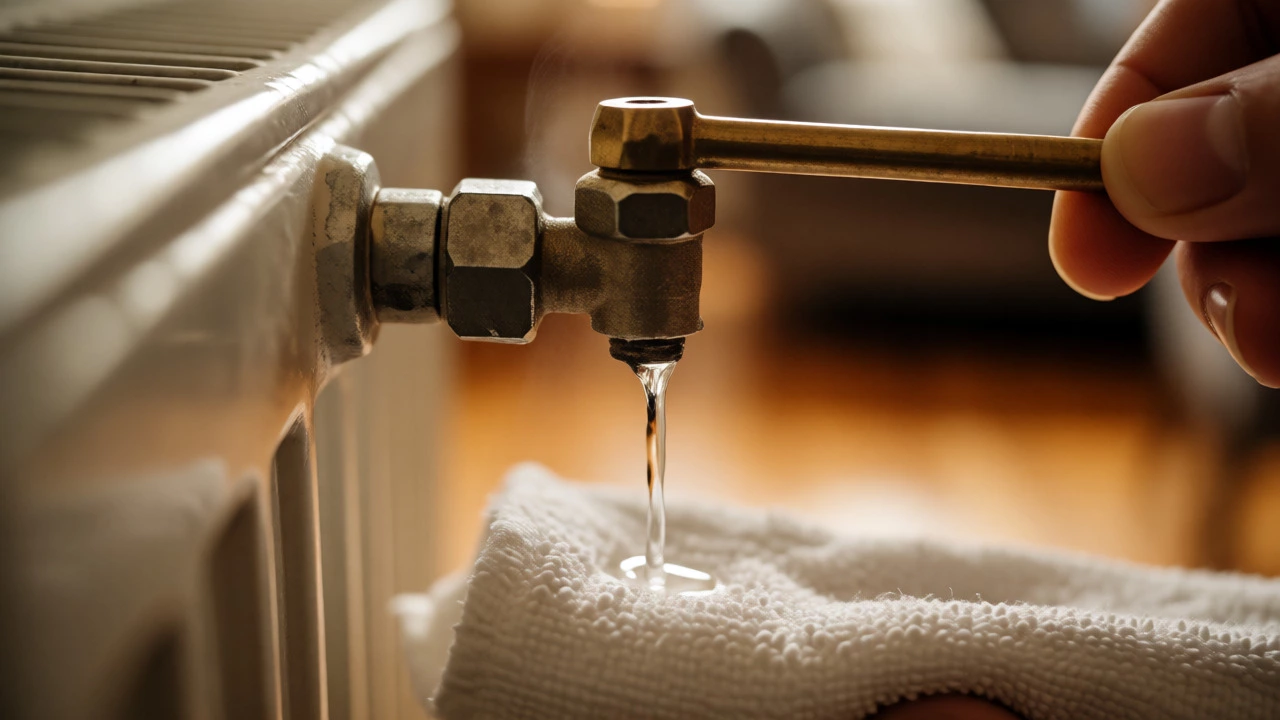
- The Fix: Use a radiator key to open the bleed valve at the top of the radiator. Hold a cloth underneath to catch drips. When water flows steadily instead of hissing air, close it up.
- The Follow-up: Bleeding lowers system pressure. Check your boiler gauge afterward and repressurize if necessary.
Clogged Condensate Pipe
Modern condensing boilers produce acidic condensate that drains away via a small white plastic pipe. If this freezes (rare in Brisbane, but possible during cold snaps) or gets blocked by sludge, the boiler shuts down with a fault code.
- The Fix: Disconnect the pipe from the drain (wear gloves and eye protection-the water is acidic!). Flush it through with a bucket of warm water. Reconnect securely.
- The Warning: Ensure the connection is watertight. Leaking acid can damage flooring and create slip hazards.
When to Call a Professional Immediately
If you've checked the basics and the boiler still won't play nice, stop tinkering. Here are the signs that indicate a deeper issue requiring a licensed technician.
| Symptom | Likely Cause | Action |
|---|---|---|
| Fault Code F1/F2 | Flow sensor or PCB error | Call Pro: Requires diagnostic tools and part replacement. |
| Smell of Gas | Leak in gas valve or pipework | Emergency: Turn off gas at meter, ventilate, call gas fitter. |
| Noisy Kettling | Scale buildup in heat exchanger | Call Pro: Needs power flushing or chemical descaling. |
| Pilot Light Won't Stay Lit | Thermocouple failure | Call Pro: Safety device; incorrect fitting risks leaks. |
| Water Leak from Bottom | Cracked heat exchanger or pump seal | Call Pro: High-pressure leak; potential component failure. |
The Danger of "Ghost" Repairs
A lot of homeowners try to clean a dirty burner or replace a fan motor because YouTube made it look easy. The problem? Modern boilers are sealed combustion systems. If you break the seal on the casing without replacing the gasket correctly, you compromise the integrity of the unit. Worse, if you misalign a component by millimeters, you might clear the fault code temporarily, only to have the boiler fail catastrophically three months later. And guess who pays for the new boiler? You do, because the manufacturer will deny the warranty claim due to unauthorized tampering.
Legal and Insurance Implications in Australia
In Queensland, all gas appliance repairs must be certified. When a licensed gas fitter finishes a job, they provide a Certificate of Compliance. This document proves the work was done safely and meets Australian Standards (AS/NZS 5601).
Why does this matter? If you attempt a DIY repair on a gas boiler and subsequently have a fire or explosion, your home insurance provider might refuse to pay out. They will argue that unlicensed work invalidated the policy conditions. Even for electric boilers, improper wiring can be flagged during a future building inspection, costing you thousands in remediation fees before you can sell your house.
Tools You Actually Need for Basic Maintenance
If you want to keep your boiler healthy and avoid those low-pressure calls, keep these tools handy. You don't need a van full of gear-just the essentials.
- Radiator Keys: Buy a set of different sizes. Old radiators use square keys; newer ones often use flathead screwdrivers.
- Pressure Gauge: While most boilers have built-in gauges, a handheld digital gauge helps verify accuracy if the built-in one looks stuck.
- Adjustable Spanners: For tightening hose connections on the filling loop. Don't overtighten plastic fittings!
- Bucket and Rags: Essential for catching spills when bleeding radiators or flushing condensate pipes.
- Gloves and Goggles: Boiler water can contain bacteria and debris. Acidic condensate can burn skin. Protect yourself.
Preventative Maintenance: The Best DIY Job
The best way to "fix" a boiler is to prevent it from breaking. Annual servicing by a professional is crucial, but you can do monthly checks to spot trouble early.
- Check Pressure Monthly: Look at the gauge. If it's dropping consistently, you likely have a slow leak somewhere in the system. Catching this early prevents major water damage.
- Listen for Changes: Does the boiler sound different? A slight hum is normal. Banging, whistling, or grinding is not. Note the timing-does it happen at startup or shutdown?
- Inspect Visible Pipes: Look for corrosion or damp patches around the copper pipes connected to the boiler. Small pinhole leaks can escalate quickly.
- Clear Vents: Ensure the flue outlet (the hole in your wall or roof) isn't blocked by leaves, spider webs, or laundry hanging too close.
Cost-Benefit Analysis: DIY vs. Pro
Let's look at the numbers. In Brisbane, a standard boiler service costs between $180 and $250. A minor repair, like replacing a diverter valve or a pump, ranges from $300 to $500 including parts and labor.
If you spend $50 on parts and four hours of your weekend trying to fix a complex PCB issue, and you end up calling a plumber anyway because you couldn't diagnose it, you've wasted time and money. However, if you solve a low-pressure issue in five minutes for free, that's a win. The key is knowing your limits. If the fix involves opening the main housing, disconnecting wires, or touching gas components, hire a pro.
Can I reset my boiler myself?
Yes, resetting a boiler is generally safe. Press the reset button once and wait a few seconds. If it locks out again immediately, do not press it repeatedly. This indicates a persistent fault that requires professional diagnosis. Resetting more than twice in quick succession can sometimes cause further damage to the control board.
How long should a boiler last?
With proper annual servicing, a high-quality combi boiler typically lasts 10 to 15 years. Cheaper models may fail after 7-8 years. Factors influencing lifespan include water quality (hard water causes scale), usage patterns, and whether the system includes a magnetic filter to catch debris.
Is it worth repairing an old boiler?
If your boiler is over 15 years old and requires a repair costing more than $400, it is often better to replace it. Newer condensing boilers are significantly more energy-efficient, potentially saving you 20-30% on heating bills. Additionally, older parts become scarce, making future repairs difficult and expensive.
What does error code E1 mean?
Error codes vary by manufacturer, but E1 commonly indicates ignition failure or flame detection issues. This is often related to the gas supply, spark electrode, or ionization probe. Since it involves the combustion process, it is recommended to call a licensed gas fitter rather than attempting a DIY fix.
Do I need a certificate for DIY boiler work?
You cannot get a compliance certificate for DIY gas work in Queensland. Only licensed practitioners can issue these. For electric-only boilers, while you might not need a certificate for a simple bulb change, any internal electrical repairs should ideally be done by a registered electrician to ensure safety and insurance validity.
Final Thoughts: Know When to Fold 'Em
Your boiler is the heart of your home's comfort. Treating it with respect means knowing when to roll up your sleeves and when to pick up the phone. Simple tasks like bleeding radiators, checking pressure, and clearing condensate pipes are perfect for DIY enthusiasts. They save money and give you peace of mind.
But the moment you smell gas, hear strange noises from the core mechanism, or see water leaking from inside the casing, step back. Call a licensed professional. In Brisbane, finding a reputable gas fitter or plumber is easier than ever, and their expertise ensures your home stays warm, safe, and efficient for years to come.