Freezer Repair vs. Replacement Calculator
Enter your details below to determine if you should fix your current freezer or buy a new one. This tool uses the industry-standard "50% Rule" and factors in potential energy savings.
Financial Breakdown
- Repair Cost:
- New Unit Price:
- Repair % of New:
- Annual Energy Savings:
- Payback Period:
Reasoning
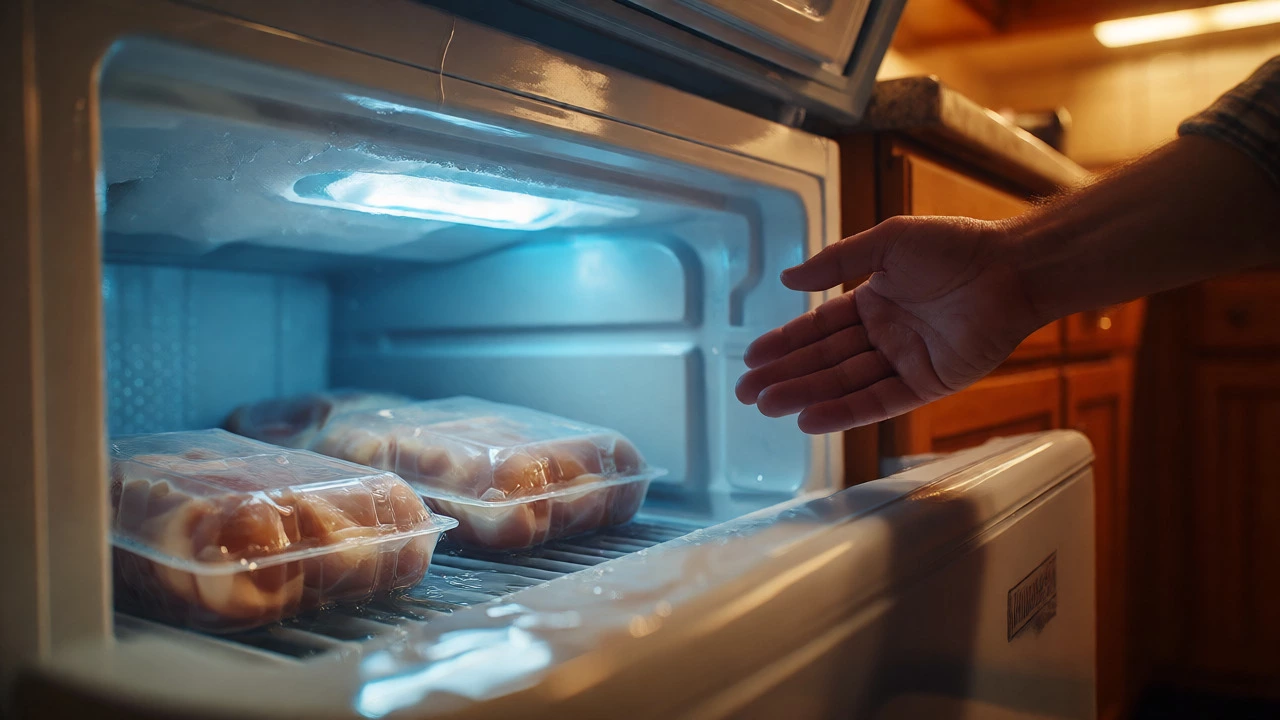
You open the door to your chest freezer, expecting a blast of cold air, but instead, you’re greeted by the smell of thawing chicken and a puddle on the floor. It’s that sinking feeling every homeowner knows too well. Now comes the hard question: do you call a technician to fix it, or do you bite the bullet and buy a new one? In 2026, with energy costs fluctuating and appliance prices rising, this isn’t just a guesswork game. It’s a math problem.
The answer usually hinges on three things: the age of your unit, the specific part that failed, and how much energy the old model burns compared to a modern equivalent. Let’s break down exactly when to reach for the wrench and when to head to the store.
The 50% Rule: A Quick Financial Check
Before you even pick up the phone, apply the industry-standard "50% Rule." If the estimated cost of repairs exceeds 50% of the price of a comparable new freezer, you should almost always replace it. Why? Because if you spend half the cost of a new machine fixing an old one, you’re throwing money at a device that likely has other components nearing the end of their lifespan.
For example, let’s say you have a mid-range upright freezer that costs $800 to replace. If a technician quotes you $450 for a repair, walk away. That extra $350 buys you a brand-new warranty, better energy ratings, and peace of mind. However, if the quote is $200, repair it. You still have years of life left in the chassis, and the savings are immediate.
| Scenario | Recommended Action | Reasoning |
|---|---|---|
| Unit is under 10 years old | Repair | Most major brands design units to last 10-15 years. Early failures are often isolated parts. |
| Unit is over 15 years old | Replace | Parts availability drops; energy inefficiency outweighs repair savings. |
| Repair cost < 50% of new price | Repair | High ROI. You extend the asset's life cheaply. |
| Repair cost > 50% of new price | Replace | Diminishing returns. Risk of second failure soon after. |
| Cabinet rusted/damaged | Replace | Structural issues cannot be fixed effectively. |
The Compressor Dilemma
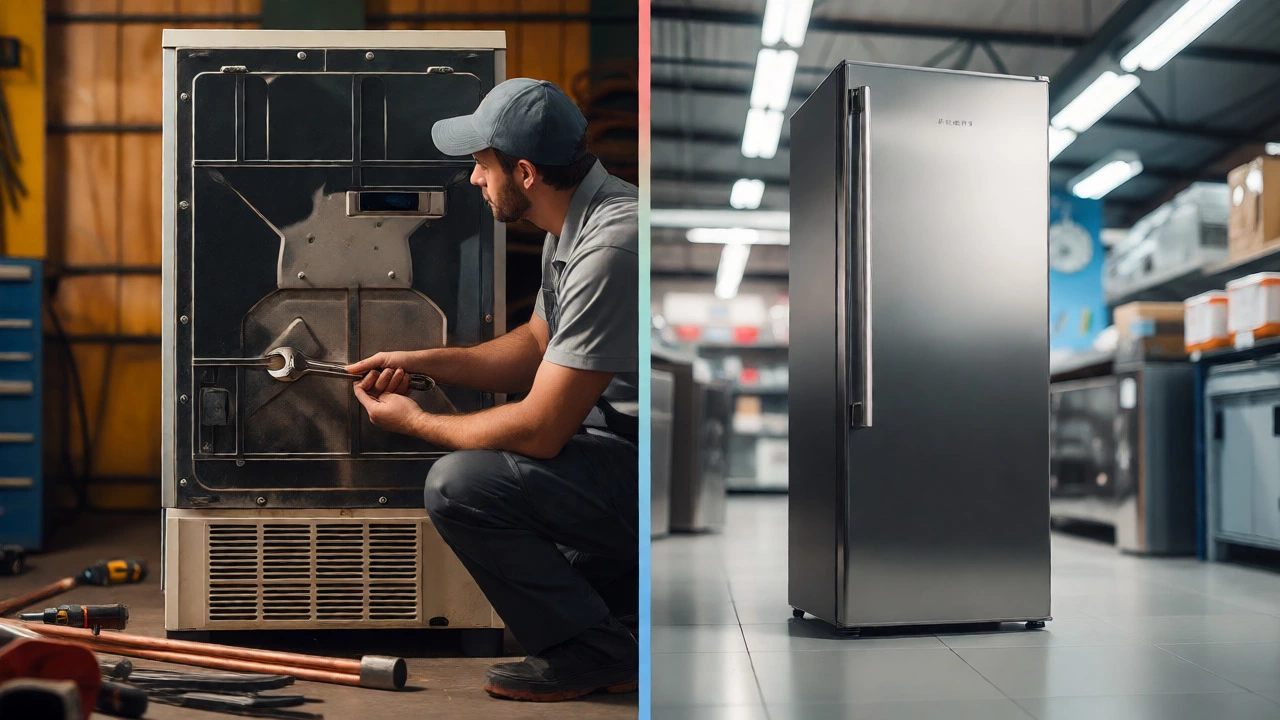
The compressor is the heart of your freezer. When this part fails, the repair bill skyrockets. Replacing a compressor isn't just about swapping a motor; it involves recovering refrigerant, welding copper lines, and testing pressure seals. In Australia, labor rates for specialized technicians can push this repair into the $600-$900 range depending on the region.
If your freezer is older than 10 years, a compressor failure is usually the final nail in the coffin. Modern compressors use different refrigerants (like R600a) compared to older models (R134a), meaning compatibility issues and higher part costs. Unless you have a high-end commercial-grade unit where the cabinet itself is worth thousands, replacing the entire freezer is almost always the smarter financial move here.
Energy Efficiency: The Hidden Cost Saver
Here is where many people get stuck. They think, "My old freezer works fine, why change it?" But "working fine" doesn't mean "running efficiently." An energy-efficient freezer from 2026 uses significantly less electricity than a model from 2010. Older freezers often lack proper insulation and use less efficient thermostat controls, causing the compressor to run longer cycles.
Let’s look at the numbers. An old 300L chest freezer might consume 400 kWh per year. At an average Australian rate of roughly $0.30 per kWh (varies by state and plan), that’s $120 annually. A new, high-rated Star Label model might use only 250 kWh, costing $75. That’s a $45 annual saving. Over five years, you save $225. If your repair quote was $200, you’ve essentially paid for the repair with energy savings alone, while getting a new warranty.
Common Repairs Worth Doing
Not all breakdowns are catastrophic. Some issues are minor and incredibly cheap to fix. If you spot these signs, call a pro immediately rather than buying a new unit:
- Door Gasket Failure: If the rubber seal around the door is torn or brittle, cold air escapes. This forces the compressor to work overtime. A new gasket costs $20-$50 plus labor. It’s a no-brainer repair.
- Faulty Thermostat: If the freezer is too warm or too cold, the thermostat might be off. Calibration or replacement is usually under $150 total.
- Defrost Drain Clog: Ice buildup inside the unit often means the drain tube is blocked. Clearing this takes minutes and costs little.
- Condenser Coil Cleaning: Dust on the coils reduces efficiency. A deep clean can restore performance for a fraction of the cost of a new machine.
These fixes address symptoms, not structural failures. They keep the core machinery running without breaking the bank.
When to Consider Professional Maintenance First
Sometimes, what looks like a broken freezer is just a dirty condenser coil or a blocked vent. Before assuming the worst, check the exterior. Is the back or bottom covered in dust bunnies? Vacuuming these coils can drop the operating temperature by several degrees. In Brisbane’s humid climate, mold and dust accumulate faster on external vents, especially if the unit is tucked into a tight cupboard. Ensure there is at least 5cm of clearance around the unit for airflow.
If cleaning and checking the power supply don’t solve the issue, then it’s time for a diagnostic. Many local technicians offer a call-out fee that covers the diagnosis. Use this to get a firm quote before committing to any labor.
The Environmental Angle
We live in a world where waste matters. Throwing away a functional cabinet because a $50 fan died feels wasteful. Conversely, keeping a 20-year-old energy hog running for another decade wastes more carbon emissions through inefficient power usage than manufacturing a new unit does. Modern appliances are designed with recyclability in mind. Steel cabinets are highly recyclable, whereas older foam insulations were harder to process.
If you decide to replace, ensure you dispose of the old unit correctly. Most retailers offer removal services for a small fee, ensuring the refrigerant is captured safely rather than released into the atmosphere. Don’t leave it on the curb unless your council explicitly allows it-refrigerants are potent greenhouse gases.
Local Context: Buying New in Australia
In 2026, the Australian market offers a wide range of options. Brands like Bosch, Miele, and Electrolux dominate the premium segment, while Samsung and LG offer competitive mid-range models. Keep an eye out for sales during EOFY (End of Financial Year) or Black Friday, which can knock 20-30% off retail prices.
Also, consider the type of freezer. Chest freezers generally retain cold better during power outages and are more energy-efficient due to less cold air loss when opened. Upright freezers are easier to organize but lose more cold air each time you open the door. If you rarely access your frozen goods, a chest model is cheaper to run long-term.
Final Verdict: Your Decision Checklist
To make this easy, run through this quick checklist before spending a cent:
- Check Age: Is it over 10-12 years old? Lean towards replacement.
- Get a Quote: Ask for a written estimate including parts and labor.
- Compare Prices: Find the current retail price of a similar new model.
- Apply the 50% Rule: If Repair > 50% of New Price, replace.
- Assess Energy Savings: Calculate if the new unit’s efficiency will pay for the difference within 3-5 years.
- Inspect Condition: If the cabinet is rusted or dented, replace regardless of mechanical health.
Repairing is usually the winner for younger units with minor faults. Replacing wins for older units with major component failures. By doing the math now, you avoid paying twice later.
How long should a freezer last?
The average lifespan of a household freezer is between 10 and 15 years. High-quality brands like Miele or Bosch may last up to 20 years with proper maintenance, while budget models might fail around the 8-year mark. Regular cleaning of condenser coils and checking door seals can extend this lifespan significantly.
Is it worth repairing a 15-year-old freezer?
Generally, no. At 15 years, most freezers are approaching the end of their engineering life. Parts become scarce, and energy efficiency lags far behind modern standards. Unless the repair is very minor (like a light bulb or shelf), replacing the unit is usually more cost-effective due to lower energy bills and new warranties.
What is the most expensive part to fix in a freezer?
The compressor is typically the most expensive component to replace. Labor-intensive installation, requiring specialized tools and refrigerant handling, often pushes the total cost to between $600 and $900 AUD. This frequently exceeds the cost of a new mid-range freezer, making replacement the logical choice.
Can I replace the door seal myself?
Yes, replacing a freezer door gasket is a common DIY task. You need to measure the dimensions of the old seal accurately and purchase a compatible replacement. Most seals snap or screw into place. However, if the door frame is warped or damaged, professional assessment is recommended as a new seal won’t fix a bent door.
Do newer freezers really save money?
Yes, modern freezers with high energy star ratings consume 20-40% less electricity than models manufactured 10+ years ago. While the upfront cost of a new unit is higher, the reduction in monthly power bills can offset the purchase price over time, especially if you keep the freezer for another 5-10 years.