Fridge Troubleshooter Tool
Identify Your Fridge Issue
Based on the article: "What Usually Fails in a Fridge? Common Breakdowns and What to Check First"
What's happening with your fridge?
Do you see these symptoms?
Your Diagnosis
Recommended Actions
Before You Call a Technician
Check these items based on the article:
-
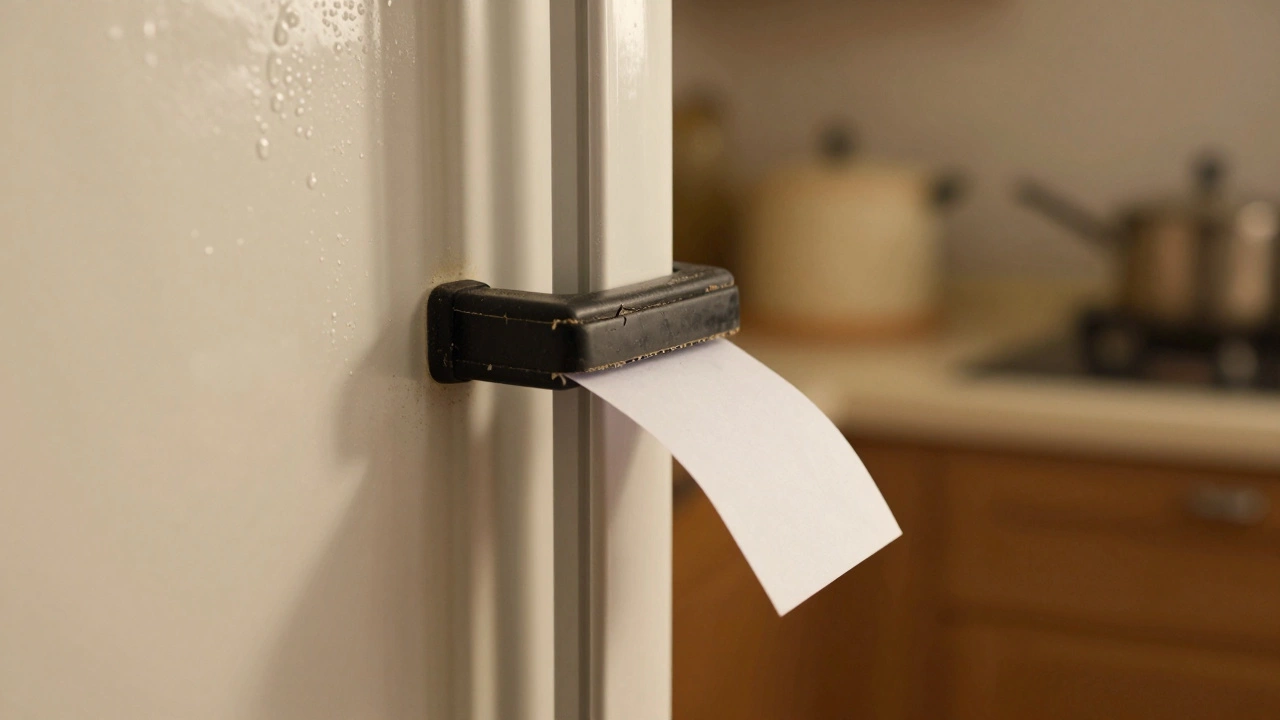
Check door seal: Run hand along edge or use paper test
-
Thaw freezer: Unplug and let ice melt for 24 hours
-
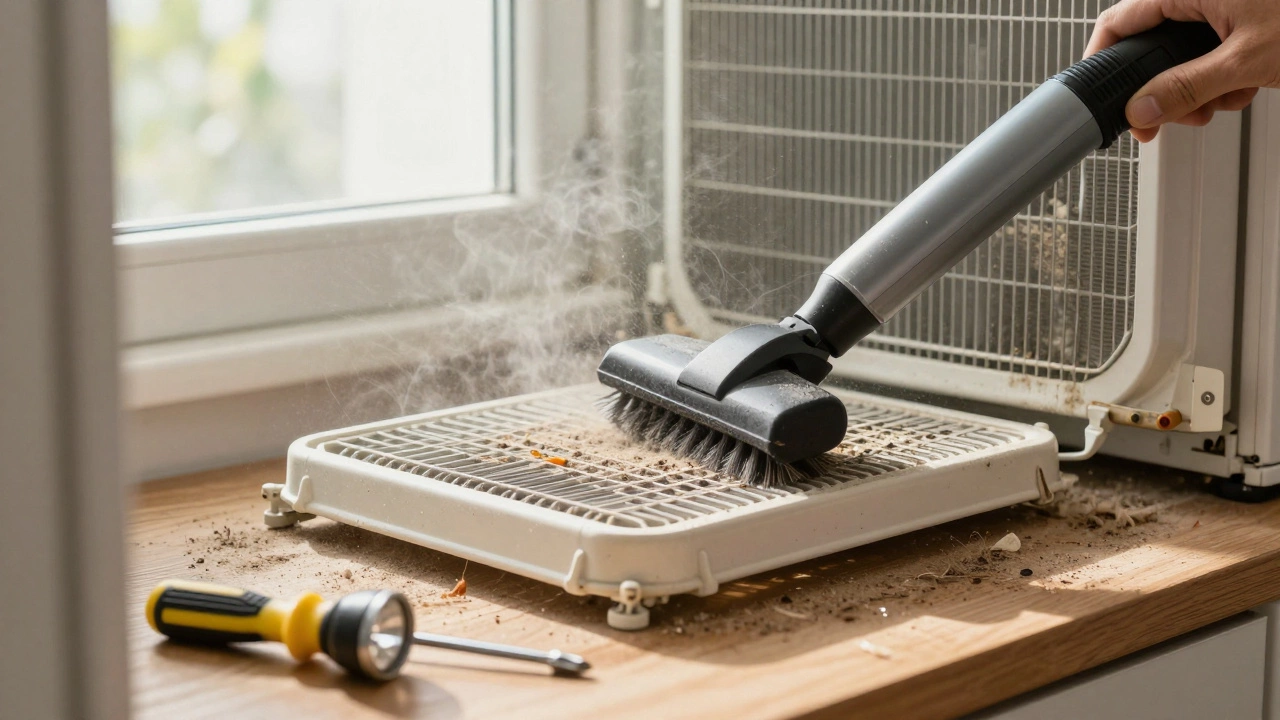
Check condenser coils: Clean with vacuum every 6 months
-
Listen for fans: Check evaporator and condenser fan operation
If your fridge has stopped cooling or started making weird noises, you're not alone. In Brisbane, where temperatures regularly hit 30°C in summer, a broken fridge isn’t just inconvenient-it’s a food safety risk. Most people assume their fridge just "died" and call for a replacement. But here’s the truth: 8 out of 10 fridge failures are fixable, and often for under $200. The real problem? Most folks don’t know what to look for before they panic and buy a new one.
Door Seals Are the Silent Killers
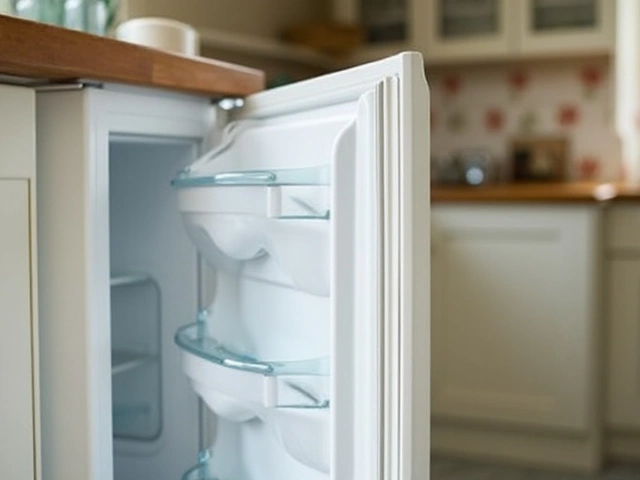
The number one thing that fails in a fridge? The door seal. Not the compressor. Not the thermostat. The rubber gasket around the door. It’s cheap, it’s simple, and it’s the first thing to wear out. Over time, heat, dirt, and repeated opening cause the seal to crack, harden, or pull away from the frame. You won’t always see it. But if you run your hand along the edge of the closed door and feel a draft-or better yet, stick a piece of paper in the door and try to pull it out-it slides out too easily. That’s your sign.
A damaged seal means cold air escapes, and warm air rushes in. The compressor runs nonstop trying to compensate. That’s why your fridge feels warm on the sides, your energy bill spikes, and ice builds up in the freezer. Replacing the seal costs $30-$60 and takes 20 minutes. No technician needed. Just order the exact model number from the manufacturer’s site and snap it in. Most fridges use standard gaskets. If yours is from 2015 or earlier, chances are you can still find a replacement.
The Thermostat Isn’t Always the Culprit
People blame the thermostat when the fridge isn’t cold. But in modern fridges, the thermostat rarely fails. It’s a simple switch. More often, the problem is that the thermostat is working fine-it’s just being lied to. If the evaporator coils are frozen over from a bad seal or blocked airflow, the thermostat thinks the fridge is cold enough and shuts off the compressor. That’s why you might hear the fan running but the fridge stays warm.
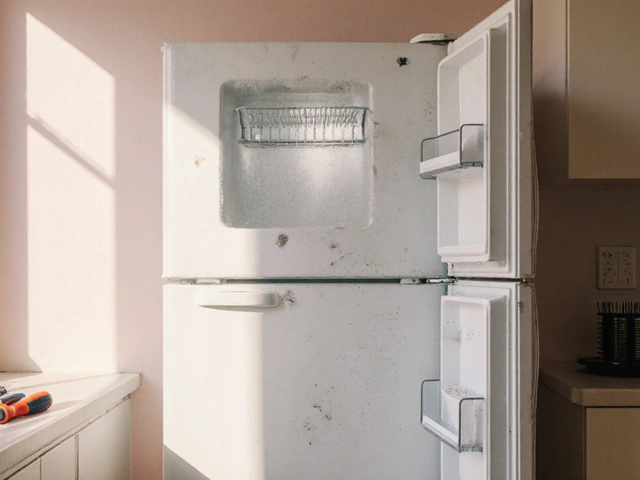
Check the back of the freezer compartment. If you see thick ice (more than 5mm), that’s your clue. Unplug the fridge, leave the door open for 24 hours, and let it thaw completely. Then plug it back in. If it cools properly after that, the thermostat was never the issue. You had a frozen coil caused by airflow blockage or a bad seal.
Compressor Failure Is Rare-But Costly
The compressor is the heart of the fridge. It’s also the most expensive part to replace-often $500-$800. And here’s the kicker: if your compressor fails, it’s usually because something else broke first. A dirty condenser coil, a failing start relay, or a seized fan motor can overload the compressor and burn it out. That’s why replacing just the compressor without fixing the root cause is a waste of money.
How do you know if it’s the compressor? Listen. If the fridge is completely silent-no hum, no buzz, no clicking-then unplug it, wait 10 minutes, and plug it back in. If you still hear nothing, the compressor might be dead. But if you hear a faint click and then silence, it’s more likely the start relay. That’s a $25 part you can swap yourself. You’ll find it on the side or back of the compressor. Just take a photo of the wiring before you disconnect it.
Condenser Coils Get Clogged-And No One Cleans Them
Most fridges have coils on the back or bottom that release heat. Dust, pet hair, and kitchen debris build up on them over time. In Brisbane’s humid climate, this clogging happens faster. When the coils are covered in gunk, the fridge can’t dump heat. The compressor works harder, gets hotter, and eventually shuts down to protect itself.
Check your coils every 6 months. Pull the fridge out from the wall, unplug it, and use a vacuum with a brush attachment to clean the coils. If they’re covered in dust balls, that’s your problem. Clean them, and your fridge will run cooler, quieter, and last longer. No tools needed. Just a vacuum and 15 minutes.
Fan Motors Die-And Nobody Thinks to Check
There are two fans in your fridge: one in the freezer (evaporator fan) and one at the back (condenser fan). If the evaporator fan stops, cold air doesn’t circulate into the fridge compartment. The freezer might still be cold, but the fridge side is warm. If the condenser fan stops, the coils overheat and the compressor shuts off.
Open the freezer. Listen. Do you hear a quiet whirring? If not, the evaporator fan might be dead. Unplug the fridge, remove the back panel of the freezer, and check if the fan blades spin freely. If they’re stuck, the motor’s seized. Replacement fans cost $40-$70. You can order them by model number. Same for the condenser fan-if it’s not spinning when the compressor kicks on, that’s your issue.
Defrost System Failure Is Sneaky
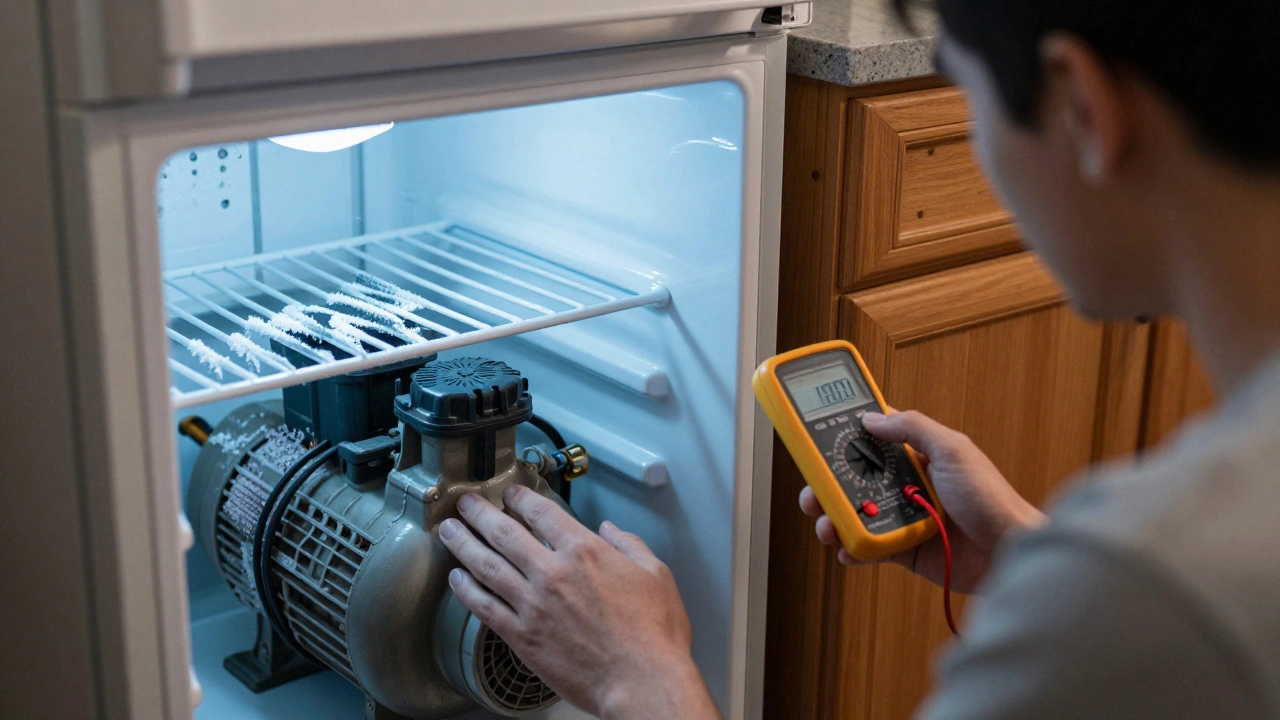
Every fridge has a defrost timer or heater that melts ice off the coils every few hours. If this system fails, ice builds up and blocks airflow. The fridge runs constantly but never gets cold. You’ll notice frost in the freezer, but the fridge side stays lukewarm.
This is common in older models. If your fridge is over 10 years old and you’ve got thick ice buildup even after cleaning the coils, the defrost heater or thermostat is likely broken. You can test it with a multimeter if you’re handy. If not, a technician can replace it for $150-$250. But don’t ignore it-ice buildup strains the compressor and shortens the fridge’s life.
What to Do Before You Call a Technician
Before you spend $100 on a service call, do this checklist:
- Check the door seal with a paper test.
- Unplug the fridge and let it thaw for 24 hours if there’s ice buildup.
- Clean the condenser coils with a vacuum.
- Listen for fan noise in the freezer and back.
- Plug it back in and wait 15 minutes. Does it start cooling?
If the fridge still doesn’t cool after all that, then it’s time to call someone. But you’ve already ruled out the top 5 causes. That saves you money.
When to Replace Instead of Repair
Here’s the hard truth: if your fridge is over 12 years old and needs a compressor or control board replaced, walk away. Modern fridges use 40% less energy. A new Energy Star-rated fridge in Australia costs around $800-$1,200. With rebates and old appliance trade-ins, you can get it for under $700. The electricity savings alone pay for it in 2-3 years.
Also, if your fridge uses R12 or R22 refrigerant (old, toxic gases), it’s not worth repairing. Those gases are banned. Even if you find someone to refill it, it’s illegal and environmentally harmful. New fridges use R600a, which is safer and more efficient.
Don’t fall for the "it’s just one part" story. A fridge is a system. If one major part fails, others are close behind. Fixing it once is cheap. Fixing it twice is expensive.