Water Heater Element Diagnostic Tool
Follow the steps below to determine if your water heater element is healthy, faulty, or has a ground issue.
Diagnostic Result
StatusYou step into the shower, and instead of that glorious blast of steam, you get a lukewarm drizzle. Or maybe your electric bill has quietly crept up while your showers have gotten shorter. Before you call a plumber or start shopping for a new unit, there’s a good chance the culprit is something small, cheap, and easy to fix: a heating element. This component is essentially the engine of an electric water heater, converting electricity into heat. When it fails, your system stops working efficiently or not at all. But how do you know for sure it’s the element and not the thermostat, the wiring, or the tank itself? Let’s walk through the clear signs and the simple tests that will tell you exactly what’s wrong.
The Most Common Signs Your Heating Element Has Failed
Water heaters don’t just stop working without warning. They usually send out distress signals first. If you notice any of these symptoms, your heating element is likely the suspect.
- Inconsistent Water Temperature: This is the classic sign. If your upper element works but the lower one doesn’t, you’ll get plenty of hot water initially, but it runs out quickly. You might find yourself taking short showers in the morning but having no hot water left for the evening dishes.
- Lukewarm Water Everywhere: If both elements are dead, or if the main breaker tripped due to a shorted element, you’ll get cold water from every tap in the house.
- Sudden Increase in Energy Bills: A failing element often struggles to heat water, running longer cycles to achieve the same temperature. In Brisbane, where electricity costs are climbing, this inefficiency hits your wallet hard. If your usage hasn’t changed but your bill has spiked by 15-20%, check the elements.
- Visible Damage or Leaks: Sometimes the problem is obvious. Look around the base of the element access panel. Are there signs of corrosion, rust, or moisture? A cracked element housing can leak water onto the insulation, causing further damage.
Why Do Heating Elements Fail?
It’s not just bad luck. Most element failures are predictable if you understand the causes. The primary enemy of any heating element is mineral buildup, also known as scale. In areas with hard water, calcium and magnesium deposits coat the element like a thick blanket. This layer insulates the metal from the water, meaning the element gets hotter than it should to transfer heat. Eventually, the internal wire melts or burns out.
Another common cause is dry firing. This happens when the water level inside the tank drops below the element-perhaps due to a leak or heavy usage-and the element continues to heat air instead of water. Since air doesn’t absorb heat as well as water, the element overheats and fails rapidly. If you’ve recently had plumbing work done or noticed a leak, this could be the reason.
Tools You Need for Diagnosis
You don’t need a degree in electrical engineering to diagnose this. With a few basic tools, you can pinpoint the issue in under 30 minutes. Here’s what you need:
- Multimeter: This is non-negotiable. It measures voltage, continuity, and resistance. A basic digital model from a local hardware store works fine.
- Voltage Tester: For safety. Always verify power is off before touching wires.
- Screwdrivers: Phillips and flathead to remove the access panels and wire covers.
- Insulated Gloves and Safety Glasses: Electricity and water are a dangerous mix. Protect yourself.
Step-by-Step Guide to Testing a Water Heater Element
Before you buy a replacement part, confirm the old one is actually broken. Follow these steps carefully. Remember, we’re dealing with mains electricity here, so caution is key.
- Turn Off the Power: Go to your circuit breaker panel and switch off the breaker labeled "Water Heater." Use your voltage tester on the terminals inside the heater to ensure there is zero voltage present. Never assume the breaker is off; always test.
- Access the Element: Remove the outer cover plate (usually held by screws) and peel back the insulation to reveal the inner plastic cover. Unscrew this to expose the two wires connected to the element.
- Disconnect the Wires: Label them if necessary (though most are symmetrical), then disconnect the wires from the element terminals. Keep them clear of each other.
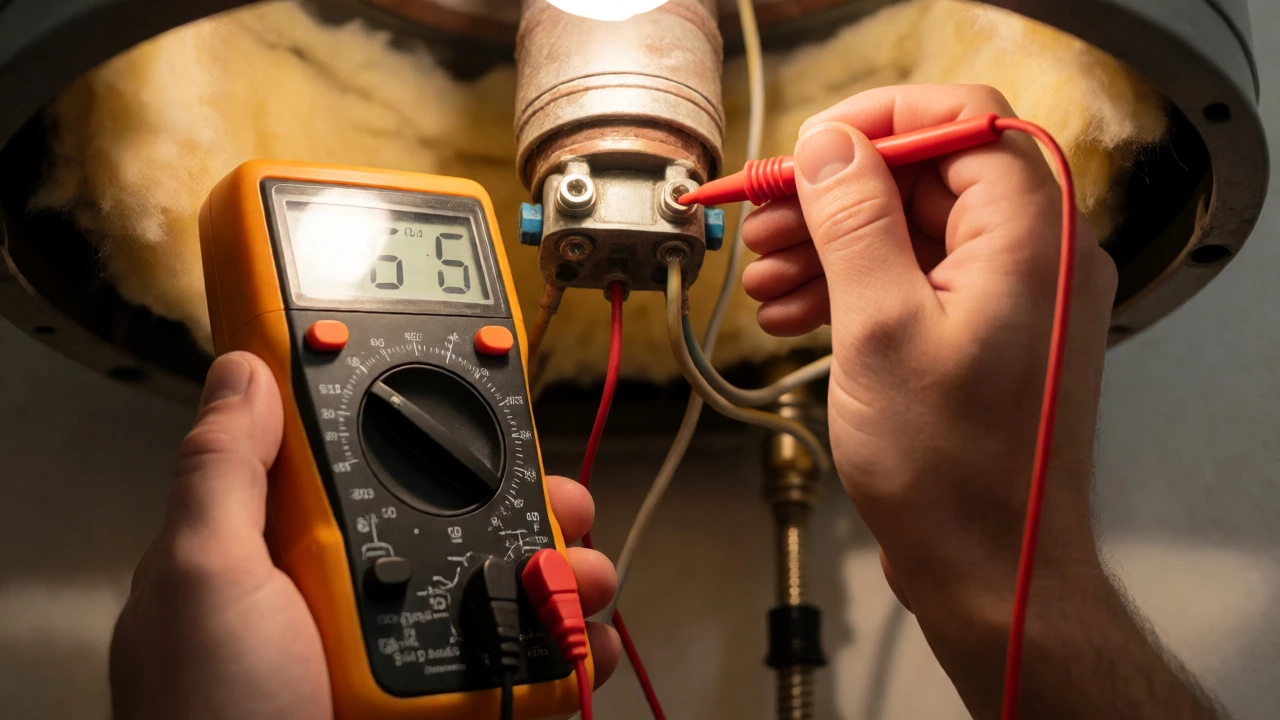
- Test for Continuity: Set your multimeter to the resistance (Ohms) setting. Touch one probe to each terminal of the element. A healthy element typically reads between 10 and 30 Ohms. If the reading is infinite (often displayed as "OL" or "1"), the internal wire is broken, and the element is dead.
- Test for Ground Faults: This is crucial. Place one probe on a terminal and the other on the bare metal casing of the element. A healthy element shows infinite resistance (no connection). If you get a low resistance reading, electricity is leaking to the ground. This trips breakers and wastes energy. Replace the element immediately.
Upper vs. Lower Element: Which One Is Broken?
Most residential electric water heaters have two elements: an upper and a lower. They don’t work simultaneously; the upper one kicks in first to heat the top of the tank, then the lower one takes over. Knowing which one failed helps you troubleshoot faster.
| Failed Component | Typical Symptom | Impact on Usage |
|---|---|---|
| Upper Element | Short supply of hot water; water cools down quickly during use. | You can take a quick shower, but not a bath. Dishes may finish with warm, not hot, water. |
| Lower Element | Water heats slowly; overall volume of hot water seems reduced. | Longer wait times for hot water; higher energy bills due to extended runtime. |
| Both Elements | No hot water at all; breaker may trip repeatedly. | System is effectively offline until repaired. |
When to Call a Professional
While replacing an element is a popular DIY job, some situations require a pro. If you discover significant corrosion on the tank threads, or if the element is seized and won’t budge after applying penetrating oil, forcing it can crack the tank. That turns a $30 part into a $1,500 replacement. Also, if you test the element and it’s fine, but the heater still doesn’t work, the issue might be the thermostat or high-limit switch. These components are interconnected, and misdiagnosing them can lead to repeated trips to the store. If you’re uncomfortable working near live circuits or removing insulated panels, hiring a licensed plumber in Brisbane ensures the job is done safely and correctly.
Preventing Future Element Failures
Once you’ve replaced the bad element, you want to avoid doing this again in six months. Prevention is straightforward:
- Flush Your Tank Annually: Sediment builds up at the bottom, covering the lower element. Draining a few gallons once a year removes this scale and extends element life.
- Install a Water Softener: If you live in a hard water area, a softener reduces mineral content, drastically slowing down scale buildup on elements.
- Check Thermostat Settings: Keeping your thermostat at 60°C (140°F) is efficient and safe. Higher temperatures accelerate mineral precipitation and scaling.
Can I replace a water heater element myself?
Yes, provided you are comfortable working with basic hand tools and understand electrical safety. The key is ensuring the power is completely off and the tank is drained enough to prevent flooding when you remove the element. If you encounter rusted threads or feel unsure about the wiring, consult a professional.
How much does it cost to replace a water heater element?
The part itself typically costs between $20 and $50 AUD depending on the wattage and brand. Labor costs vary, but a plumber might charge between $150 and $250 for the service, including diagnosis and installation. DIY saves the labor cost but requires time and proper tools.
Do water heater elements last forever?
No. The average lifespan of a heating element is 3 to 5 years, though this varies significantly based on water quality. Hard water can reduce this to 1-2 years, while soft water systems might see elements last 7+ years.
What does a bad water heater element look like?
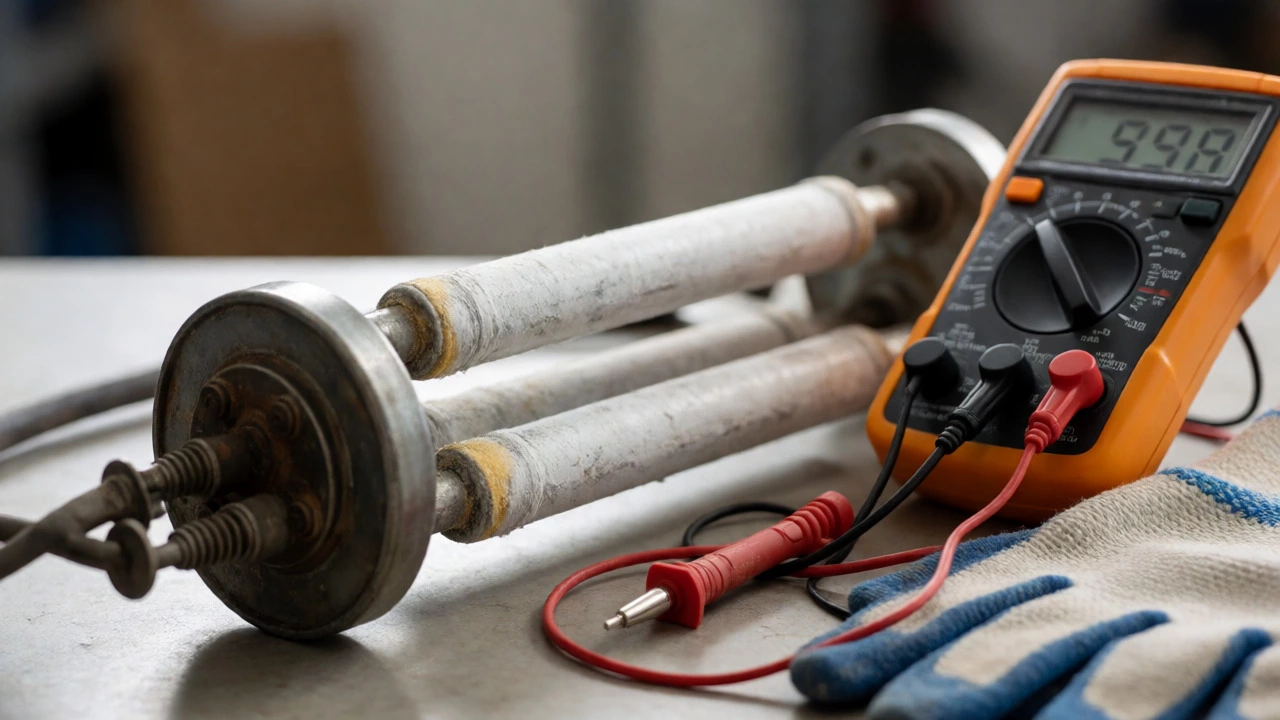
Visually, a bad element often appears covered in white or yellowish crusty scale. In severe cases, the metal sheath may show signs of blistering, cracking, or burn marks. However, some elements fail internally without visible external damage, which is why testing with a multimeter is essential.
Will a bad element trip the breaker?
Yes, frequently. If the internal wire breaks and touches the metal casing, it creates a short to ground. This draws excessive current, causing the circuit breaker to trip instantly or shortly after resetting. If your breaker keeps tripping, test the element for a ground fault.