Boiler Cycling Impact Calculator
Enter your home's details to see if "switching it off" is actually costing you money and shortening your boiler's life.
You probably have that one friend who insists on switching their boiler completely off at night to save money. Or maybe you do it yourself because the noise of the pump keeps you awake. But here is the uncomfortable truth: constantly killing the power to your heating system might be costing you more in repairs than it saves in gas bills.
The idea seems logical. If you aren't using it, why let it run? But modern heating systems are not lightbulbs. They are complex machines involving water pressure, combustion cycles, and delicate electronics. Understanding how a boiler actually works changes everything about how you should treat it during those cold Brisbane mornings or chilly nights.
Understanding the Modern Condensing Boiler
To answer whether switching it off causes damage, we first need to look at what sits in your cupboard or garage. Most homes built in the last two decades use condensing boilers. Unlike old-fashioned non-condensing models, these units recover heat from exhaust gases, making them significantly more efficient. They operate by heating water only when needed, thanks to smart thermostats and timers.
These units are designed for efficiency through modulation. This means the burner doesn't just switch between "full blast" and "off." It adjusts its flame height to match the exact heat demand of your home. When you manually cut the power, you bypass this intelligent control system. You force the entire machine into a hard stop and start cycle, which is mechanically stressful.
| Feature | Modulating Mode (Normal) | Hard Switching (On/Off) |
|---|---|---|
| Burner Action | Adjusts flame size smoothly | Full ignition followed by full shutdown |
| Thermal Stress | Low; components stay warm | High; rapid expansion and contraction |
| Energy Use | Optimized for current demand | Spike in energy to reheat cold pipes |
| Component Wear | Minimal wear on seals and valves | Accelerated wear on diverter valve and pump |
The Myth of Energy Savings
Let's tackle the biggest misconception head-on: turning the boiler off saves significant money. For most modern homes with decent insulation, the answer is no. In fact, it can increase costs. Here is the physics behind it.
Your house loses heat continuously. When the boiler is on standby but powered, the thermostat monitors room temperature. As soon as the temp drops below your set point, the boiler fires up gently to maintain comfort. If you turn the boiler off completely, the water in your radiators and pipes cools down to ambient temperature. To bring it back up, the boiler must work harder and longer. This is known as the "reheat penalty."
Think of it like driving a car. Is it cheaper to drive at a steady 60 km/h, or to stop at every red light and accelerate back up to speed? The constant stopping and starting burns more fuel. Similarly, reheating cold water requires a massive surge of energy compared to maintaining lukewarm water. Unless your home is poorly insulated and you are away for several days, leaving the boiler on with a lower setting is usually cheaper.
Mechanical Stress: Why Hard Stops Hurt
Every time you flip the switch, you trigger a chain reaction inside the unit. The gas valve closes abruptly. The fan spins down. The pump stops circulating water. When you turn it back on, everything has to restart from zero.
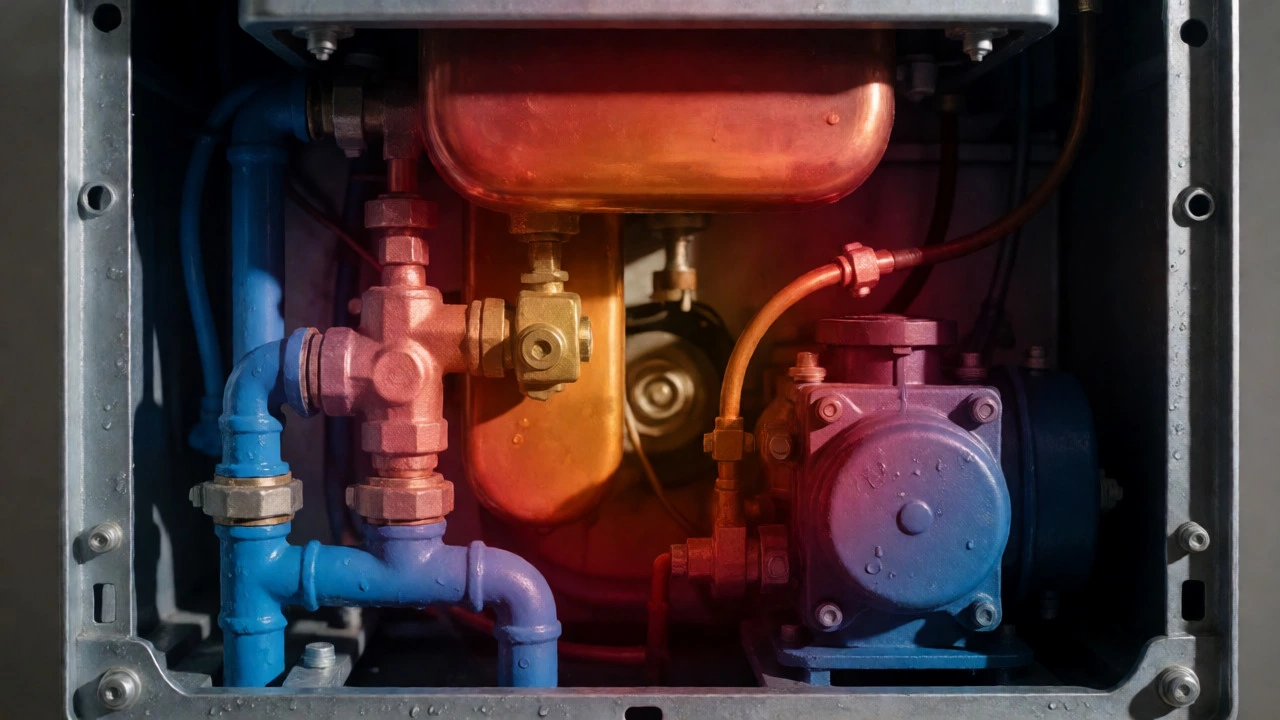
This process creates thermal shock. Metal components expand when hot and contract when cold. Rapid cycling accelerates this expansion and contraction. Over time, this stress can cause tiny cracks in the heat exchanger or weaken the seals around the combustion chamber. A leaking heat exchanger is one of the most expensive repairs you can face, often costing hundreds of dollars.
Then there is the diverter valve. This component directs hot water to either your radiators or your taps. It relies on lubrication and smooth movement. Frequent hard starts can dry out seals or cause the valve to stick. Once a diverter valve fails, you might lose heating while still having hot water, or vice versa. It’s a common failure point directly linked to aggressive usage patterns.
The Role of the Pump and Electronics
Modern boilers rely heavily on electronic control boards. These boards manage the ignition sequence, safety checks, and error codes. Power surges can occur when appliances are switched on and off frequently, especially if your local grid is unstable. While less common now due to better power supplies, repeated electrical interruptions can shorten the lifespan of sensitive circuitry.
The circulation pump is another victim of frequent switching. Pumps are designed to run continuously or for long durations. They have bearings that rely on water flow for cooling and lubrication. Short, frequent runs don't allow the pump to reach optimal operating temperature and stability. This can lead to premature bearing failure. Replacing a pump is easier than replacing a heat exchanger, but it’s still an unnecessary expense caused by misuse.
When Should You Actually Turn It Off?
So, is the rule "never turn it off" absolute? No. There are specific scenarios where powering down makes sense. Context matters.
- Long Absences: If you are going on holiday for more than 48 hours, turn the boiler off. The risk of freezing (in colder climates) or minor leaks outweighs the cost of reheating the house upon return.
- Summer Months: In Brisbane, winters are mild. If you don't need central heating for weeks, switching off the heating function via the programmer is fine. Keep the hot water function active unless you are away.
- Electrical Storms: If a severe storm is approaching, unplugging or switching off the boiler protects the control board from lightning-induced surges.
In all other cases, resist the urge to micromanage your boiler. Let the thermostat do its job. It is calibrated to balance comfort and efficiency far better than your finger on the switch ever could.
Signs Your Cycling Habits Are Hurting Your System
How do you know if your habit of switching the boiler on and off is causing problems? Watch for these warning signs. They indicate that the mechanical stress is taking its toll.
- Loud Banging or Kettling: This noise often comes from scale buildup or trapped air, but it can worsen if the system is repeatedly drained and refilled due to manual resets.
- Frequent Lockouts: If your boiler displays error codes and locks out after short runs, the ignition electrodes may be wearing out from constant sparking.
- Drip Leaks: Check underneath the boiler. Thermal stress can loosen pipe joints and seals, leading to slow drips.
- Inconsistent Heating: Radiators that take ages to warm up or cool down quickly suggest the pump or diverter valve is struggling with the load.
If you notice any of these issues, stop switching the boiler off manually. Call a professional technician. Continuing to abuse the system will likely turn a small repair into a major replacement.
Best Practices for Boiler Longevity
You want your boiler to last 15 years or more. That requires treating it like a high-performance engine, not a simple switch. Here is how to optimize its life without wasting energy.
Use programmable thermostats wisely. Set your heating to come on 30 minutes before you wake up rather than running all night. Lower the temperature slightly when you are asleep or out. This reduces the workload without forcing a hard stop.
Annual servicing is non-negotiable. A qualified engineer will clean the burner, check the gas pressure, and inspect the seals. They can spot early signs of wear that you might miss. Servicing also ensures the boiler modulates correctly, preventing the "short cycling" that damages components.
Finally, bleed your radiators once a year. Trapped air prevents efficient heat transfer, forcing the boiler to run longer than necessary. This indirect strain contributes to wear. Keeping the system balanced helps the boiler operate within its intended parameters.
Final Verdict: Leave It Alone
Turning your boiler on and off does not instantly break it, but it certainly wears it out faster. The mechanical and thermal stress from hard cycling outweighs the marginal energy savings for most households. Modern condensing boilers are smarter than we give them credit for. Trust the controls. Let the system modulate. Save your money for the annual service instead of emergency repairs.
Is it cheaper to leave the boiler on all day?
For well-insulated homes, yes. Leaving the boiler on a low setting allows it to maintain temperature efficiently using less energy than reheating a cold house from scratch. However, if your home is drafty or you are away for long periods, lowering the thermostat or turning it off may be more economical.
Does turning the boiler off at night save money?
Usually, no. The energy required to reheat the water in the pipes and radiators in the morning often exceeds the energy saved by keeping the house slightly cooler overnight. It is better to lower the temperature setting rather than cutting the power entirely.
What happens if I reset my boiler too often?
Frequent resetting indicates an underlying fault, such as low water pressure, a faulty sensor, or a blockage. Ignoring the root cause and simply resetting can mask serious issues, potentially leading to complete system failure or dangerous carbon monoxide leaks.
Can short cycling damage my boiler?
Yes. Short cycling occurs when the boiler turns on and off rapidly. This puts excessive strain on the gas valve, fan, and ignition system. It reduces efficiency and shortens the lifespan of key components. Ensure your boiler is correctly sized for your home to prevent this.
Should I turn off my boiler in summer?
You can disable the heating function in summer, but keep the hot water function active if you use it regularly. Turning off the entire unit is only recommended if you are away for extended periods. Otherwise, the convenience of instant hot water outweighs the negligible standby power consumption.