Refrigerator Repair vs. Replacement Calculator
Enter Your Details
Analysis & Recommendation
Enter values above to see if it makes financial sense to fix or replace your fridge.
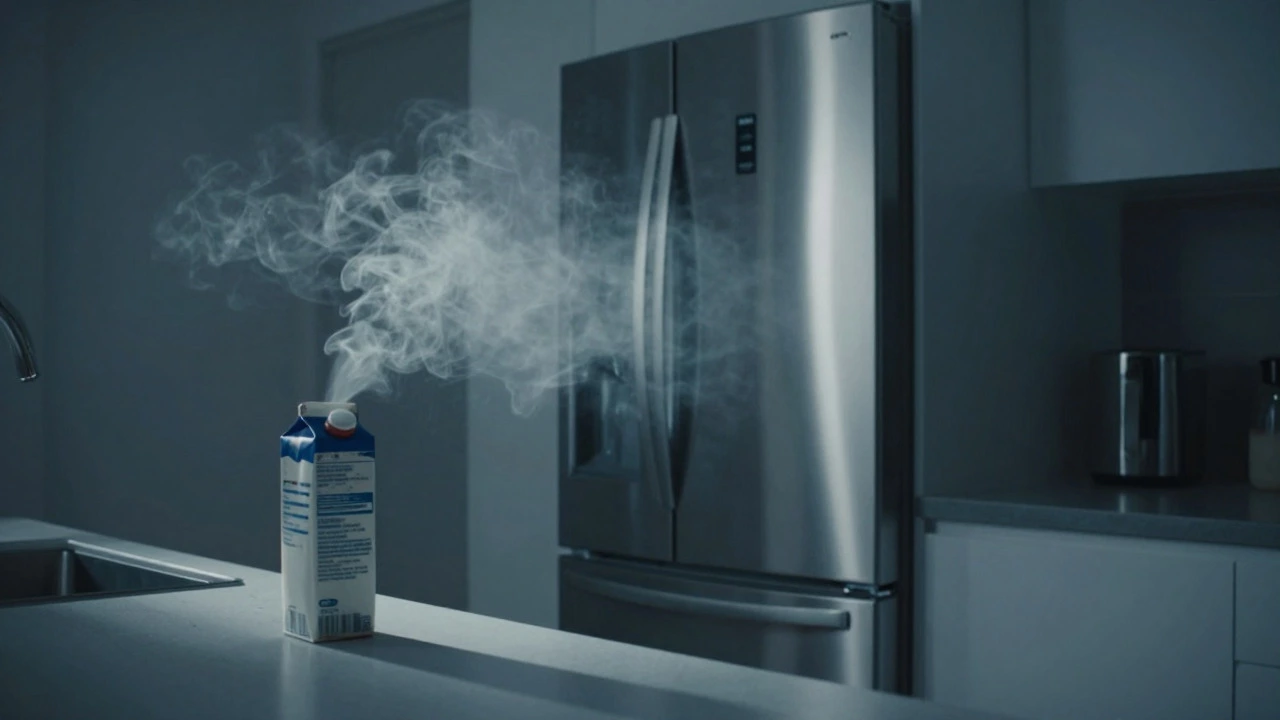
You wake up to a warm kitchen and the smell of spoiled milk. Your refrigerator has stopped cooling, and you are staring at a bill for repairs that feels too high for an appliance that is seven years old. The question on everyone’s mind is simple: should you pay to fix it, or is it time to buy a new one?
This is not just about the immediate cost of a part. It is about long-term value, energy bills, and whether your current unit still meets your needs. In this guide, we break down the math behind repairing versus replacing a seven-year-old fridge, helping you make a decision that saves money and stress.
The Age Factor: Where Does Seven Years Sit?
To understand if a repair is worth it, you first need to know what "old" means in the world of appliances. According to data from the U.S. Department of Energy and major manufacturers like Samsung and LG, the average lifespan of a standard refrigerator is between 10 and 15 years. High-end models with premium compressors can last up to 20 years, while budget units might start failing closer to the eight-year mark.
A seven-year-old fridge is in the middle ground. It is not ancient, but it is no longer young. Think of it like a car with 100,000 kilometers on the odometer. It might run fine today, but you are entering the period where major components-like the compressor or the sealed system-are likely to fail. If your fridge is a basic top-freezer model, it might have several good years left. If it is a complex French door or side-by-side model with ice makers and touchscreens, seven years is often when the electronics start giving up the ghost.
The 50% Rule: A Simple Financial Test
One of the most reliable ways to decide is to use the "50% rule." This heuristic suggests that if the cost of the repair is more than 50% of the price of a new replacement unit, you should replace it. Let’s look at some real numbers.
Assume a mid-range new refrigerator costs around $1,200 AUD. Half of that is $600. If your technician quotes you $400 for a new thermostat or damper motor, the repair makes financial sense. However, if they quote you $800 for a compressor replacement or a sealed system leak, you are better off buying a new fridge. You get a fresh warranty, modern features, and peace of mind.
Keep in mind that labor costs vary significantly. In cities like Brisbane, hourly rates for licensed technicians can range from $90 to $130 per hour, plus call-out fees. Always ask for a total estimate before authorizing any work. If the technician cannot give you a firm price without diagnosing further, factor in the diagnostic fee (usually $80-$100) as part of your total cost.
Energy Efficiency: The Hidden Cost of Old Fridges
Money spent on repairs is only half the story. The other half is what you pay every month to keep the fridge running. Refrigerators manufactured seven years ago are less efficient than those available today. Since 2019, energy standards have tightened, meaning newer models use significantly less electricity to maintain the same temperature.
An older fridge might consume 400-500 kWh per year, while a modern Energy Star-rated or equivalent Australian New Energy Efficient Label (NEEL) 5-star model might use only 250-300 kWh. At current electricity rates in Australia (approximately $0.30-$0.40 per kWh), an old fridge could be costing you an extra $60-$100 per year in power bills compared to a new one. Over five years, that adds up to $300-$500 in wasted energy costs.
If your current fridge runs constantly because the seals are worn or the insulation has degraded, these costs will be even higher. When calculating whether to repair, subtract these potential future energy savings from the cost of a new unit. This "total cost of ownership" approach often tips the scale toward replacement for units older than six or seven years.
Common Failures in 7-Year-Old Models
Not all breakdowns are created equal. Some issues are cheap and easy to fix; others signal the end of the line. Here are the most common problems we see in seven-year-old refrigerators:
- Thermostat or Control Board Failure: These electronic parts control the temperature. They can fail due to power surges or age. Replacement is usually moderate in cost ($150-$300 including labor) and extends the life of the fridge significantly.
- Door Seals (Gaskets): Worn seals let cold air escape, forcing the compressor to work harder. Replacing gaskets is inexpensive ($50-$100) and highly recommended, as it improves efficiency immediately.
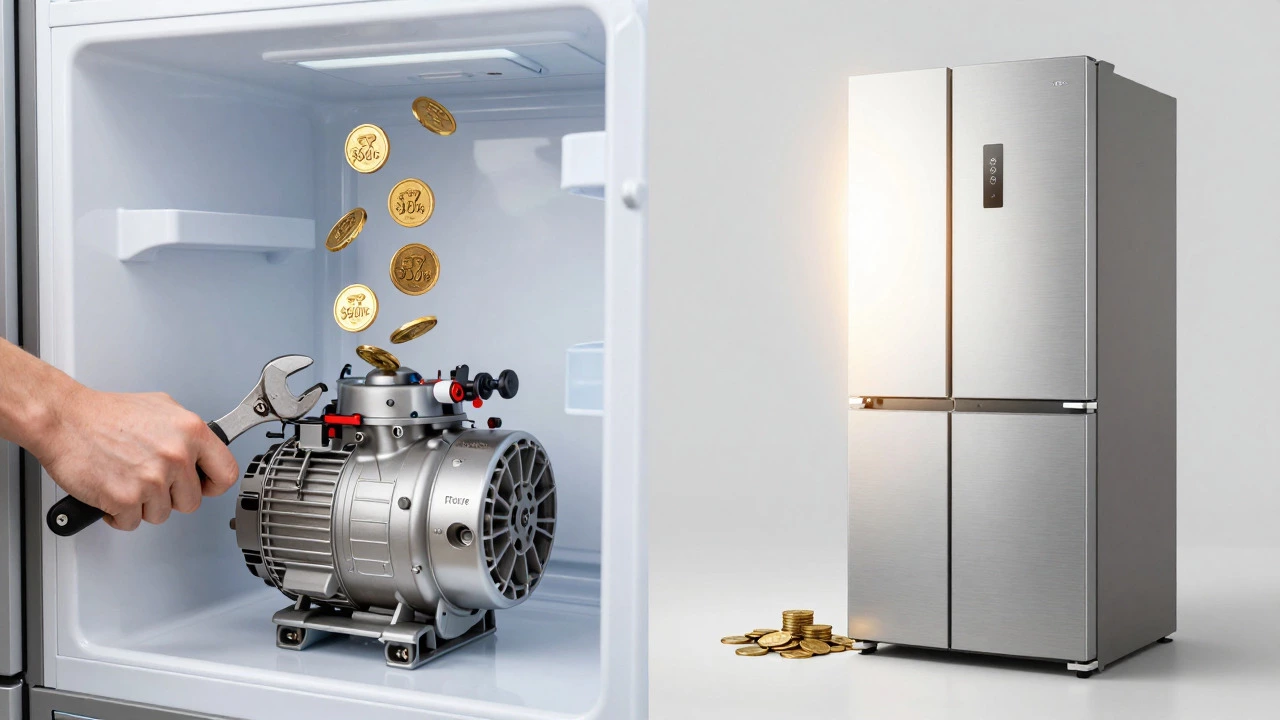
- Compressor Issues: The compressor is the heart of the fridge. If it is making loud noises, clicking, or not starting, the repair is expensive ($600-$900+). For a seven-year-old unit, this is almost always a sign to replace.
- Evaporator Fan Motor: This fan circulates cold air inside the freezer and fridge sections. It fails frequently and is relatively cheap to fix ($200-$350).
- Ice Maker Leaks: Common in side-by-side models. While annoying, fixing the water inlet valve or heater assembly is usually affordable ($150-$250).
If your issue falls into the "cheap to fix" category (seals, fans, thermostats), repairing is a smart move. If it involves the compressor or the sealed refrigerant system, think twice.
| Scenario | Estimated Cost | Recommendation | Reasoning |
|---|---|---|---|
| Worn Door Seals | $50 - $100 | Fix | Low cost, immediate energy savings, extends life by 1-2 years. |
| Fan Motor Failure | $200 - $350 | Fix | Moderate cost, critical component, likely to last another 5+ years. |
| Control Board Issue | $250 - $400 | Consider Fix | Depends on brand reliability. If other parts are healthy, fix it. |
| Compressor Failure | $600 - $900+ | Replace | High cost, indicates major wear, no warranty coverage. |
| Refrigerant Leak | $500 - $800+ | Replace | Complex repair, environmental regulations, poor ROI. |
Warranty Status and Future Risks
Most manufacturer warranties cover parts and labor for only one year, with extended options up to five years. By year seven, your fridge is completely out of warranty. This means you are paying full price for every single part and hour of labor. There is no safety net if another component fails next month.
New refrigerators come with a standard one-year warranty, and many brands offer optional extended plans. More importantly, new units come with modern materials and improved manufacturing techniques. If you fix your seven-year-old fridge today, you are betting that it will survive another three to five years without another major issue. Is that a bet you want to take?

Environmental Impact: To Toss or To Keep?
Many people feel guilty about throwing away a large appliance. E-waste is a growing problem, and landfills are filling up with old electronics. However, keeping an inefficient fridge running can have a larger carbon footprint over time due to higher energy consumption.
If you choose to repair, ensure you extend the life of the appliance by at least two to three years. If you choose to replace, recycle your old fridge properly. In Australia, many local councils and retailers offer free pickup and recycling services for old appliances. They recover valuable metals and safely dispose of refrigerants. Check with your council or the store where you buy your new fridge for their trade-in programs.
When to Definitely Buy New
Sometimes, the decision is obvious. You should skip the repair and buy a new refrigerator if:
- The repair cost exceeds $500: Unless it is a high-end luxury model, spending half the price of a new unit on an old one rarely pays off.
- You need different features: Do you hate the way your current fridge organizes food? Do you want an ice dispenser, a larger capacity, or a different style (like a French door)? Use the breakdown as an opportunity to upgrade your kitchen experience.
- The fridge is noisy or inefficient: If it vibrates loudly, cycles constantly, or leaves frost buildup despite being "frost-free," it is struggling. A new unit will be quieter and more reliable.
- Multiple repairs in the last year: If you have already fixed something else recently, the pattern suggests systemic failure. One more repair is likely coming soon.
Next Steps: How to Proceed
If you are leaning toward repair, get a second opinion. Call two different local technicians in Brisbane for quotes. Ask them specifically: "Given the age of this unit, do you recommend repair or replacement?" A honest technician will tell you if the fridge is nearing the end of its useful life.
If you are leaning toward replacement, measure your space carefully. Note the width, height, and depth, and check if your doors swing clear. Look for models with high energy ratings (5 stars or above on the NEEL label) to maximize long-term savings. Compare prices across major retailers and consider bundle deals that include delivery and removal of your old unit.
Ultimately, a seven-year-old refrigerator is at a crossroads. With a minor fix, it can serve you well for a few more years. But with a major failure, it is time to say goodbye and welcome a more efficient, reliable appliance into your home.
How much does it cost to repair a refrigerator in Australia?
Minor repairs like replacing door seals or fan motors typically cost between $150 and $350 AUD, including labor. Major repairs involving compressors or sealed systems can range from $600 to $900+ AUD. Diagnostic fees usually add another $80 to $100.
What is the average lifespan of a refrigerator?
The average lifespan of a refrigerator is 10 to 15 years. Basic top-freezer models often last longer, while complex built-in or side-by-side models may have a shorter functional life due to more electronic components.
Should I replace my fridge if it is 7 years old?
Not necessarily. Seven years is mid-life for many fridges. If the repair cost is low (under $300) and the issue is minor, fixing it is reasonable. However, if the repair is expensive (over $500) or involves the compressor, replacing it is usually the better financial choice due to improved energy efficiency in new models.
Are new refrigerators more energy efficient than older ones?
Yes. Energy standards have improved significantly over the last decade. A new 5-star rated fridge can use 30-40% less electricity than a model from seven years ago, leading to substantial savings on your annual power bills.
How do I recycle my old refrigerator?
Many appliance retailers offer free pickup and recycling when you buy a new fridge. Alternatively, contact your local council in Brisbane or other Australian cities for e-waste collection services. Never leave a fridge on the curb without arranging proper disposal, as refrigerants must be handled safely.