Freezer Failure Food Safety Checker
Follow the steps below to determine the safety status of your food items.
Disclaimer: This tool provides general guidelines. When in doubt, always follow the golden rule: "When in doubt, throw it out."
The honest answer is that it depends entirely on the temperature of the food and how long the power has been out. Most people panic and throw everything away, but you might be wasting hundreds of dollars of perfectly good groceries. Others keep things that are borderline dangerous, risking a nasty bout of food poisoning. The goal is to find the middle ground using a few basic rules of thumb and a meat thermometer.
Quick Guide to Saving Your Food
- Keep the door shut: Every time you open the freezer to "check" the food, you let out the cold air, speeding up the thaw.
- Check the crystals: If the food still has ice crystals on or in it, it's generally safe to refreeze.
- The 4-hour rule: Perishable foods usually stay safe for about 4 hours if the temperature remains below 40°F (4°C).
- When in doubt, throw it out: If you can't remember how long it's been warm or it smells off, don't risk it.
Understanding the Temperature Danger Zone
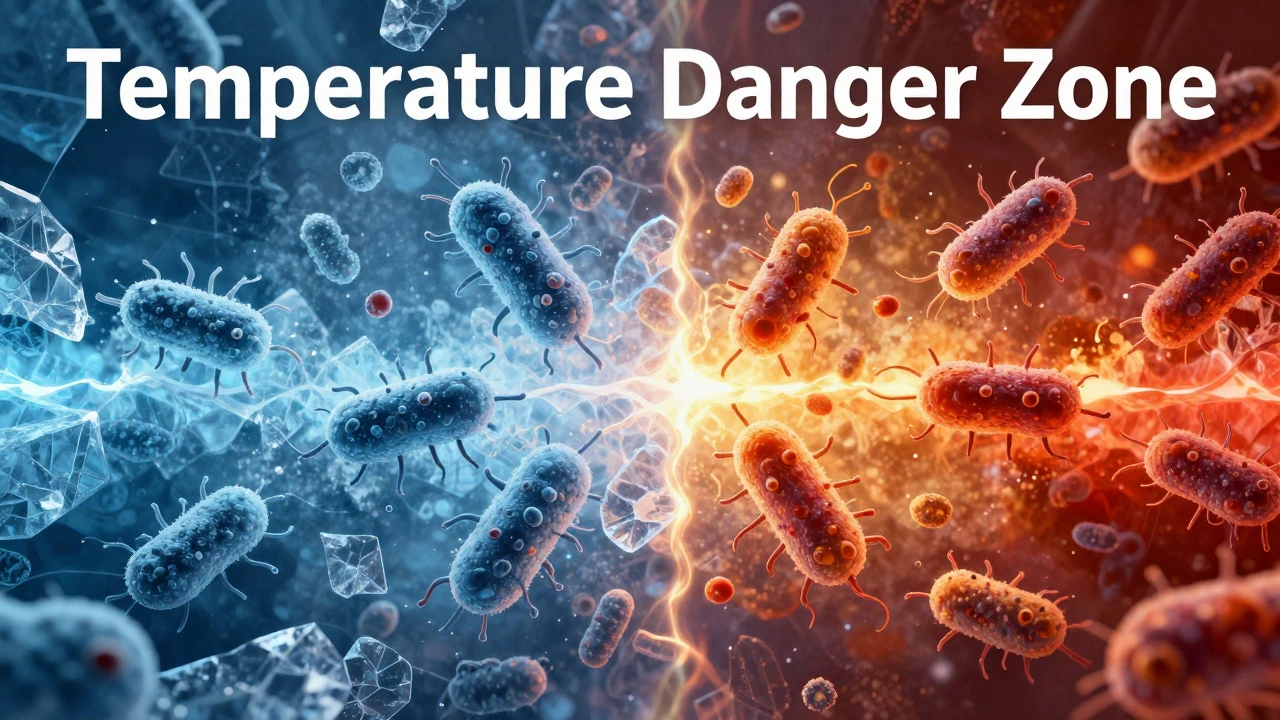
To make a smart decision, you need to understand what bacteria are doing inside your appliance. Bacteria love warmth. In the food industry, there is something called the Temperature Danger Zone, which is the range between 40°F and 140°F (4°C to 60°C). When your food hits this window, bacteria like Salmonella and Listeria start multiplying at an exponential rate.
A fully frozen freezer keeps food at 0°F (-18°C), which puts bacteria into a state of dormancy. They aren't dead, but they aren't growing. Once the Compressor stops pumping refrigerant and the internal temperature climbs, that dormant state ends. The clock starts ticking the moment your food crosses that 40°F threshold.
Which Foods are the Riskiest?
Not all frozen items are created equal. A bag of frozen spinach is much more forgiving than a raw turkey breast. You can categorize your freezer contents into three risk levels to decide what stays and what goes.
| Risk Level | Examples | Action Required |
|---|---|---|
| High Risk | Raw meat, poultry, fish, soft cheeses, cooked leftovers | Discard if above 40°F for more than 2 hours. |
| Medium Risk | Hard cheeses, salted meats, butter, some frozen vegetables | Check for spoilage; cook thoroughly if thawed. |
| Low Risk | Frozen fruit, bread, most processed snacks, ice cream (quality issue) | Safe if crystals remain; toss if completely melted/liquid. |
How to Safely Test Your Food
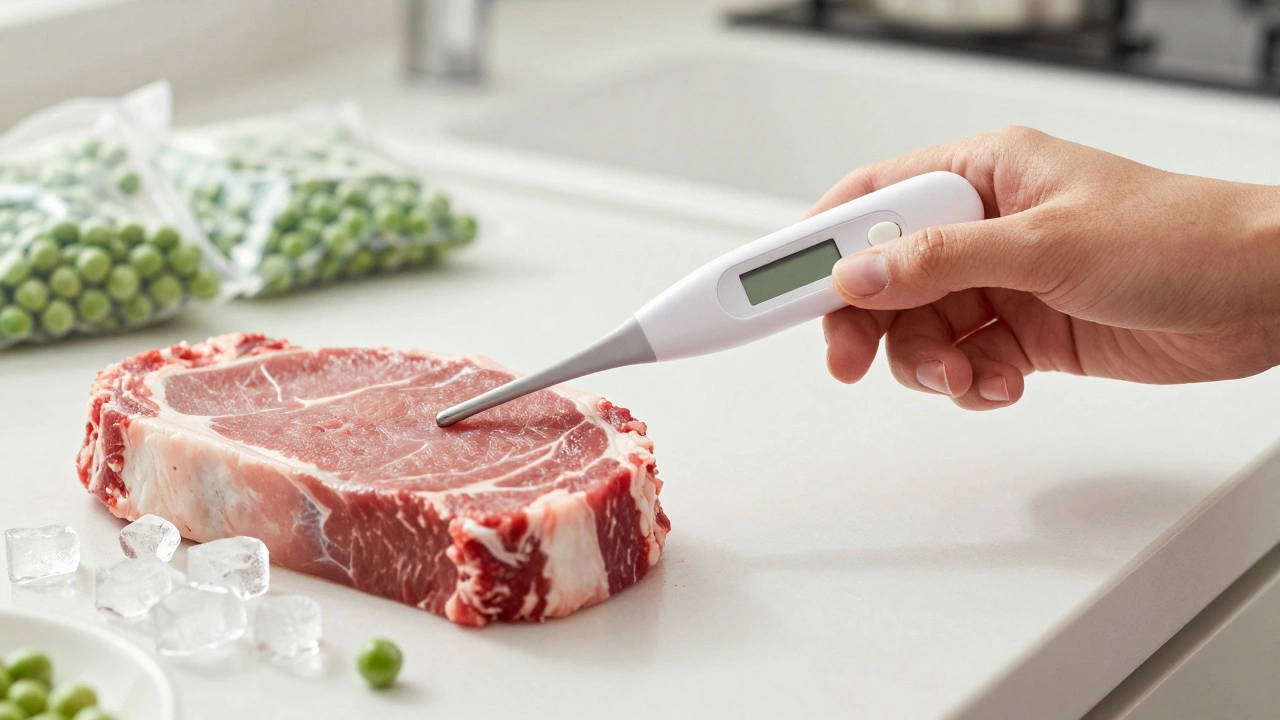
Don't rely on your hand to tell if something is "still cold." Your skin is not a calibrated thermometer. To get a real answer, use a digital probe thermometer. Insert it into the thickest part of the meat or the center of a container of soup.
- Measure the internal temperature: If the core of the food is still 40°F (4°C) or colder, it is safe to keep or refreeze.
- Look for ice crystals: If you don't have a thermometer, look for crystals. If the meat is thawed but still has ice shards, it's generally safe to put back in the freezer, though the texture might suffer.
- The Smell Test (The Last Resort): While bacteria that cause food poisoning often don't smell, a strong, sour, or ammonia-like odor is a clear sign that the food has decayed. If it smells "off," toss it immediately.
The Refreezing Dilemma: Quality vs. Safety
There is a big difference between food being safe to eat and food being good to eat. When food thaws and you refreeze it, you're dealing with a massive loss in quality. This happens because as the food thaws, the cell walls of the meat or vegetables break down. When you refreeze it, larger ice crystals form, which shred the texture further.
If you decide to keep thawed meat, the best move is to cook it immediately. Once cooked, you can freeze the meal again without any safety issues. This is a great way to save a batch of beef stew that has started to soften. However, avoid refreezing raw seafood or highly processed frozen dinners, as the texture usually becomes mushy and unappealing.
Common Causes of Freezer Failure
While you're sorting through your groceries, it's worth thinking about why this happened so you can prevent a second meltdown. Most freezer issues stem from a few common culprits. A failed Start Relay can prevent the compressor from kicking in, leaving your food to warm up while the lights inside still work.
Another frequent issue is a frosted-over Evaporator Coil. If the defrost heater fails, ice builds up around the coils, blocking the airflow. Your freezer might seem like it's working, but the temperature slowly creeps up because the cold air can't circulate. If you notice an unusual humming or a complete silence where the motor should be, you're likely looking at a mechanical failure that requires a professional technician.
Prevention Tips for the Future
To avoid this stress again, consider a few simple upgrades. First, install a cheap freezer alarm. These devices beep loudly the moment the internal temperature hits 15 or 20°F, giving you a head start before the food actually thaws.
Second, organize your food using the "block freezing" method. Group meats and heavy items together in the center of the freezer. A large mass of frozen food acts like a giant ice cube, keeping everything else cold for much longer than isolated bags of frozen peas would. Finally, keep a few bags of ice or frozen gel packs in the bottom. These provide a thermal buffer that can buy you an extra few hours of safety during a power outage.
Can I refreeze meat if it has thawed in the freezer?
Yes, provided the meat still contains ice crystals or its internal temperature is 40°F (4°C) or below. If the meat has completely thawed and stayed above 40°F for more than two hours, it is unsafe to refreeze and should be discarded or cooked immediately if the time window is short.
How long does a freezer keep food cold without power?
A full freezer will generally keep its temperature for about 48 hours if the door remains closed. A half-full freezer will hold the cold for about 24 hours. This is why packing your freezer with water jugs or extra ice is a great strategy for power outages.
Is it safe to eat thawed ice cream?
Generally, ice cream is safe to eat if it hasn't been warm for a long time, but the quality will be ruined. Once ice cream melts and then refreezes, it becomes grainy and icy. However, because it contains dairy and sugar, it can grow bacteria if it stays in the Danger Zone for too long, so use the same 2-hour rule for dairy.
What should I do if my freezer is leaking water during a failure?
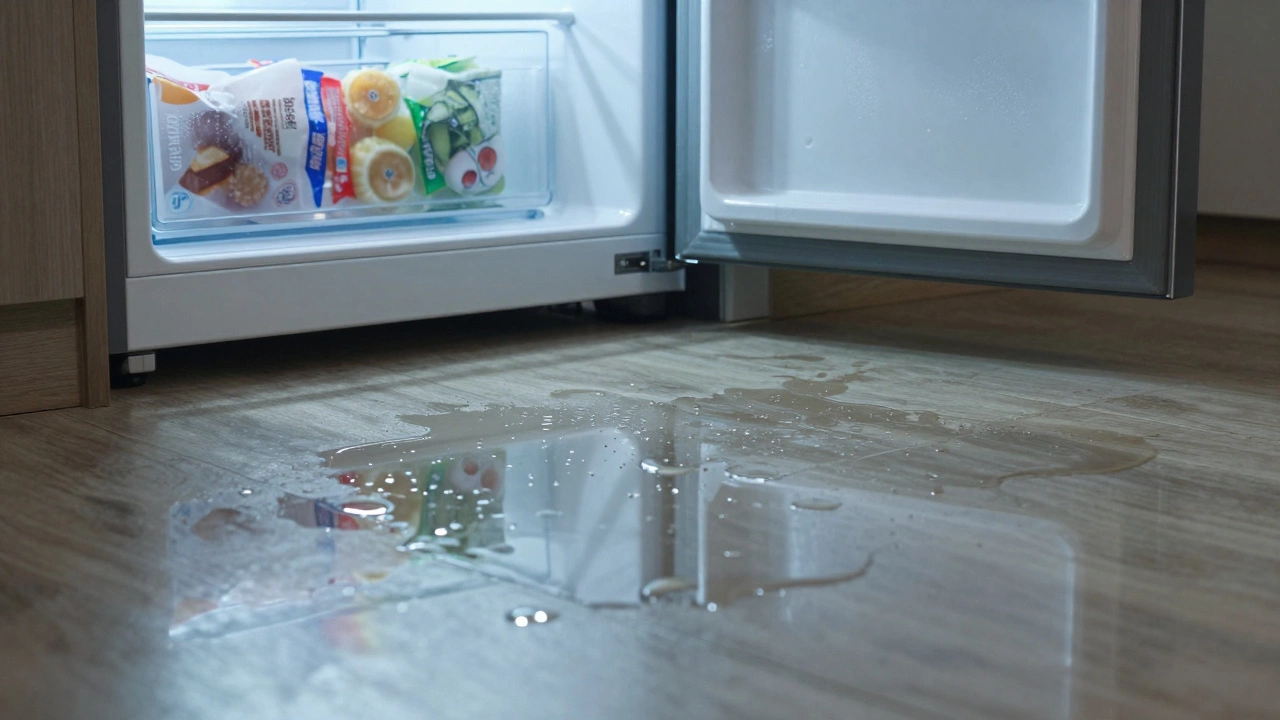
Leaking water is simply the result of the ice and frost melting. Use towels to prevent floor damage, but focus on the food first. If the leak is accompanied by a strange smell or a clicking sound from the back of the unit, it likely indicates a failed compressor or a refrigerant leak.
Can I use a cooler to save my food while waiting for repair?
Absolutely. Moving high-risk items like raw meat and dairy into a high-quality cooler with fresh ice is the best way to extend their life. Keep the cooler in a cool area of the house and avoid opening it frequently to maintain the temperature.