Repair vs. Replace Decision Tool
Select your brand to begin the assessment.
Rheem
Focus: Affordability & AvailabilityA.O. Smith
Focus: Durability & LongevityUnit Assessment
Recommendation
Reasoning:
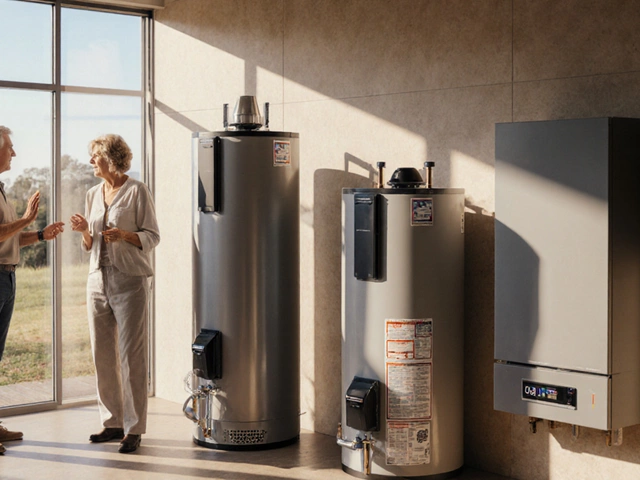
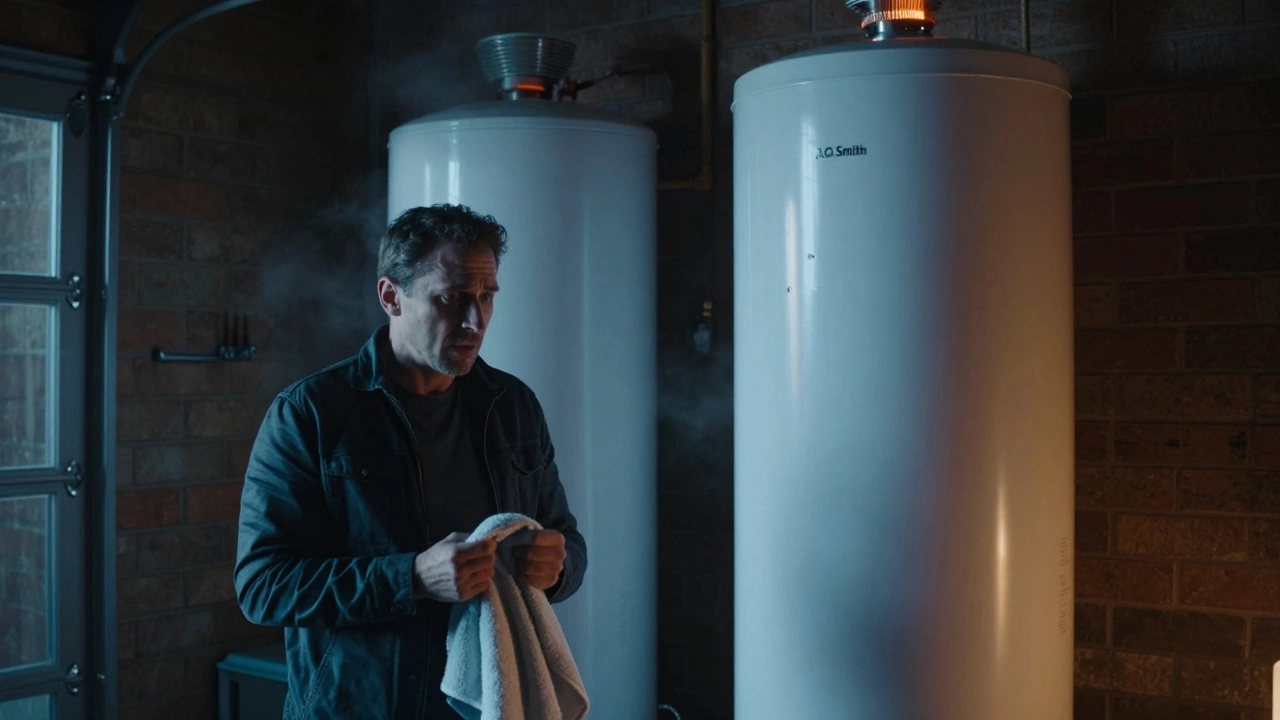
You stand in your laundry room or garage, staring at a tank that has suddenly stopped delivering hot water. The shower is cold, the dishes are grimy, and you’re wondering if this is just a minor glitch or the beginning of a costly replacement saga. If you own one of these units, you likely have either a Rheem or an AO Smith water heater. These two giants dominate the Australian market, but they approach heating technology from fundamentally different angles. One prioritizes accessibility and parts availability; the other bets everything on longevity and corrosion resistance. Knowing which side of the aisle your unit falls on changes how you troubleshoot it, how long you expect it to last, and whether you should repair it or rip it out entirely.
The Core Philosophy: Volume vs. Durability
To understand why these brands feel different when they break, you have to look at how they are built. Rheem is a mass-market manufacturer known for producing affordable, widely available water heaters with extensive service networks. Their strategy is volume. They sell millions of units globally, which means parts are cheap, technicians know them inside out, and finding a replacement model is easy. However, this affordability often comes at the cost of premium materials in their entry-level lines.
On the other hand, A.O. Smith is a heritage brand focused on durability, featuring proprietary corrosion-resistant coatings and robust construction. A.O. Smith markets itself as the "tank that lasts." They use thicker steel, better insulation, and their signature PowerVent or Glass-Lined tanks designed to resist the internal rust that kills most water heaters. You pay more upfront, but the expectation is a longer lifespan before catastrophic failure.
| Feature | Rheem | A.O. Smith |
|---|---|---|
| Primary Focus | Affordability & Availability | Durability & Longevity |
| Tank Lining | Standard Enamel (varies by tier) | PowerVent / Glass-Lined (Premium) |
| Warranty Structure | 6-10 Years (Tank), 1 Year Parts | 6-12 Years (Tank), 1 Year Parts |
| Parts Availability | High (Ubiquitous) | Moderate (Specialist Required) |
| Repair Complexity | Low to Moderate | Moderate |
| Best For | Budget-conscious buyers, rentals | Long-term homeowners, hard water areas |
Common Failure Points: What Actually Breaks?
When a water heater dies, it rarely does so quietly. It usually leaks, makes noise, or simply stops heating. Interestingly, both brands suffer from similar mechanical failures, but the root causes often differ due to material quality.
The Thermocouple and Gas Valve: In gas models, the thermocouple is the safety switch that shuts off gas if the pilot light goes out. On older Rheem units, these tend to degrade faster due to cheaper copper alloys. A.O. Smith uses slightly heavier gauge components here. If your pilot won’t stay lit, check the thermocouple first. Cleaning it might work, but replacement is often necessary. Rheem parts are generic enough that you can buy them at any hardware store. A.O. Smith parts are specific, so you might need to order online or visit a specialist.
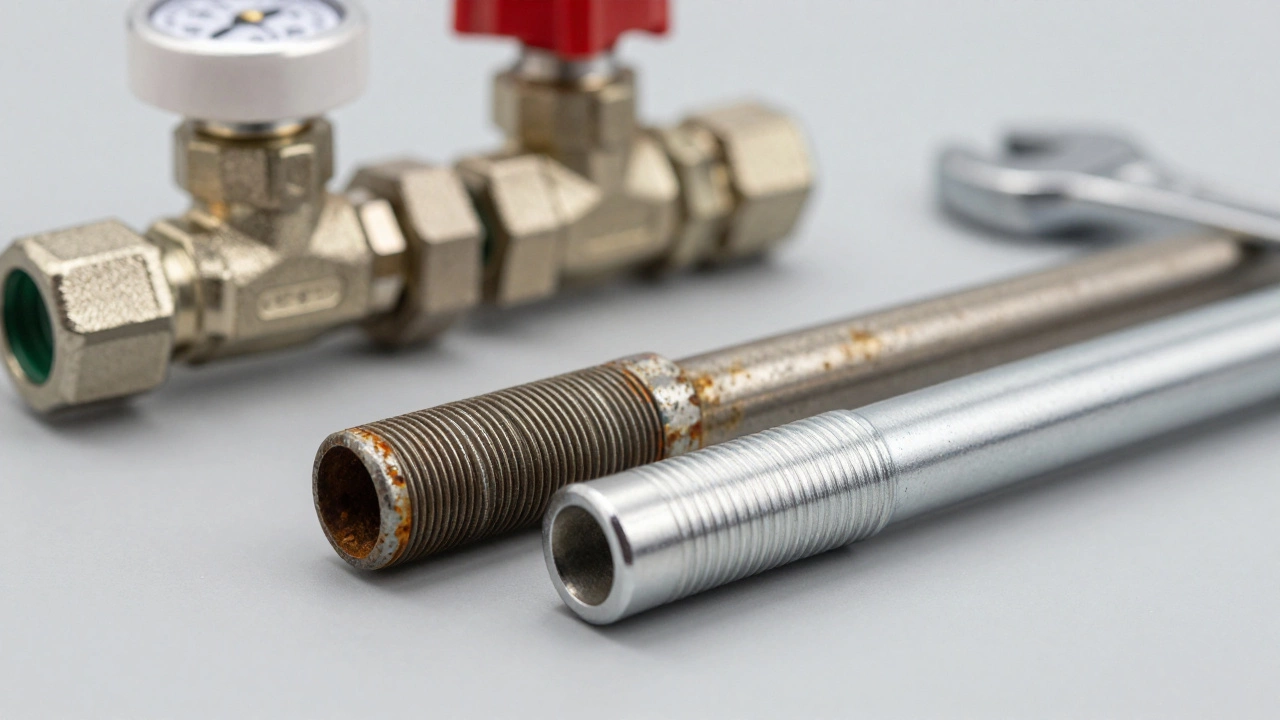
Anode Rod Depletion: This is the silent killer. The anode rod sacrifices itself to protect the steel tank from rust. In Brisbane’s hard water conditions, anodes deplete quickly. Rheem’s standard anodes are magnesium-based and dissolve rapidly in high-mineral water. A.O. Smith often includes aluminum-zinc-titanium alloy anodes in their higher-end models, which last significantly longer. If you haven’t checked your anode rod in three years, it’s likely gone. Once the anode is gone, the tank starts corroding from the inside out. This is where A.O. Smith’s superior lining shines-it buys you extra time even after the anode fails.
Sediment Buildup: Both brands struggle with sediment if not flushed annually. However, Rheem’s burner designs in lower-tier models are more prone to overheating when sediment covers the bottom of the tank. This leads to popping noises and eventual cracks in the tank floor. A.O. Smith’s burners are spaced differently and often include better heat distribution, reducing the risk of thermal shock cracking.
Repair vs. Replace: The Economic Decision
Here is the hard truth about water heater repair: labor costs in Australia have skyrocketed. A technician’s call-out fee plus one hour of labor can easily exceed $150-$200. If the problem is a simple thermostat or thermocouple, repair is worth it. But if the tank itself is leaking, no amount of repair will fix it. The tank is sealed; once it breaches, it’s dead.
If you have a Rheem under 8 years old, repairing minor issues like thermostats or dip tubes is usually cost-effective because parts are cheap ($20-$50). However, if your Rheem is over 10 years old and leaking, replace it. The likelihood of secondary failures is too high.
If you have an A.O. Smith, you might squeeze an extra 1-2 years out of it through careful maintenance because the tank integrity holds up better. But again, if there is water pooling around the base, do not attempt a repair. It’s a lost cause. The investment in an A.O. Smith was supposed to be longevity; if it failed prematurely, check your warranty. A.O. Smith honors warranties strictly, but you must prove installation compliance.
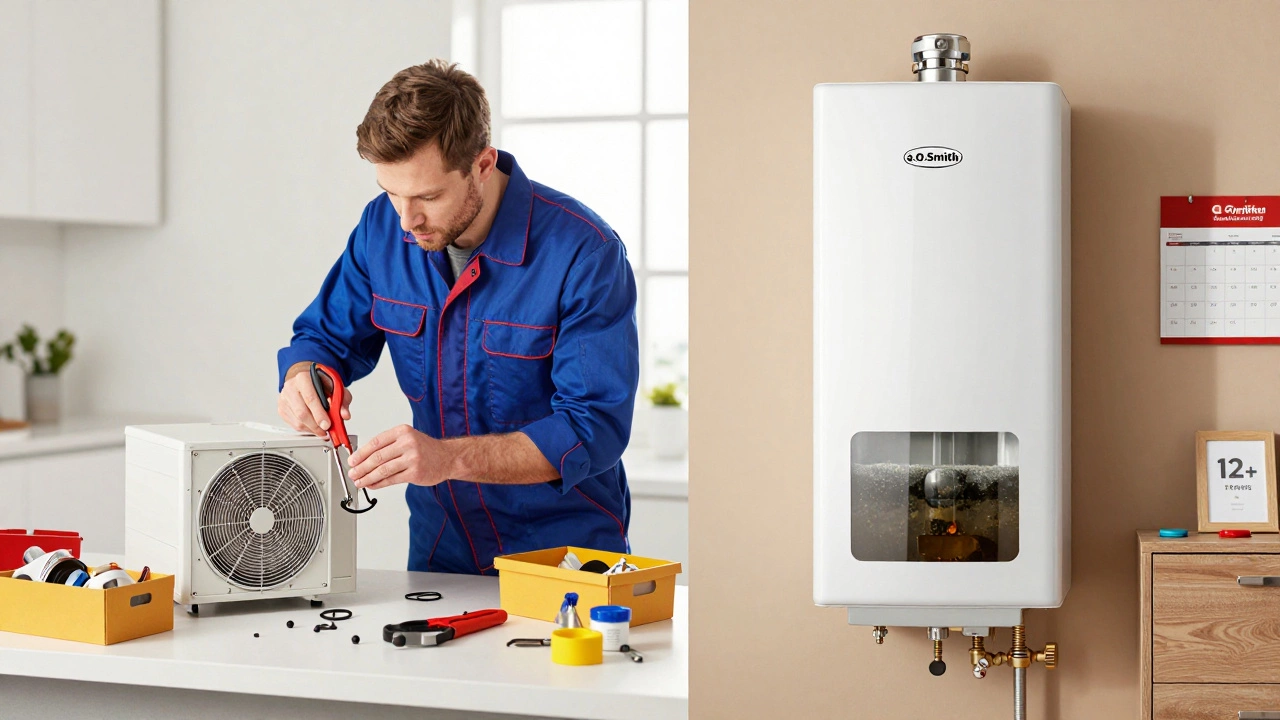
Maintenance Tips to Extend Lifespan
Regardless of the brand, neglect is the number one reason water heaters fail early. Here is what you can do yourself to avoid expensive calls:
- Flush the Tank Annually: Connect a hose to the drain valve and run it until the water runs clear. This removes sediment that insulates the water from the burner, causing inefficiency and overheating.
- Check the Temperature/Pressure (T&P) Relief Valve: Lift the lever once a year. Water should spurt out. If it doesn’t, replace the valve immediately. This is a critical safety device that prevents explosions.
- Inspect the Anode Rod: Every 3-5 years, remove the anode rod. If it’s covered in calcium or less than half an inch thick, replace it. This single action can add 3-5 years to your tank’s life.
- Monitor Water Pressure: High pressure stresses the tank seams. Ensure your home’s water pressure is below 80 PSI. Install a pressure reducing valve if it’s higher.
Which Brand Should You Choose Next Time?
If you are buying new, the decision depends on your priorities. Do you want the lowest upfront cost and easiest repairs? Go with Rheem. Their network is vast, and almost every plumber carries their parts. It’s the safe, pragmatic choice for rentals or budget builds.
Do you plan to stay in your home for 15+ years and want minimal hassle? Choose A.O. Smith. The higher initial price pays off in reduced maintenance frequency and a lower chance of mid-life tank failure. In areas with very hard water, A.O. Smith’s corrosion resistance is a genuine advantage, not just marketing fluff.
Ultimately, neither brand is "bad." Both produce reliable appliances when maintained correctly. The difference lies in the trade-off between immediate savings and long-term durability. Know which game you’re playing, and maintain your unit accordingly.
Is Rheem or AO Smith easier to repair?
Rheem is generally easier to repair due to its widespread availability of generic parts and familiarity among local plumbers. Most hardware stores stock Rheem thermostats and valves. A.O. Smith parts are more specialized and may require ordering from authorized distributors, potentially increasing wait times for repairs.
How long do Rheem and AO Smith water heaters typically last?
With proper maintenance, both brands typically last 8-12 years. However, A.O. Smith models often reach the upper end of this range (10-12+ years) due to superior tank linings and corrosion resistance. Rheem units may fail closer to the 8-year mark if subjected to hard water without regular anode rod replacement.
Can I replace a Rheem water heater with an AO Smith model?
Yes, but you must ensure the physical dimensions, gas line size, and venting requirements match. A.O. Smith tanks are sometimes slightly taller or wider than equivalent Rheem models. Always verify clearance space and consult a licensed plumber to ensure compliance with Australian gas fitting standards.
Why is my water heater making popping noises?
Popping noises are caused by sediment buildup at the bottom of the tank. As water heats, steam bubbles form under the sediment layer and escape with a pop. This indicates significant mineral accumulation. Flush the tank immediately to prevent overheating and potential tank damage.
Does the warranty cover labor costs for repairs?
No, standard warranties from both Rheem and A.O. Smith typically cover only the defective part or tank, not labor or call-out fees. Extended service plans may cover labor, but these are separate purchases. Always check your specific warranty terms before scheduling a repair.