DIY Washing Machine Repairs: Fix It Yourself or Call a Pro?
When your DIY washing machine, a home appliance you attempt to fix without professional help. Also known as home appliance repair, it saves money—but only if you know what you're doing. Most people think fixing a washing machine is just about tightening a hose or replacing a belt. But the truth? It’s more about understanding why it broke in the first place. A washing machine isn’t just a tub with a motor. It’s a system: water valves, pumps, drums, sensors, control boards, and belts all working together. One part fails, and the whole thing acts up. And if you guess at the fix, you could make it worse—or even dangerous.
Take the washing machine pump, the component that moves water in and out of the drum. If your machine won’t drain, it’s often the pump. But is it clogged? Broken? Or is the issue really the drain hose kinked behind the machine? Many DIYers replace the pump, only to find out the real problem was a sock stuck in the hose. Then they’re out $80 and still have a broken washer. Same with the washing machine door lock, a safety switch that prevents the drum from spinning if the door isn’t sealed. If the door won’t lock, it’s not always the lock. It could be a faulty sensor, a broken latch, or even a dirty seal. You don’t need to be an engineer to fix these—but you do need to check the simple stuff first.
There’s a big difference between washing machine maintenance, regular cleaning and checks to prevent breakdowns. and washing machine repair, fixing something that’s already broken. Cleaning the filter every month? That’s maintenance. Replacing a worn-out motor bearing? That’s repair. Most DIY fixes fail because people skip the prep. They don’t unplug the machine. They don’t drain the water. They don’t check the error codes. And then they wonder why the machine still doesn’t work. A quick look at the display—yes, even if it’s just flashing a code like F02 or E20—can save you hours of guesswork. Those codes aren’t there to confuse you. They’re there to tell you exactly where to look.
And let’s talk about parts. You can buy a new drum bearing for $25 online. But if you don’t know how to remove the outer casing, or you strip the screws trying to get to it, you’ve just turned a $25 fix into a $300 repair job. Some things are worth doing yourself: cleaning the detergent drawer, replacing a worn-out belt, unclogging the pump filter. Others? Not so much. If your machine is over 8 years old and the control board is glitching, it’s not a matter of "can I fix it?" It’s "should I?" Older machines use parts that are hard to find, and the labor to install them often costs more than a new entry-level model.
There’s no shame in calling a pro. But there’s also no reason to panic every time your washer makes a weird noise. The best DIYers don’t just follow YouTube videos—they ask the right questions first. Is the machine level? Are the hoses kinked? Did you overload it? Did it start after a power surge? Those are the clues that matter. The posts below give you real, step-by-step fixes for the most common washing machine problems you’ll actually face. No fluff. No theory. Just what works, what doesn’t, and when to stop trying and call someone who does this every day.
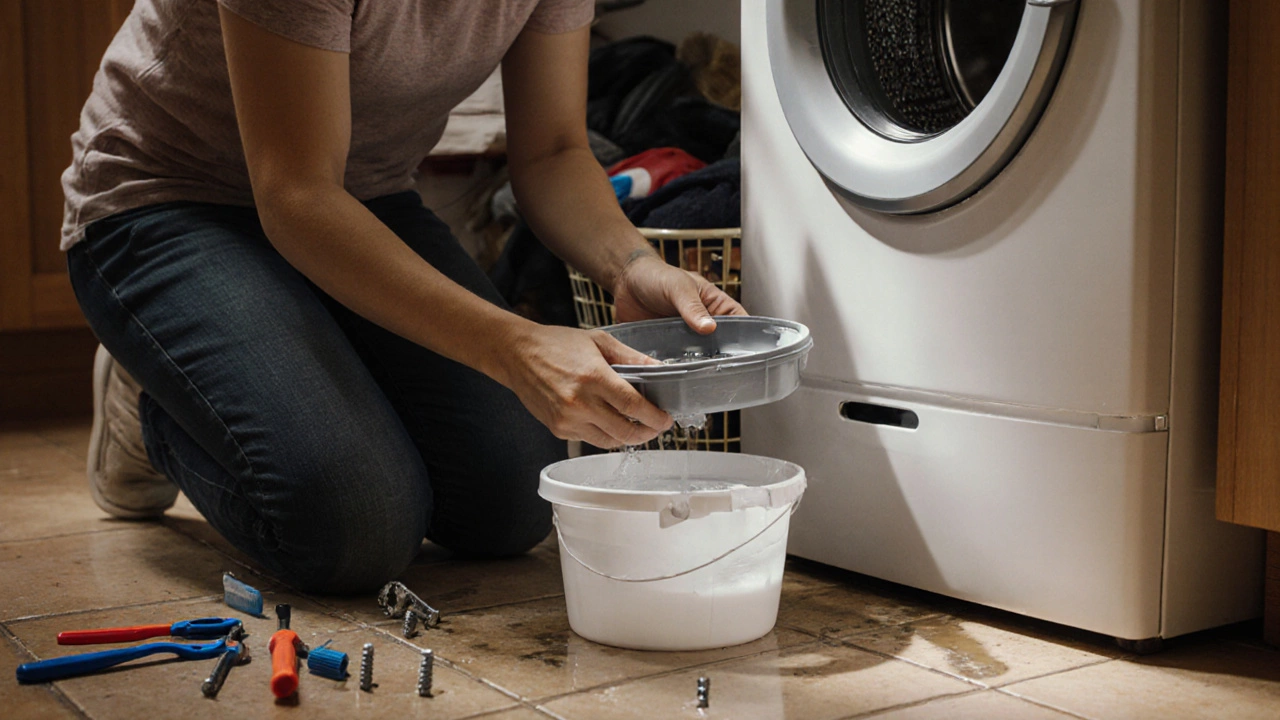
Can You Repair a Washing Machine Yourself? Simple Fixes That Actually Work
Learn how to fix common washing machine problems yourself-drain clogs, broken belts, faulty locks, and leaks-without calling a technician. Save money and extend your machine's life with simple DIY repairs.