If your electric oven isn’t heating properly, takes forever to preheat, or shuts off randomly, you’re not alone. These aren’t rare glitches-they’re everyday problems that show up in homes across Brisbane, Sydney, and beyond. Most people assume it’s time to replace the whole unit, but in many cases, it’s just one simple part failing. Knowing the most common faults can save you hundreds of dollars and a lot of frustration.
Heating Element Failure
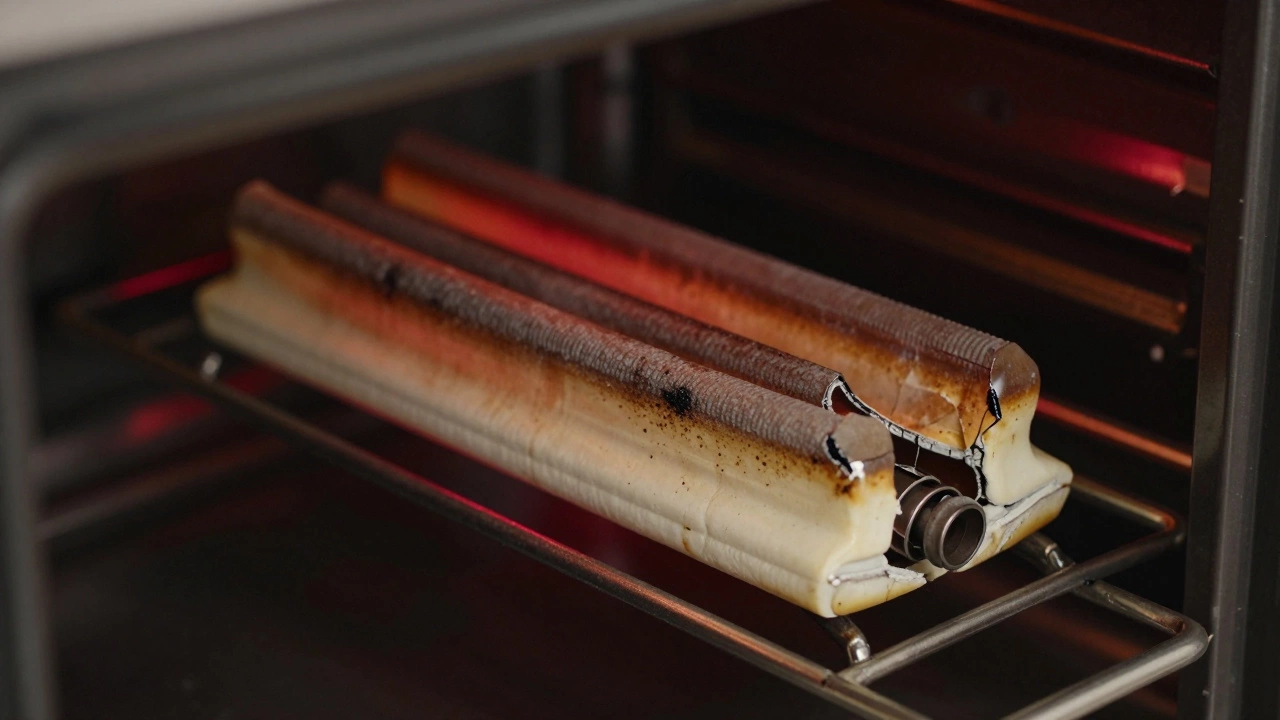
The heating element is the most likely culprit when your oven doesn’t get hot enough or heats unevenly. It’s the metal coil at the top and bottom of the oven cavity. Over time, the repeated expansion and contraction from heating and cooling causes tiny cracks. Eventually, the element breaks and stops conducting electricity.
You can spot a bad element easily. Look for visible gaps, blisters, or sections that are discolored or burnt black. If the element doesn’t glow red when the oven is on, it’s dead. Replacing it is straightforward: turn off the power, remove the two screws holding it in place, unplug the wires, and swap in a new one. Most elements cost under $80 and fit standard models from brands like Bosch, Electrolux, and Samsung.
Thermostat or Temperature Sensor Malfunction
Even if the element works fine, your oven might still cook food unevenly or burn things on the bottom. That’s often a sign of a faulty thermostat or temperature sensor. These components tell the oven when to turn the heat on and off. If they’re off by just 20°C, your cookies will be burnt while your roast stays raw.
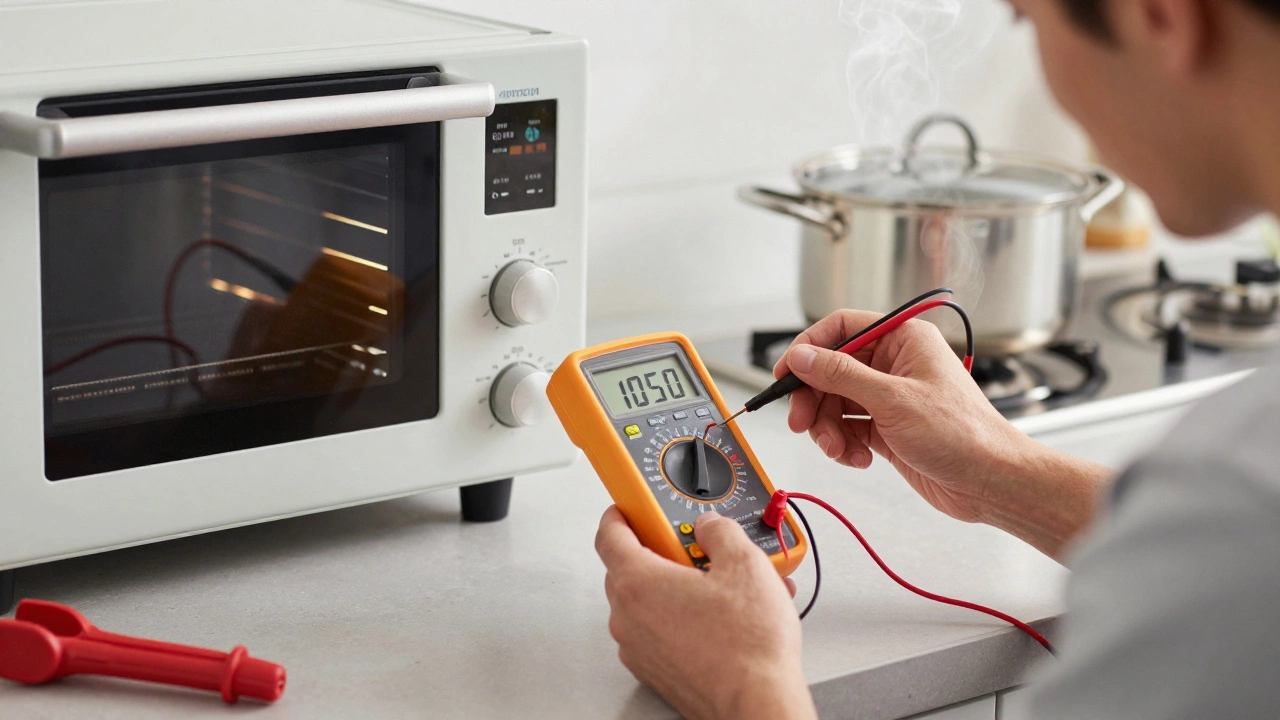
Thermostats are mechanical and wear out after years of use. Temperature sensors are electronic and can fail due to moisture buildup or grease accumulation. To test it, use a multimeter to check resistance. At room temperature, a working sensor reads between 1000 and 1100 ohms. If it reads zero or infinity, it’s dead. Replacement sensors cost between $40 and $70. Don’t try to clean or repair them-replace them outright.
Door Seal or Gasket Failure
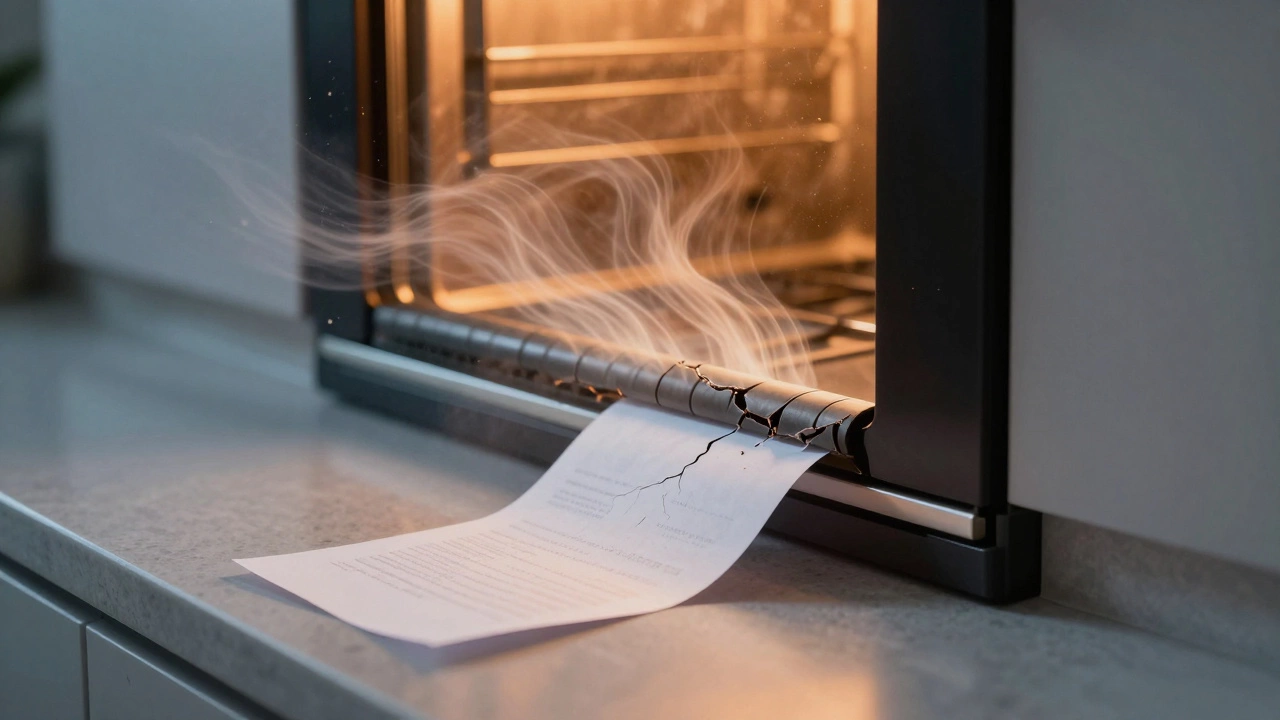
A broken door seal might not stop your oven from heating, but it’ll make it work way harder-and that means higher bills. The rubber gasket around the oven door keeps heat inside. If it’s cracked, brittle, or pulled away from the frame, heat escapes. You’ll notice the oven taking longer to reach temperature, or the door itself feels hot to the touch when it’s running.
Check the seal by closing a piece of paper in the door. If you can pull it out easily, the seal isn’t holding. Replacing it is cheap and simple: peel off the old gasket, clean the groove, and snap the new one in. Most gaskets cost under $30. Ignoring this issue doesn’t just waste energy-it puts extra strain on the heating element and thermostat, shortening their life.
Control Board or Relay Issues
Modern electric ovens have digital control boards that manage everything: timing, temperature, fan speed, and even self-cleaning cycles. When these boards fail, symptoms are confusing. The oven might turn on but not heat. The display might show error codes like E1, F3, or C0. Sometimes, the oven works for a few minutes, then shuts off completely.
Relays on the control board are the most common failure point. They’re tiny switches that handle high current to the heating elements. After years of use, they get stuck open or closed. You can’t repair them-you need a new control board. Prices range from $150 to $300, depending on the model. Before replacing it, make sure the issue isn’t just a blown fuse or a loose wire. Many people replace the board unnecessarily because they didn’t check simpler fixes first.
Igniter or Bake Element Connection Problems
In some electric ovens, especially older models, the bake element connects through a terminal block inside the back panel. Over time, these terminals get corroded from heat and moisture. You might see white powdery residue, or the wires might be loose or melted.
If the oven doesn’t heat in bake mode but the broil element works fine, check the bake element’s connection. Turn off the power, remove the back panel, and inspect the terminals. Clean corrosion with a wire brush and baking soda paste. Tighten any loose screws. If the terminal block is cracked or charred, replace the whole assembly. It’s a $50 part that can fix the problem without replacing the whole oven.
Power Supply Issues
Electric ovens need 240 volts to run properly. If your house has an old or overloaded circuit, the oven might not get enough power. Symptoms include weak heating, flickering lights when the oven turns on, or the oven shutting off mid-cycle.
Check your circuit breaker. If it trips when you turn on the oven, that’s a red flag. Most ovens require a dedicated 40-amp double-pole breaker. If your home was built before 2000, the wiring might not support modern oven demands. A licensed electrician should test the voltage at the outlet and check for proper grounding. Don’t try to fix this yourself-electrical faults here can cause fires.
Self-Cleaning Cycle Damage
Many people use the self-cleaning function once a year. It sounds convenient, but it’s one of the biggest killers of oven components. The cycle heats the oven to over 500°C. That extreme heat can warp the door seal, crack the interior enamel, and fry the temperature sensor or control board.
If your oven started having problems after using self-clean, that’s no coincidence. The high heat stresses every part. Avoid using this feature more than once a year, and never run it if the oven is full of grease. Use oven cleaners and a sponge instead. If you must use self-clean, remove racks and wipe out heavy spills first.
What to Do When Your Oven Fails
Don’t panic. Most electric oven failures are fixable. Start by checking the simplest things: Is the oven plugged in? Is the circuit breaker tripped? Did you accidentally turn on the timer or child lock?
Next, test the heating element visually and with a multimeter. Check the door seal. Look for error codes on the display. If you’re unsure, take a photo of the error code and search for your oven model online-manufacturers often list what each code means.
Only replace parts you’re sure are faulty. Buying the wrong part is expensive and frustrating. Keep the old part until you’re certain the new one works. If you’re not comfortable with electrical testing, call a technician. A $100 service call is cheaper than a $1000 oven.
Preventing Future Problems
Regular maintenance stops most oven failures before they start.
- Wipe spills immediately-grease and sugar buildup can damage elements and sensors.
- Don’t use abrasive cleaners on the interior-stick to mild soap and water.
- Check the door seal every six months.
- Replace the oven light bulb with the correct wattage-wrong bulbs can overheat the control panel.
- Run the self-clean cycle no more than once a year, and only when the oven is mostly clean.
Most electric ovens last 10 to 15 years. With basic care, yours can make it to the end of that range without major repairs.
Why does my electric oven take so long to preheat?
A slow preheat usually means one of three things: a weak heating element, a faulty temperature sensor, or a damaged door seal. The element might be partially broken, the sensor might be reading the wrong temperature, or heat could be leaking out. Check all three before assuming the oven is failing.
Can a dirty oven cause it to stop working?
Yes. Heavy grease buildup around the heating element or temperature sensor can insulate them, making them overheat and fail. Carbonized food debris can also create electrical shorts. Clean spills regularly, and never let grease sit for weeks. A quick wipe after each use extends the life of your oven.
Is it worth repairing an older electric oven?
If your oven is under 10 years old and the repair cost is under $250, it’s usually worth fixing. For ovens older than 15 years, replacement is often better-parts are harder to find, and efficiency drops significantly. Newer models use 20-30% less energy and have better temperature control.
Why does my oven turn off by itself during cooking?
This usually points to a faulty control board, overheating due to a blocked vent, or a tripped thermal fuse. If it shuts off after 20 minutes, the thermal fuse may have activated to prevent overheating. If it shuts off randomly, the control board is likely failing. Check for blocked vents behind the oven and listen for clicking sounds-that’s the relay switching off.
Do all electric ovens have the same parts?
No. While most have heating elements, thermostats, and door seals, the design varies by brand and model. Some use separate bake and broil elements, others combine them. Newer ovens have digital sensors and touch controls; older ones use dials and mechanical thermostats. Always match the part number from your oven’s manual or label inside the door frame.