Food Safety Calculator
When your freezer stops freezing, your food doesn’t just get warm-it starts to spoil. Ice cream turns into a puddle. Meat develops an off smell. Frozen vegetables lose their texture and become mushy. And if this happens overnight, you’re looking at hundreds of dollars in lost food and possible health risks. This isn’t just an inconvenience. It’s a crisis in your kitchen.
Why Your Freezer Stopped Freezing
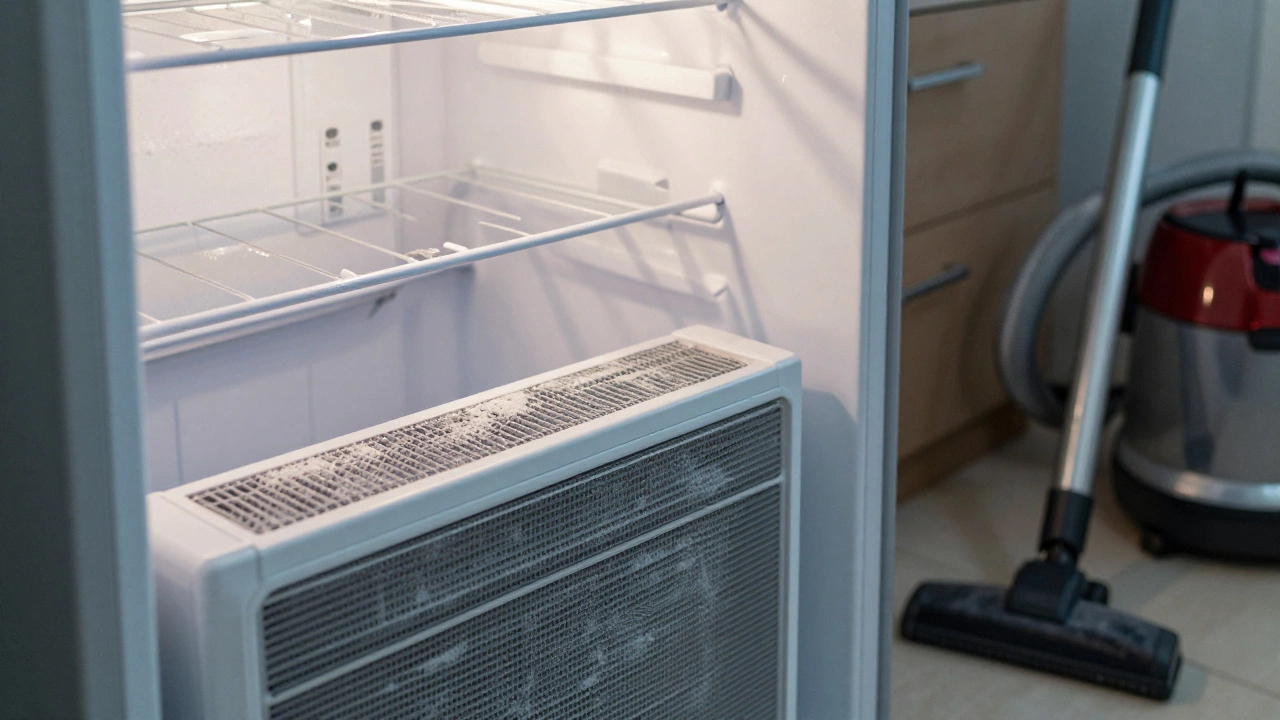
Your freezer doesn’t just turn off randomly. Something broke, got clogged, or failed. The most common reasons are simple, but they’re often ignored until it’s too late.The condenser coils are the first place to check. These are the metal coils at the back or bottom of your freezer that release heat. Over time, dust, pet hair, and crumbs build up on them. When that happens, the freezer can’t cool properly. It runs nonstop but never gets cold enough. A dirty coil is the #1 reason freezers fail to freeze in homes with pets or dusty garages.
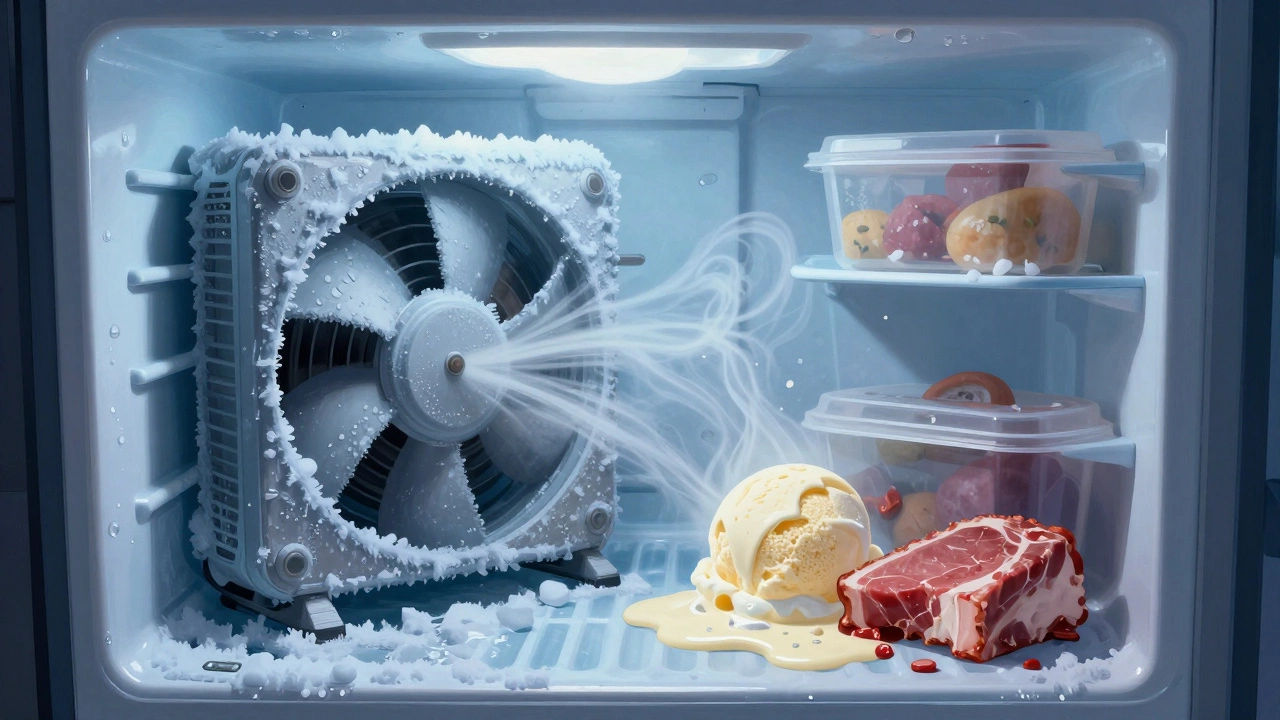
Next, look at the evaporator fan. This small fan inside the freezer pulls cold air from the coils and blows it into the compartment. If the fan is stuck, broken, or covered in ice, cold air doesn’t circulate. You’ll feel warm air when you open the door, even if the compressor is running. A silent freezer doesn’t mean it’s working-it means the fan has quit.
The thermostat could be faulty. It’s the little dial or digital sensor that tells the freezer when to turn on and off. If it’s stuck in the wrong position, the freezer thinks it’s cold enough when it’s not. Try turning the temperature dial to the coldest setting and wait 24 hours. If nothing changes, the thermostat likely needs replacing.
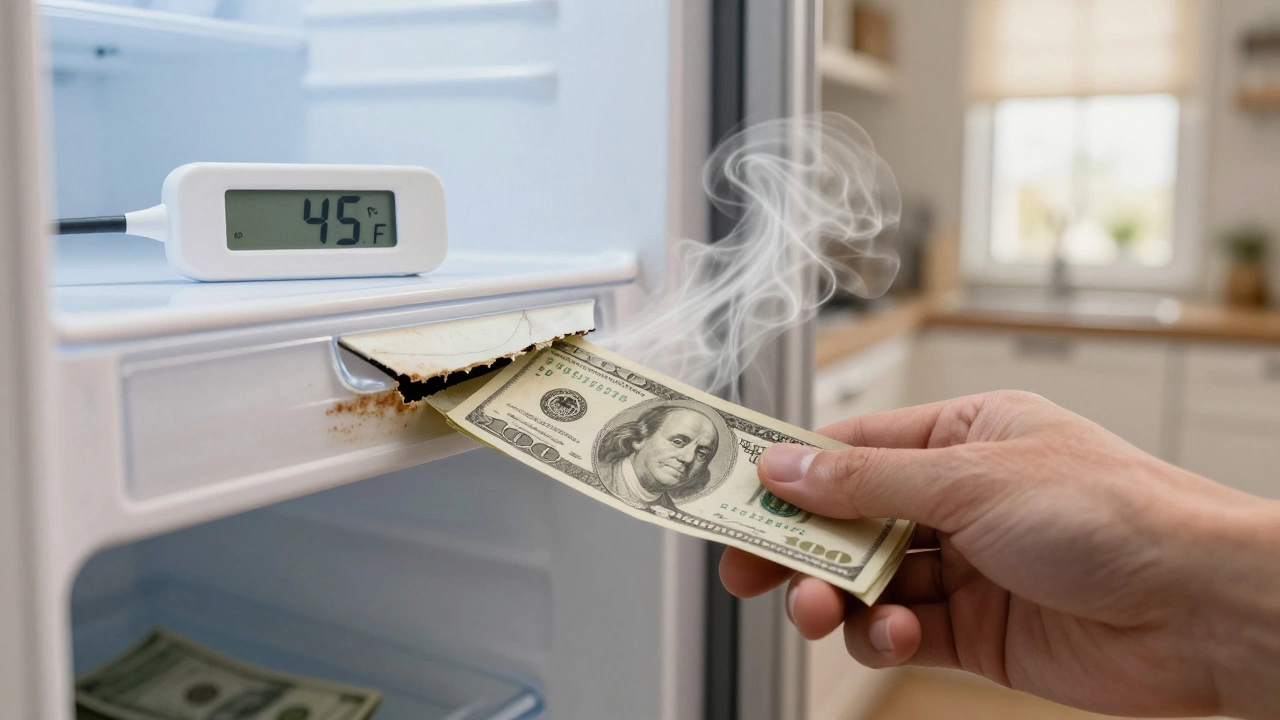
Don’t overlook the door seal. A cracked, warped, or dirty gasket lets warm air sneak in. Test it by closing a dollar bill in the door. If you can pull it out easily, the seal is bad. You’ll notice frost buildup around the edges or ice forming on the inside walls. Replacing the gasket costs less than $50 and takes 20 minutes.
And then there’s the compressor. It’s the heart of the system. If it’s dead, the freezer won’t cool at all. You might hear a loud hum, then silence. Or no sound at all. Compressors rarely fail unless the unit is over 10 years old or has been overworked. If you suspect this, don’t guess-call a pro.
What Happens to Your Food
When the temperature in your freezer rises above 0°F (-18°C), bacteria start growing again. It doesn’t happen overnight, but it happens faster than you think.After 12 hours at 25°F (-4°C), ice cream softens and loses its structure. After 24 hours, raw meat begins to develop harmful bacteria like Salmonella and E. coli. Frozen vegetables turn slimy. Bread gets freezer burn and becomes dry and crumbly. And once food thaws completely, refreezing it won’t make it safe again.
The USDA says any food that has been above 40°F (4°C) for more than two hours should be thrown out. That includes meat, poultry, seafood, dairy, and cooked leftovers. Even if it looks fine, it’s not safe. No amount of reheating will kill all the bacteria that grow during thawing.
If your freezer went out during a power outage, check the temperature with a thermometer. If it’s still below 40°F, you’re probably okay. If it’s higher, don’t risk it. Spoiled food doesn’t always smell bad-some bacteria don’t produce odor.
Quick Fixes You Can Do Today
You don’t need to call a technician right away. Here’s what you can do before spending money:- Unplug the freezer for 5 minutes, then plug it back in. This resets the control board and can fix minor glitches.
- Clean the condenser coils with a vacuum or coil brush. Do this every six months to prevent problems.
- Check the door seal. Wipe it down with warm soapy water and dry it. If it’s cracked or stiff, replace it.
- Make sure the freezer isn’t packed too full. Air needs to circulate. Leave space between items.
- Move the freezer away from the wall if it’s pushed right up. It needs at least 2 inches of space for airflow.
- Set the temperature to the coldest setting and wait 24 hours. If it doesn’t get colder, the thermostat or compressor is the issue.
If none of these work, you’re dealing with a deeper problem. Don’t keep trying to fix it yourself. You could damage the compressor or waste more electricity.
When to Call a Professional
You should call a repair technician if:- The freezer runs constantly but stays warm
- You hear clicking or buzzing but no cooling
- The compressor is hot to the touch and silent
- There’s a strange smell (like burning plastic or oil)
- The freezer is over 10 years old and the repair cost is more than half the price of a new one
A technician will check the refrigerant levels, test the compressor, and inspect the control board. They’ll know if the system is low on coolant-a sign of a leak. Refrigerant leaks are serious. They’re illegal to refill without proper certification, and they’ll keep happening unless the leak is sealed.
Don’t try to refill refrigerant yourself. It’s not like topping off your car’s oil. You need special tools, training, and EPA certification. DIY kits don’t fix leaks-they just delay the problem.
Preventing This From Happening Again
Prevention is cheaper than repair. Here’s how to keep your freezer running for years:- Clean the coils every six months. Use a vacuum with a brush attachment.
- Check the door seal monthly. Wipe it clean and test the seal with the dollar bill trick.
- Keep the freezer at least 1/3 full. Frozen items help maintain cold temperature during outages.
- Avoid opening the door more than necessary. Every time you open it, warm air rushes in.
- Don’t put hot food directly in the freezer. Let it cool to room temperature first.
- Replace the freezer if it’s over 12 years old. New models use 40% less energy and cool faster.
Modern freezers have digital displays that show temperature and alert you if something’s wrong. Older models don’t. If yours doesn’t, consider upgrading. The energy savings alone pay for a new unit in 3-5 years.
What to Do Right Now
If your freezer stopped freezing today:- Move perishable food to a cooler with ice packs or a friend’s freezer.
- Keep the freezer door closed. Even a broken freezer holds cold longer than you think.
- Check the temperature with a thermometer. If it’s above 40°F, start tossing food.
- Unplug the unit to stop it from wasting electricity.
- Call a repair technician within 24 hours. Delaying makes repairs harder and more expensive.
Don’t wait until your food smells bad. By then, it’s already unsafe.
Why is my freezer running but not cold?
If your freezer is running but not cold, the most likely causes are dirty condenser coils, a broken evaporator fan, or a faulty thermostat. The compressor may be working, but without proper airflow or temperature control, it can’t cool the interior. Clean the coils, check the fan, and test the thermostat setting. If none of those fix it, the refrigerant may be low or the compressor is failing.
Can I still eat food that thawed and refroze?
No. Once food has thawed completely and reached temperatures above 40°F (4°C), bacteria begin to multiply. Refreezing it doesn’t kill those bacteria-it just pauses their growth. Eating refrozen food puts you at risk for food poisoning. When in doubt, throw it out. It’s not worth the health risk.
How long can a freezer go without power before food spoils?
A full freezer can keep food frozen for up to 48 hours without power, if the door stays closed. A half-full freezer lasts about 24 hours. The key is minimizing how often you open the door. Keep a thermometer inside to monitor the temperature. If it rises above 40°F, food safety is compromised.
Is it worth repairing an old freezer?
If your freezer is over 10 years old, repairs often cost more than half the price of a new one. New models are 40-50% more energy efficient and have better temperature control. If the compressor is failing or there’s a refrigerant leak, replacement is usually the better choice. Repairing a 15-year-old freezer is like fixing a 20-year-old car-it might work for a while, but it’s not reliable.
What causes frost buildup inside the freezer?
Frost buildup usually means warm air is leaking in-often from a damaged door seal. It can also happen if the defrost timer or heater is broken, causing ice to accumulate on the evaporator coils. If frost is thick and uneven, check the gasket first. If it’s even and thick across the back wall, the defrost system may need repair.