If your washing machine suddenly stops spinning, leaks water all over the floor, or just makes a loud grinding noise before shutting off, you’re not alone. These aren’t random glitches-they’re classic signs of specific parts wearing out. In Brisbane, where hard water and heavy laundry loads are the norm, washing machines often show their age faster than you’d expect. The good news? Most failures happen in just a few key areas. Knowing which parts break most often saves you time, money, and a lot of frustration.
Drain Pump: The Most Common Culprit
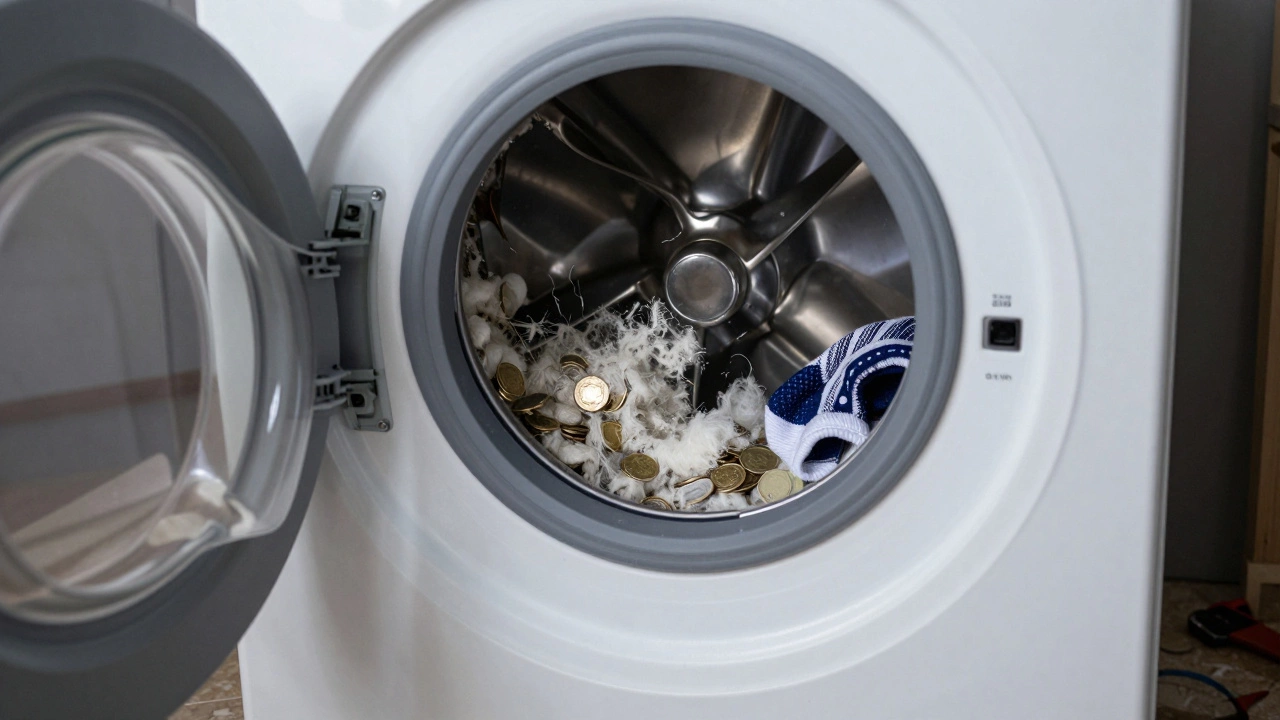
The drain pump is the heart of your machine’s water removal system. It’s a small, motor-driven impeller that pushes water out through the hose. Over time, lint, coins, buttons, and even socks get sucked into it. These get caught in the impeller blades, causing it to jam, overheat, or burn out. You’ll know it’s failing if the machine fills and washes fine but never drains. No spin cycle. No final rinse. Just water sitting there.
Most drain pumps last 5-7 years, but in homes with lots of laundry, they can go sooner. A simple fix? Unplug the machine, remove the front panel, and check the pump for blockages. Sometimes, a quick clean fixes it. If the motor is dead, replacing the pump costs between $80 and $150, depending on the model.
Door Lock Assembly: Why It Won’t Start
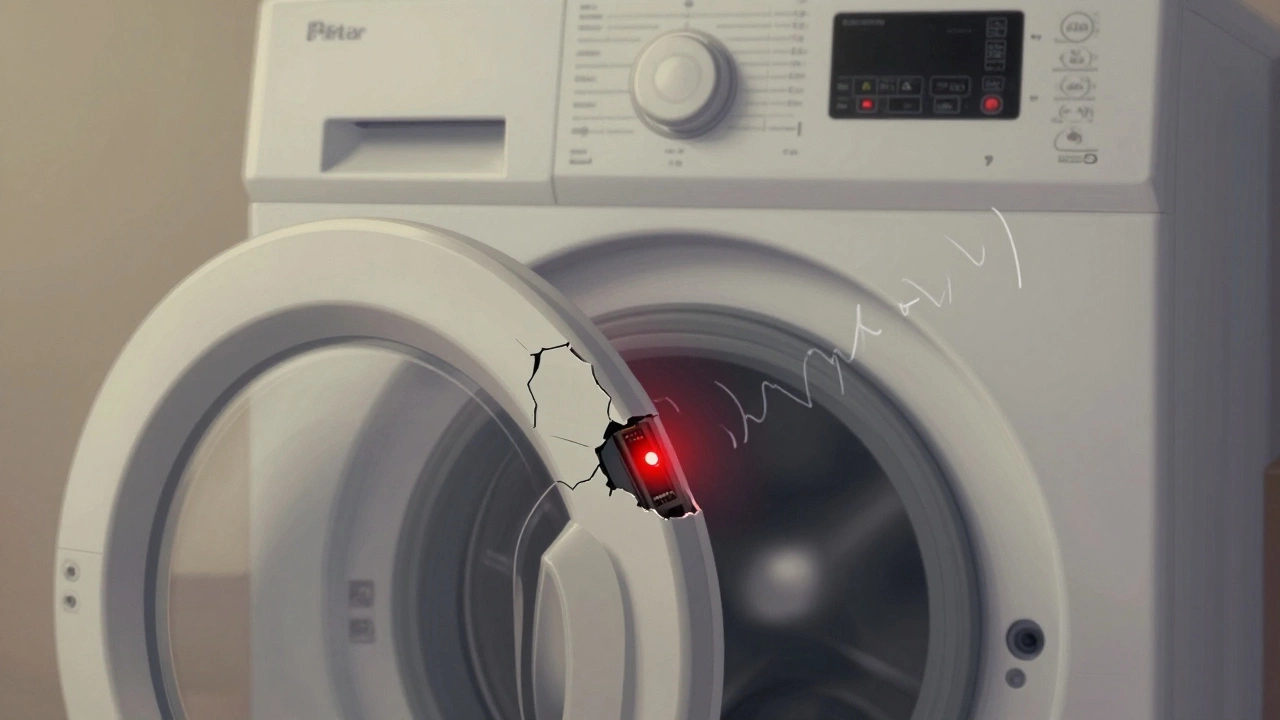
If the machine doesn’t start at all, or it starts then stops after a few seconds, the door lock is often to blame. This isn’t just a mechanical latch-it’s an electronic switch that tells the control board the door is sealed. If the switch fails, the machine thinks the door is open and shuts down for safety.
Older machines had simple mechanical locks. Modern ones use a solenoid and sensor combo. When the plastic housing cracks or the sensor loses calibration, the machine won’t run. You might hear a clicking sound when you press start. Or, the control panel lights up but nothing happens. Replacing the lock assembly is usually straightforward. Parts cost $40-$90, and it’s a 30-minute job if you’re handy.
Drive Belt: The Silent Killer
Here’s a sneaky one: your washing machine spins, but the drum doesn’t move. Or it spins slowly, like it’s struggling. That’s usually the drive belt. It connects the motor to the drum. Over time, heat and tension cause it to stretch, crack, or snap.
Belts don’t usually make noise before they fail. One day, the motor runs fine, but the drum just sits there. If you hear a squealing or slipping sound during spin, that’s a warning. Replacing the belt is cheap-$15 to $30-but it requires pulling the machine apart. Most DIYers miss this because they assume the motor or drum is broken. But if the belt’s intact, the motor’s probably fine.
Water Inlet Valve: Leaks and No Fill
When your machine doesn’t fill with water-or fills too slowly-it’s often the inlet valve. This part controls how much hot and cold water enters the tub. It has two solenoids (one for hot, one for cold) and a mesh filter to catch debris.
Hard water in Brisbane clogs those filters fast. Mineral buildup stops the valve from opening fully. If the valve’s stuck closed, no water flows. If it’s stuck open, water keeps running even after the cycle ends, flooding your floor. You might also notice uneven water temperature-like cold water in a hot wash cycle.
Replacing the inlet valve costs $60-$120. But before you buy one, clean the filter screens first. That fixes half the cases. If the problem returns after cleaning, the valve itself is failing.
Motor Coupler: The Small Part That Causes Big Problems
On older top-loaders, there’s a tiny plastic-and-rubber piece called the motor coupler. It connects the motor shaft to the transmission. It’s designed to break if the drum gets jammed-so it protects the motor from damage.
But if you overload the machine, or if a sock gets stuck under the agitator, the coupler snaps. The motor runs, the drum doesn’t move. You hear a clicking or grinding noise. It’s not expensive to fix-$10-$25-but you have to take the cabinet apart to reach it. Many people replace the whole motor thinking it’s dead. It’s not. It’s just the coupler.
Worn Drum Bearings: The Loud Rumble
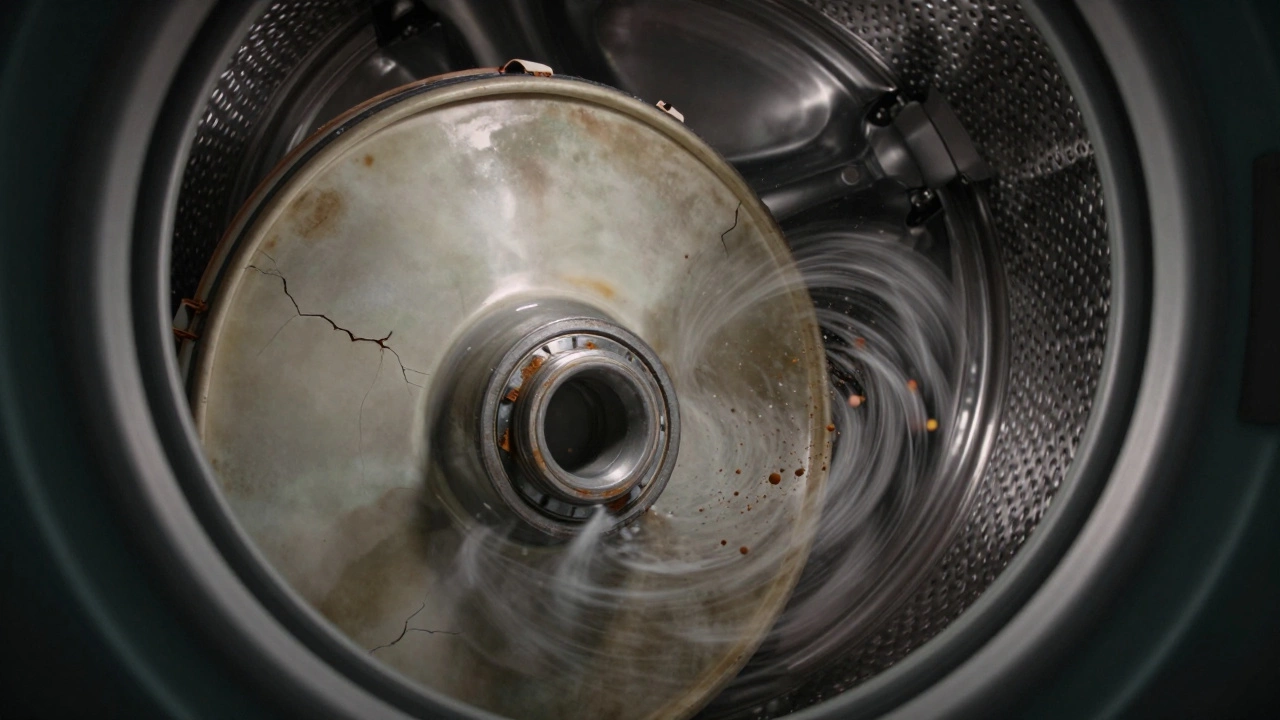
If your machine sounds like a jet engine during the spin cycle, the drum bearings are gone. These are sealed units inside the rear of the drum that let it rotate smoothly. Over time, water seeps in, rust builds up, and the bearings wear out.
You’ll notice a loud rumbling, grinding, or clunking noise. Sometimes, you can even feel the drum wobbling. If you grab the drum from inside and wiggle it, there’s too much play. That’s a dead giveaway.
Replacing drum bearings isn’t a quick fix. You have to remove the drum, the outer tub, and often the whole back panel. It’s a 2-3 hour job. Parts cost $100-$200. For older machines, it’s often cheaper to replace the whole unit. But if your washer is under 8 years old, this repair can extend its life by years.
Control Board: The Brain That Fails Without Warning
The control board is the computer inside your machine. It manages everything: water levels, spin speed, temperature, cycle timing. It rarely fails-but when it does, it’s messy.
Symptoms? Random shutdowns. Lights flashing in patterns. Buttons that don’t respond. Or worse: the machine starts on its own. Power surges, moisture buildup, or old capacitors cause these failures. You can’t fix a bad control board-you can only replace it.
Parts range from $150 to $400. But here’s the catch: many people replace the control board when the real issue is a faulty sensor or wiring. Always check connections first. Look for corrosion. Wiggle the wires. If the problem disappears when you move a wire, it’s not the board.
What to Do When Something Breaks
Most of these failures are predictable. If your machine is over 7 years old, start watching for these signs:
- Unusual noises during spin
- Water left in the drum after a cycle
- Machine won’t start or stops mid-cycle
- Leaks around the door or bottom
- Odd smells or rust inside the drum
Don’t wait for total failure. A $50 repair today can save you $800 on a new machine tomorrow. Keep a log of when problems started. Note the error codes (if any). And always unplug before poking around inside.
Prevention: Simple Habits That Extend Life
Here’s what actually works:
- Use HE detergent-never regular. Too much suds clogs the pump and damages seals.
- Leave the door ajar after each load. Moisture causes mold and rust.
- Clean the drum monthly with vinegar or a washing machine cleaner.
- Don’t overload. Half-full is better than jam-packed.
- Check pockets. Coins and keys are the #1 cause of pump jams.
These habits don’t cost anything. But they can add 3-5 extra years to your machine’s life.
Why does my washing machine leak only during the spin cycle?
If water leaks only during spin, the issue is likely the drum bearings or the tub seal. When the drum spins fast, pressure builds up. Worn bearings let water seep past the seal. Check for wobble in the drum-excessive movement means the bearings are gone. Replacing the seal or bearings stops the leak.
Can a clogged filter cause my washing machine not to drain?
Yes, absolutely. Most machines have a lint filter near the bottom front. If it’s packed with hair, threads, or fabric softener residue, water can’t exit. Clean it every 2-3 months. If cleaning doesn’t fix drainage, the drain pump itself may be failing.
Is it worth repairing a 10-year-old washing machine?
It depends on the repair. If it’s a $70 pump or belt, yes. If it’s a $300 control board or drum bearings, think twice. A 10-year-old machine is near the end of its lifespan. New energy-efficient models save 30-40% on water and electricity. Weigh repair cost against new price, warranty, and running costs.
Why does my washing machine smell like mildew?
Mildew smells come from trapped moisture in the drum, door seal, or detergent drawer. Front-loaders are especially prone. Leave the door open after use. Run a hot cycle with vinegar or a washing machine cleaner every month. Avoid liquid fabric softener-it leaves a sticky residue that traps bacteria.
What’s the average lifespan of a washing machine?
Most washing machines last 8-12 years. Top-loaders with agitators tend to last longer-up to 14 years. Front-loaders wear out faster due to more complex seals and bearings. Usage matters: 4-5 loads per week is normal. More than that, especially with hard water, cuts life by 2-3 years.