Washing Machine Not Spinning? Here’s What’s Really Wrong
When your washing machine, a household appliance designed to clean clothes using water and mechanical action. Also known as a laundry washer, it’s one of the most used appliances in the home. stops spinning, it’s not just inconvenient—it’s a signal something inside has failed. Most people assume it’s time to buy a new one, but the truth? In over 70% of cases, it’s a simple, cheap fix. You don’t need a new machine. You need to know what’s broken.
The spin cycle, the high-speed rotation that removes water from clothes after the wash. depends on three key parts: the motor, the electric component that drives the drum’s rotation., the belt, a rubber or polymer loop that transfers power from the motor to the drum., and the drain pump, the small pump that removes water before spinning begins.. If any one of these fails, the spin cycle won’t start. A worn belt is the most common issue—it’s cheap, easy to replace, and often overlooked. A blocked drain pump? That’s even simpler. Many machines won’t spin because water hasn’t fully drained. No water out? No spin. It’s that basic.
Some people blame the control board or a faulty sensor, but those are rarer. More often, it’s just a clogged filter, a loose belt, or a motor that’s overheated from too many heavy loads. You don’t need a technician to check voltage or run diagnostics right away. Start with the filter. Clean it. Check if the drum turns by hand. If it spins freely, the problem’s likely in the belt or pump. If it’s stiff or stuck, there’s a mechanical jam—maybe socks or underwear got wedged between the drum and tub.
And yes, age matters. If your machine is over 10 years old, parts wear out faster. But even a 15-year-old washer can run for another 3–5 years with a $30 belt and an hour of your time. Replacing a whole machine costs 5–10 times more than fixing it. Most people don’t realize how often a simple repair brings their washer back to life. You’re not just saving money—you’re saving waste, too.
Below, you’ll find real fixes from people who’ve been there. No fluff. No theory. Just what actually works when your washing machine won’t spin. From checking the lid switch to replacing the motor coupler, we’ve got the steps that matter. No guesswork. Just clear, proven solutions.
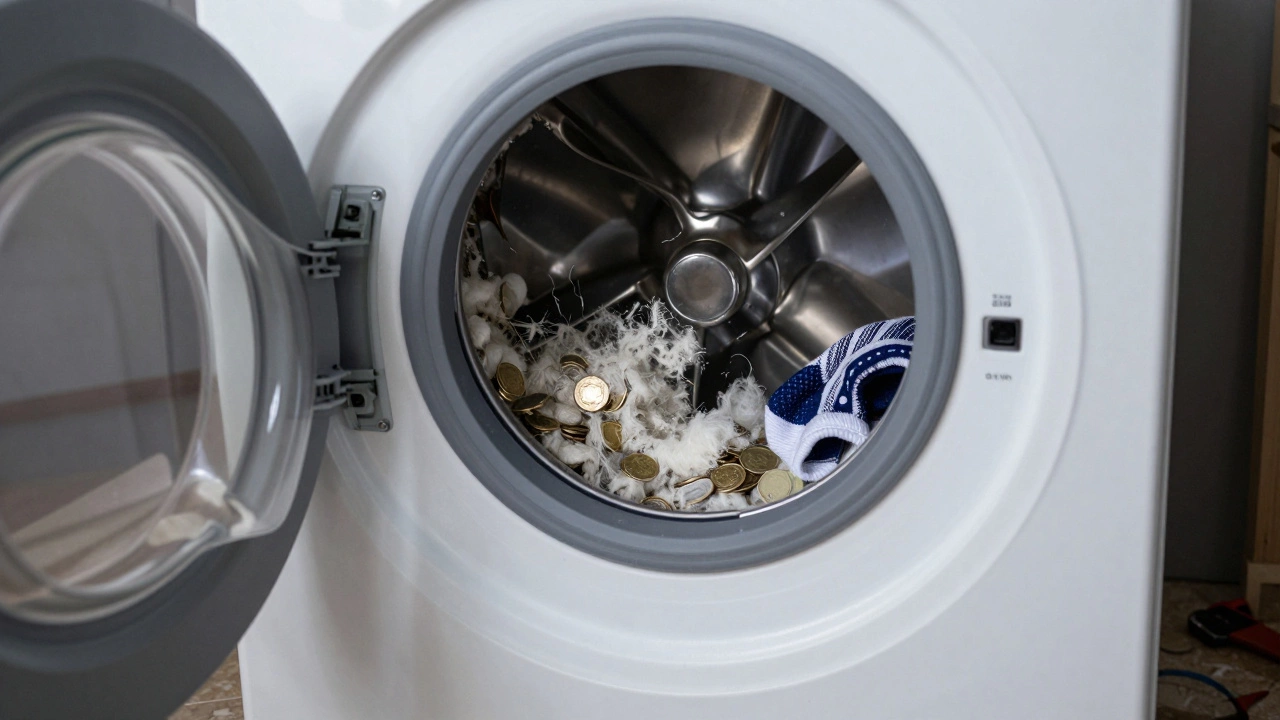
What Parts Fail in a Washing Machine? Common Breakdowns and What to Check
Washing machines commonly fail due to drain pumps, door locks, drive belts, and worn bearings. Learn the top parts that break, how to spot them early, and simple fixes that save money on replacements.
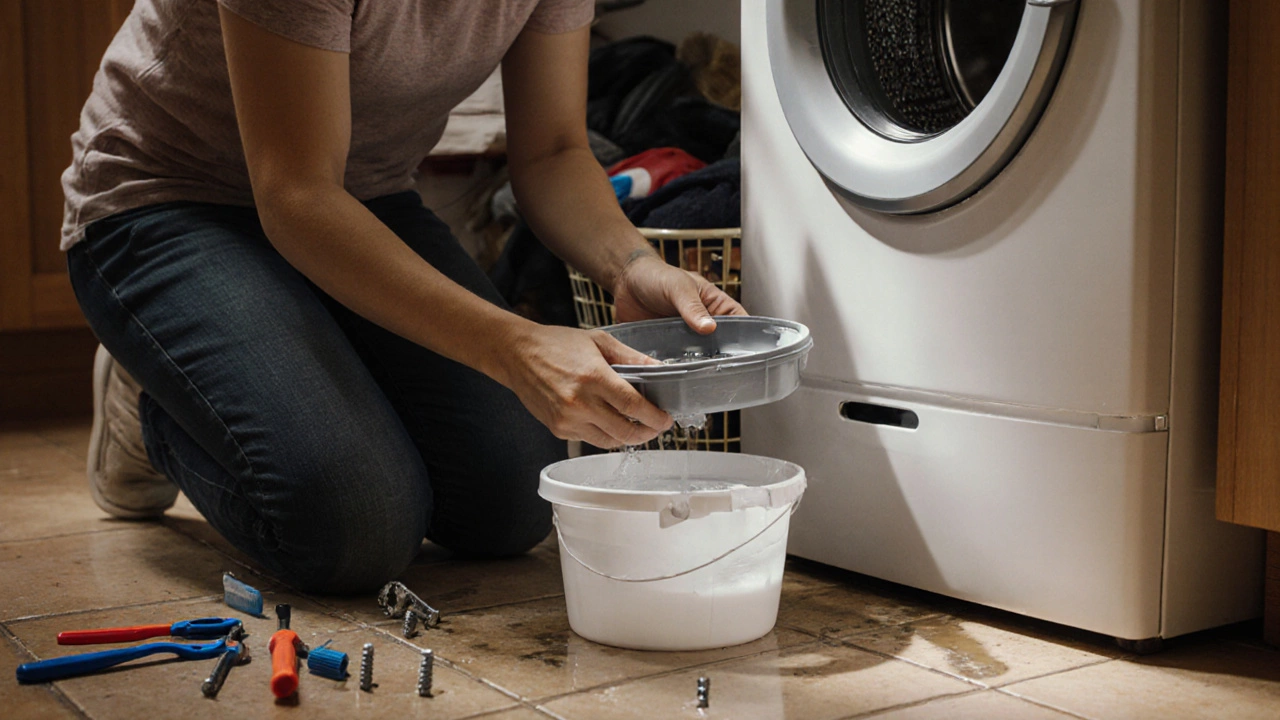
Can You Repair a Washing Machine Yourself? Simple Fixes That Actually Work
Learn how to fix common washing machine problems yourself-drain clogs, broken belts, faulty locks, and leaks-without calling a technician. Save money and extend your machine's life with simple DIY repairs.