Dishwasher Repair Calculator
Assess Your Dishwasher Issue
Repair Assessment
DIY Option
Professional
Ever stared at a dishwasher that won’t start, leaking water all over the kitchen floor, or just not cleaning your plates properly? You wonder: dishwasher repair - is this something you can handle yourself, or should you call a pro? The truth isn’t simple. Some fixes are quick, cheap, and doable in under an hour. Others? They’re a trap waiting to swallow your time, tools, and cash.
What Makes a Dishwasher Fixable?
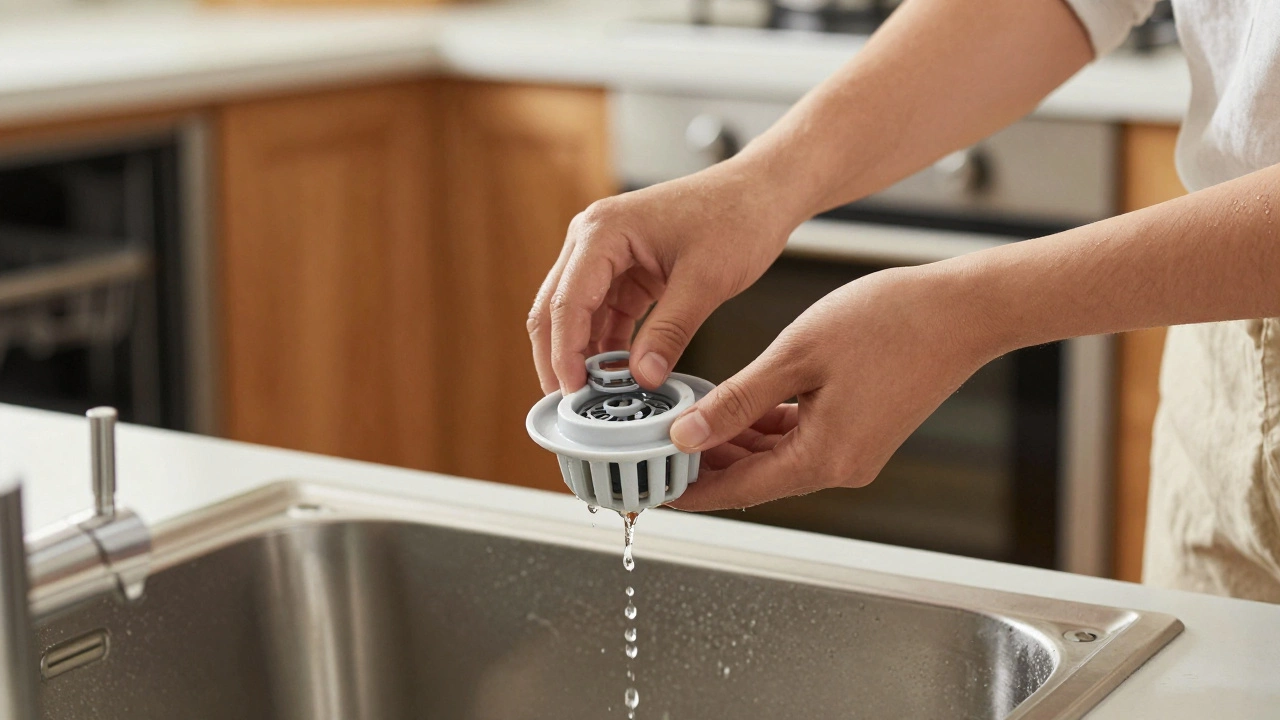
Not all dishwasher problems are created equal. Most issues fall into three buckets: clogs, electrical hiccups, and worn parts. The first two? Often easy. The third? Usually not.Take a clogged filter. It’s the #1 reason dishes come out grimy. In most models, you just twist out the bottom filter, rinse off food bits, and put it back. No tools. No manuals. Done in 90 seconds. If your dishwasher smells like old spinach, this is probably your fix.
Then there’s the door latch. If the machine won’t start, the safety switch might be stuck. A quick check: unplug the unit, open the door, and press the latch manually. If it clicks like it should, the problem isn’t here. If it’s loose or doesn’t spring back? Replacement costs $15 and takes 15 minutes. You don’t need to be an electrician - just a little patient.
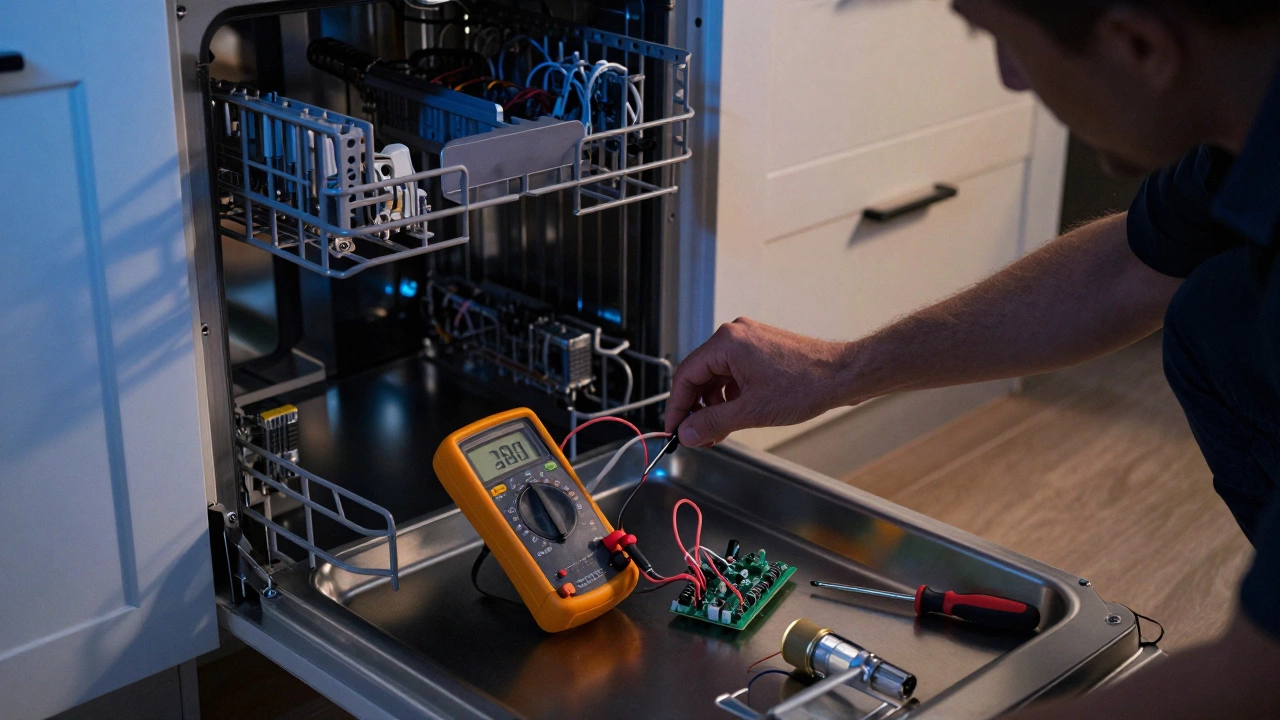
But then you hit the pump. Or the heating element. Or the control board. Those are different. You can’t just swap them like a lightbulb. You need to remove panels, disconnect wires, test voltage with a multimeter, and match part numbers exactly. One wrong connection, and you’re frying something else.
Common Fixes You Can Do Yourself
- Check the filter - Clean it monthly. Most manuals say this, but nobody does. A clogged filter causes poor cleaning, slow draining, and even leaks.
- Clear the spray arms - Pop them off, rinse out the holes with a toothpick. Mineral buildup from hard water clogs them over time.
- Inspect the door seal - If water leaks from the front, the rubber gasket might be cracked or dirty. Wipe it clean. If it’s brittle or torn, replace it. They cost under $20.
- Reset the control panel - Unplug the dishwasher for 5 minutes. Sometimes, a glitch just needs a reboot.
- Check the drain hose - Make sure it’s not kinked behind the unit. A bent hose = standing water in the tub.
These fixes work in 7 out of 10 cases. That’s not guesswork - it’s what local repair techs in Brisbane see daily. Most calls are for things you could’ve handled yourself if you’d checked the basics first.
When You Should Stop and Call a Pro
Here’s the line: if you need to open the inner cabinet, touch wiring, or test voltage, stop. Seriously. You’re not saving money - you’re risking shock, water damage, or making the problem worse.
Signs you need a technician:
- The dishwasher won’t fill with water (could be a faulty inlet valve or water supply issue)
- It runs but doesn’t heat (heating element or thermostat failure)
- It makes grinding or buzzing noises (pump or motor failure)
- Error codes flash on the display (control board issue - often not repairable)
- You’ve tried the simple fixes and nothing changed
One real example: a homeowner in Indooroopilly spent $80 on a new heating element, installed it, and still had cold dishes. Turns out, the thermostat was also dead. The repair tech fixed both for $220. The DIY attempt cost more in time and wasted parts.
Cost Comparison: DIY vs. Professional
| Issue | DIY Cost | Professional Cost | Time Required |
|---|---|---|---|
| Clogged filter | $0 | $0 (you do it) | 5 minutes |
| Door latch replacement | $15-$25 | $80-$120 (labor + part) | 15-30 minutes |
| Heating element | $40-$70 | $180-$280 | 1-2 hours |
| Pump motor | $100-$180 (part only) | $300-$500 | 2+ hours |
| Control board | $150-$300 (often incompatible) | $350-$600 | 2-4 hours |
Notice something? The labor cost is often 2-3 times the part cost. That’s why some people try DIY - they think they’re saving money. But if you mess up the wiring, crack a plastic housing, or install the wrong part, you’re not saving. You’re paying twice.
Tools You Actually Need
If you’re going to try, you don’t need a full workshop. Just these:
- Screwdrivers (Phillips and flathead)
- Adjustable wrench
- Flashlight
- Plumber’s putty (for sealing gaskets)
- Basic multimeter (if testing electrical parts)
You don’t need a torque wrench, a pressure gauge, or a soldering iron. If your repair requires any of those, walk away. You’re in pro territory.
When to Replace Instead of Repair
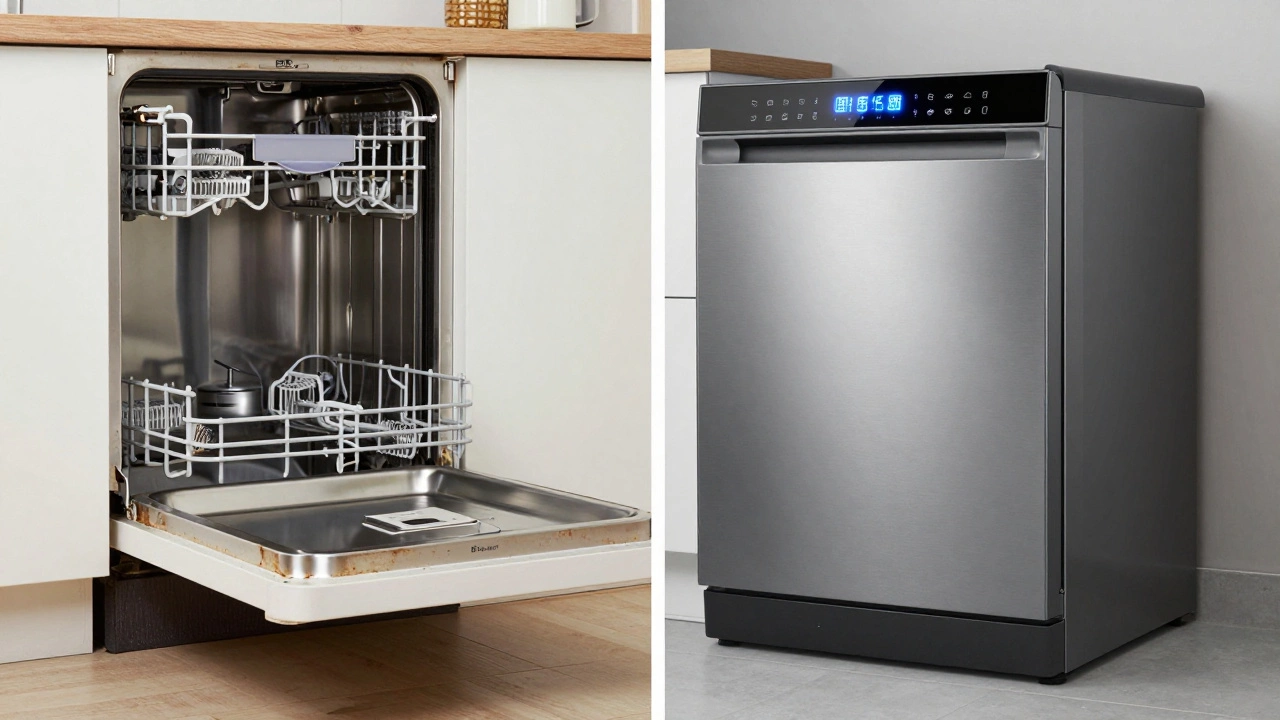
Dishwashers older than 8-10 years? Think twice. Parts are harder to find. Energy efficiency drops. New models use half the water and electricity.
Here’s the rule: if the repair costs more than half the price of a new unit, replace it. A decent new dishwasher in Australia costs $600-$1,200. So if your fix runs $400+, it’s time to upgrade.
Plus, modern dishwashers have smart features: soil sensors, quiet cycles, and app controls. You’re not just replacing a broken machine - you’re upgrading your daily life.
How to Avoid Future Problems
Prevention beats repair every time.
- Scrape food off plates - don’t rinse them. Dishwashers need some food residue to trigger the sensors.
- Run hot water at the sink before starting the dishwasher - it helps the machine fill faster and clean better.
- Use dishwasher salt and rinse aid - especially in hard water areas like Brisbane. It stops limescale and spotting.
- Run a cleaning cycle with vinegar or dishwasher cleaner every 3 months.
- Don’t overload it. Airflow matters. Dishes need space to spray.
These habits extend your dishwasher’s life by 3-5 years. That’s free money.
Final Answer: Are Dishwashers Easy to Fix?
Some fixes? Absolutely. Cleaning the filter, clearing the spray arms, replacing the door seal - these are beginner-friendly. You can do them in pajamas with a cup of coffee.
But if it’s a motor, a control board, or a wiring issue? No. It’s not easy. It’s risky. And it’s often more expensive than hiring someone who does this every day.
Start simple. Check the basics. If it’s not fixed in 30 minutes, call a pro. Don’t pride yourself on fixing it alone. Pride doesn’t clean your dishes. A working dishwasher does.
Can I fix a dishwasher without any tools?
Yes, for the simplest issues. Cleaning the filter, wiping the door seal, or resetting the control panel need no tools at all. But if you need to remove panels, access internal parts, or test electrical connections, you’ll need at least a screwdriver and a flashlight. Don’t attempt anything that requires opening the main cabinet without tools - you’ll likely make things worse.
Is it worth repairing a 10-year-old dishwasher?
Generally, no. Dishwashers older than 8-10 years are nearing the end of their lifespan. Parts are harder to find, energy efficiency drops, and repairs often cost more than half the price of a new unit. A new dishwasher uses up to 50% less water and electricity, and modern models are quieter and smarter. If your 10-year-old unit needs a major repair, replacing it is the smarter long-term choice.
Why does my dishwasher leak only during the rinse cycle?
A leak during the rinse cycle usually points to a worn door gasket or a clogged drain hose. The rinse cycle uses more water at higher pressure. If the seal is cracked or the hose is kinked, that extra pressure forces water out. Check the rubber seal around the door for cracks or debris. Also, make sure the drain hose isn’t bent behind the unit. If both look fine, the issue might be a cracked spray arm or a failing pump seal - both require professional attention.
Can I use vinegar to clean my dishwasher?
Yes, vinegar is safe and effective for cleaning. Place a cup of white vinegar on the top rack and run a full cycle on hot with no dishes. It removes grease, mineral buildup, and odors. Do this every 3 months. But don’t use vinegar if your dishwasher has a stainless steel interior - it can dull the finish. Use a dishwasher-specific cleaner instead.
Why won’t my dishwasher start even though the light is on?
If the control panel lights up but the dishwasher won’t start, the issue is likely the door latch, thermal fuse, or control board. First, check that the door closes fully and the latch clicks. If that’s fine, unplug the unit for 5 minutes to reset the system. If it still won’t start, the thermal fuse (a safety device) may be blown - this requires a multimeter to test. Most homeowners can’t safely check this without training. Call a technician.