Microwave Repair vs. Replace Calculator
There is a distinct sound every homeowner dreads: the sudden silence of a microwave that used to hum while heating leftovers. Your first instinct might be to grab a screwdriver and open it up. After all, microwaves are relatively cheap appliances, right? But before you strip the casing, you need to know the truth about microwave repair. Is it a simple task for a weekend handyman, or is it a dangerous gamble with your health and wallet?
The short answer is no. For most people, repairing a microwave is not easy, and more importantly, it is often unsafe. Unlike a toaster or a blender, a microwave contains components that hold lethal electrical charges even when unplugged. While some minor issues like a broken door switch or a faulty turntable motor are within reach for an experienced DIYer, the core heart of the machine-the magnetron-is rarely worth fixing by hand.
Why are microwaves harder to fix than other appliances?
Microwaves operate at high voltages (up to 4,000 volts) inside a sealed cavity. The capacitor can retain a deadly charge long after the power cord is pulled from the wall. Other small appliances typically run on standard household voltage and do not store energy in capacitors in the same way.
The Hidden Danger: High Voltage Capacitors
To understand why Microwave Ovens are kitchen appliances that use electromagnetic radiation to heat food, you have to look under the hood. Inside that metal box is a component called a High-Voltage Capacitor. This part stores electricity to boost the voltage needed for the magnetron. Here is the kicker: this capacitor can hold a charge of over 2,000 volts even if the microwave has been unplugged for days.
If you touch the terminals of this capacitor without properly discharging it using a specific insulated screwdriver technique, you risk severe electric shock or cardiac arrest. It is not just a zap; it is a life-threatening event. Most professional technicians carry specialized discharge tools and wear insulated gloves. Do you have those? Probably not. This single component is the primary reason why microwave repair is considered a specialized trade rather than general home maintenance.
When DIY Might Be Possible: Minor External Fixes
Not every issue requires opening the main chassis. There are a few external problems that are safe and easy to fix yourself. If your microwave looks fine but the food isn't heating evenly, check the Turntable Motor. Sometimes the glass plate simply slips off the roller ring, or the motor gear strips. Replacing the glass tray or cleaning the roller ring costs almost nothing and takes five minutes.
Another common issue is the door latch. If the microwave won't start, the problem might be a misaligned door switch or a dirty interlock mechanism. You can often clean the contacts with contact cleaner or adjust the plastic catch. However, once you move past the exterior controls and into the internal wiring, the risk skyrockets. If the display is dead, it could be a blown fuse, which is accessible in some models, but in many modern units, the control board is integrated and not user-replaceable.
- Safe to DIY: Cleaning the interior, replacing the glass turntable, checking the outlet power.
- Risky DIY: Replacing door switches, inspecting internal fuses.
- Professional Only: Magnetron replacement, capacitor testing, transformer repair.
The Cost Equation: Repair vs. Replace
Let's talk money. In Brisbane, as in most places, labor rates for appliance repair are rising. A technician visit fee alone can range from $80 to $150. If the diagnosis reveals a failed Magnetron-the tube that generates the microwaves-the part itself might cost $60 to $100, plus another hour of labor. Suddenly, you are looking at a $250 bill to fix a microwave that retails for $150 new.
This economic reality dictates the strategy. For basic countertop models, replacement is almost always the smarter financial choice. The parts are not modular enough to justify the labor. However, if you own a high-end built-in microwave drawer or a premium over-the-range model costing $800 or more, repair becomes viable. These units have higher part values and longer expected lifespans. Always get a diagnostic quote before authorizing any work.
| Scenario | Action | Reasoning |
|---|---|---|
| Basic model ($100-$200) | Replace | Repair cost exceeds 50% of new unit price. |
| Built-in/Premium ($500+) | Repair | Installation complexity makes replacement costly. |
| Dead display, no heat | Diagnose First | Could be a cheap fuse or expensive board. |
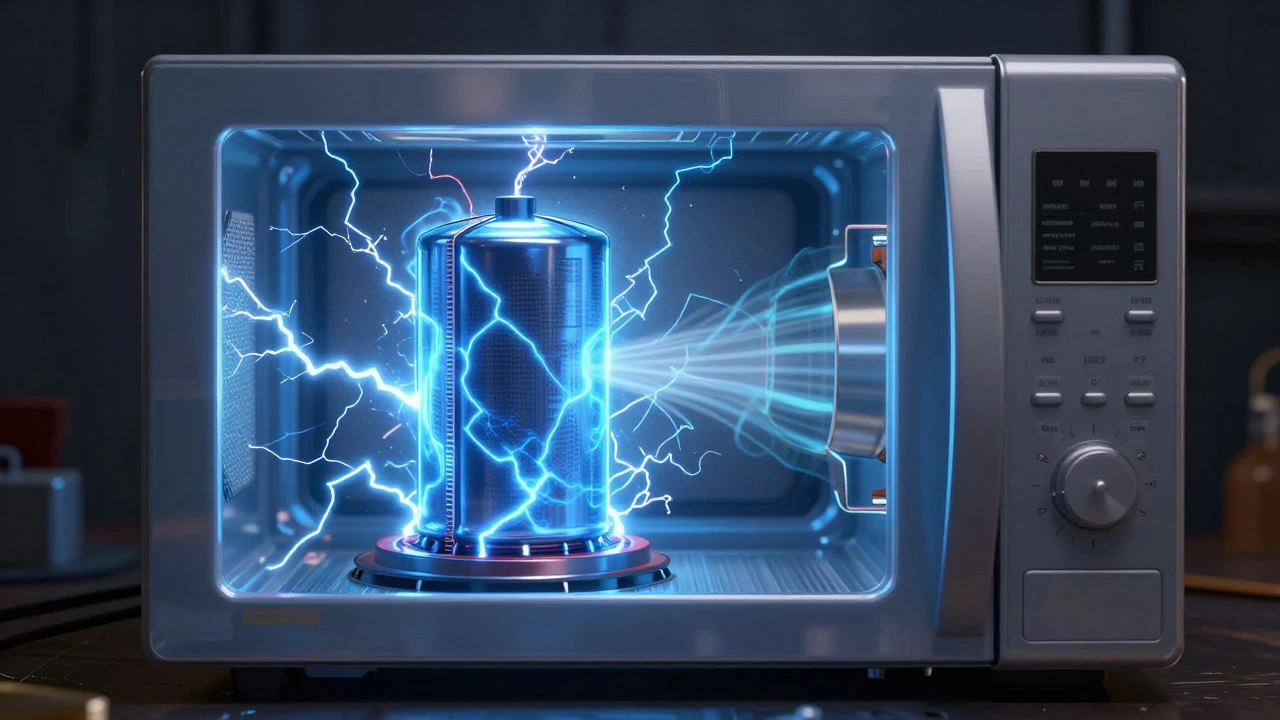
| Sparking inside | Stop Use Immediately | Indicates arcing; fire hazard. Professional inspection needed. |
Common Failure Points Explained
Understanding what breaks helps you decide if it's worth fixing. The Magnetron is the engine. It fails gradually. You notice the food taking longer to heat. Eventually, it stops working entirely. Since magnetrons have a finite lifespan (usually 7-10 years), replacing one is often a temporary fix unless the rest of the circuitry is also aging.
Next is the High-Voltage Diode. This diode converts AC current to DC current for the magnetron. When it fails, the microwave might still light up and spin the tray, but it won't heat food. Testing a diode requires a multimeter and knowledge of how to bypass the safety interlocks safely. If you aren't comfortable with multimeters, skip this step.
Door switches are another culprit. Microwaves have multiple safety switches that must engage for the unit to run. If one sticks or burns out, the microwave thinks the door is open. These are cheap parts, but accessing them requires removing the outer case and dealing with the high-voltage area nearby.
Safety Protocols for Attempted Repairs
If you decide to proceed with a DIY repair despite the risks, follow these strict protocols. First, unplug the microwave. Second, locate the high-voltage capacitor. Third, use an insulated screwdriver with a wooden handle to bridge the two terminals of the capacitor, discharging the stored energy. You should hear a loud crack or spark. Wait a minute. Discharge it again. Never assume it is safe until you have tested the terminals with a multimeter set to DC voltage.
Keep your fingers away from the waveguide cover. This mica sheet protects the magnetron from splatter. If it is burnt, replace it immediately. A damaged waveguide allows microwaves to reflect back into the magnetron, destroying it. This is a $10 part that saves a $100 magnetron.
When to Call a Professional
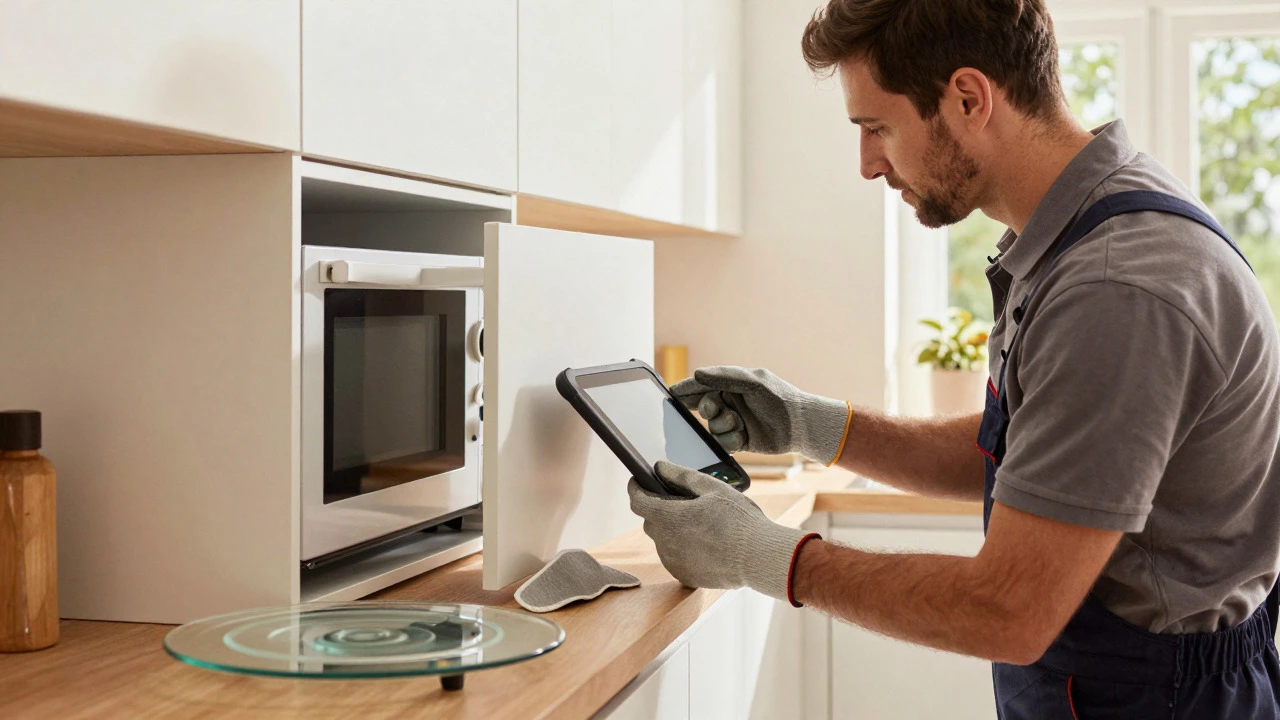
In Brisbane, finding a reliable appliance repair technician is straightforward. Look for certified professionals who specialize in major appliances. They will have the schematics for your specific model, which are often hard to find online. A pro can diagnose a bad transformer versus a bad diode in minutes. They also carry genuine OEM parts, ensuring compatibility.
Call a pro if:
- The microwave smells like burning ozone or plastic.
- You see visible sparks inside the cavity.
- The exterior gets hot to the touch during operation.
- You are unsure about discharging the capacitor.
Remember, a professional repair includes a warranty on both parts and labor. If you fix it yourself and blow the transformer three weeks later, you pay again. With a pro, that second failure is covered.
Maintenance Tips to Extend Lifespan
The best repair is no repair. Keep your microwave clean. Grease buildup on the walls and ceiling can absorb microwaves, causing arcing and damaging the magnetron. Wipe the interior weekly with a damp cloth and mild detergent. Ensure the door seals are clean so they close tightly. Avoid running the microwave empty; this reflects energy back into the magnetron, overheating it. Finally, don't put metal utensils inside. Even a tiny piece of aluminum foil can cause arcs that pit the interior coating and lead to corrosion.
How long does a microwave last?
The average lifespan of a microwave oven is between 7 and 10 years with regular use. Heavy daily use may shorten this to 5 years. Built-in models often last longer due to better build quality and ventilation.
Is it worth repairing a 10-year-old microwave?
Generally, no. At 10 years old, the magnetron and other high-stress components are near the end of their natural life. Fixing one part often leads to another failing shortly after. Replacement is usually more cost-effective.
Can I replace the mica waveguide cover myself?
Yes. The mica waveguide cover is located inside the cavity and is easily accessible. If it is burnt or cracked, remove the screws holding it in place and slide in a new one. This is a safe and effective DIY fix.
What causes sparking in a microwave?
Sparking is usually caused by metal objects inside, grease buildup on the walls, or a damaged mica waveguide cover. It can also indicate a failing magnetron. Stop using the microwave immediately and inspect the interior.
Do microwaves leak radiation?
Modern microwaves are designed with multiple safety interlocks to prevent leakage. Unless the door is damaged or the seal is compromised, leakage is minimal and well within safety limits. If the door hinges are loose, have it repaired promptly.