Water Heater Reset Diagnostic Tool
Answer the questions below to identify the likely cause of your hot water issue.
Diagnostic Result
You step into the shower, expecting warmth, but get a blast of cold instead. Or maybe you turn on the kitchen tap and wait an eternity for anything resembling heat. Before you panic or call a plumber for a costly service call, there is a quick fix that solves about 30% of these issues: resetting the water heater. But how do you know if your unit actually needs this simple tweak versus something more serious?
Most modern electric water heaters have built-in safety mechanisms designed to shut off power when things go wrong. These aren't just random glitches; they are critical safeguards against overheating. Knowing the difference between a tripped safety switch and a failed heating element can save you time, money, and a very uncomfortable shower.
The Signs Your Unit Has Tripped
If your hot water system has stopped producing warm water entirely, check the electrical panel first. Is the breaker tripped? If yes, that’s a clue, but not always the whole story. Sometimes the main breaker holds, but the internal safety switches have cut power to the elements.
Here are the most common indicators that a reset is required:
- Total loss of hot water: You have zero heat coming from any tap in the house.
- Inconsistent temperature: The water starts hot but turns lukewarm or cold after a few minutes.
- No noise: Gas heaters usually make a whooshing sound when igniting. Electric ones are silent, but if the indicator light (if present) is off, power isn’t reaching the tank.
- Recent power surge: Did a storm hit or did you experience a blackout recently? Power spikes often trip sensitive electronic components.
It’s worth noting that gas water heaters generally don’t have "reset buttons" in the same way electric ones do. They rely on thermocouples and gas valves. If you have a gas unit, a lack of ignition usually points to a pilot light issue or a faulty thermocouple, not a reset button. This article focuses primarily on electric storage systems, which are ubiquitous in many Australian homes.
Understanding the Safety Mechanisms
To understand why a reset works, you need to know what triggers it. Inside your water heater, two key components act as guardians:
- The Thermostat: This controls the target temperature. If it fails open, the heater might run continuously, overheating the water.
- The High Limit Switch (Thermal Cutoff): This is the emergency brake. If the water exceeds roughly 85°C-90°C (185°F-194°F), this switch trips to prevent the tank from exploding or damaging itself.
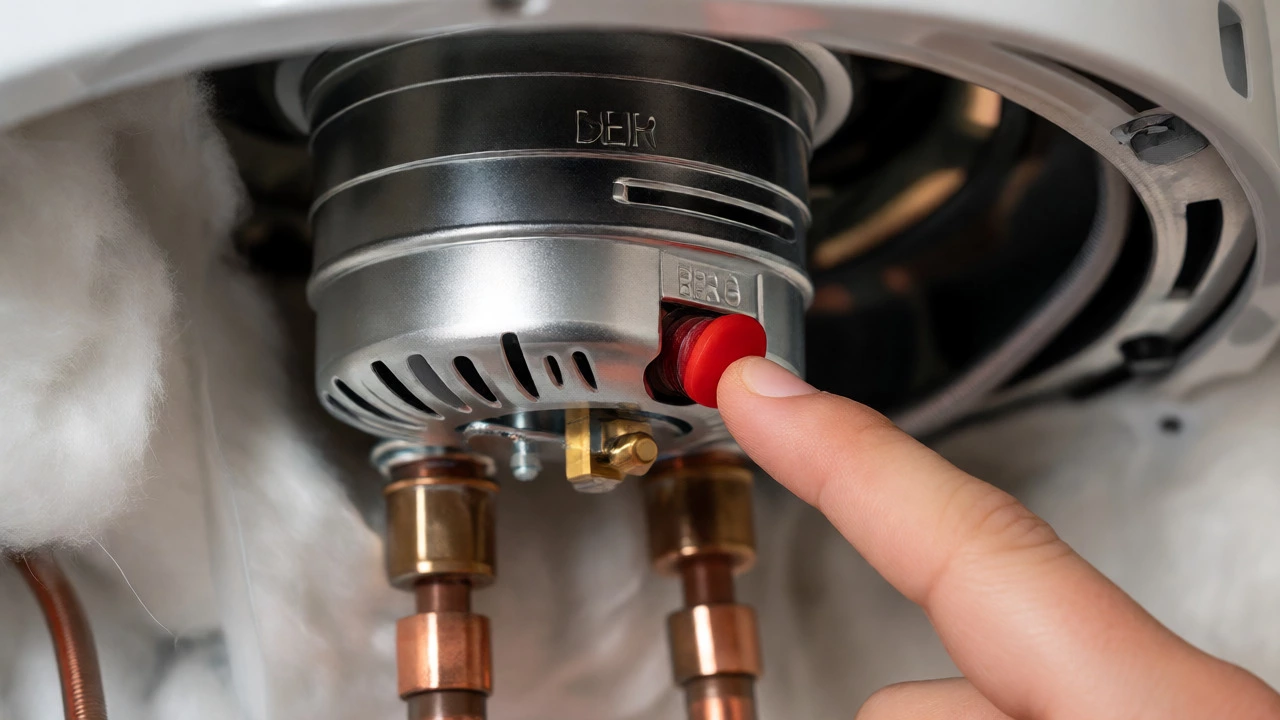
When the high limit switch trips, it cuts electricity to the heating elements. It doesn’t reset automatically because it wants to ensure the underlying problem is checked before power resumes. This is why pressing the small red button on your thermostat assembly often brings the heat back.
| Symptom | Likely Cause | Action Required |
|---|---|---|
| No hot water at all | Tripped High Limit Switch | Reset Button Press |
| Hot water runs out quickly | Failing Heating Element | Element Replacement |
| Water too hot/scalding | Faulty Thermostat | Thermostat Adjustment/Replace |
| Breaker trips immediately | Shorted Element or Wiring | Professional Inspection |
Step-by-Step Guide to Resetting
Before you touch anything inside the tank, safety is non-negotiable. You are dealing with high voltage and hot water. Here is how to do it safely without calling a technician immediately.
1. Turn Off the Power
Go to your main switchboard and flip the breaker dedicated to the water heater to the OFF position. Verify it is off by checking the unit’s indicator light if it has one. Never work on live wires.
2. Locate the Access Panels
Electric heaters typically have two access panels on the side of the tank-one near the top and one near the bottom. Each covers a heating element and its associated thermostat. Remove the screws holding these panels. Be careful; insulation may spill out.
3. Find the Reset Button
Peel back the insulation carefully. You will see the thermostat assembly. Look for a small red or black button, usually labeled "RESET." In some models, there is a separate button for the upper and lower thermostats.
4. Press the Button
Press firmly until you hear or feel a click. If the button was popped out, this re-engages the circuit. If it was already flush, try pressing it anyway-sometimes contacts stick.
5. Restore Power and Test
Replace the insulation and panels loosely for now. Turn the breaker back ON. Wait about 30 minutes, then test a hot tap. If you get hot water, great! Tighten the panels fully. If not, you likely have a different issue.
Why Did It Trip in the First Place?
A reset is a temporary fix if the root cause isn’t addressed. Think of it like a car’s check engine light. Ignoring it leads to bigger problems. Common reasons for tripping include:
- Scale Buildup: In hard water areas, mineral deposits coat the elements, causing them to overheat because heat transfer is inefficient.
- Faulty Thermostat: An old thermostat might read incorrectly, allowing water to get too hot before cutting off.
- Heating Element Failure: A cracked element can short out, drawing excessive current and triggering safety switches.
- Power Surges: Lightning strikes or grid fluctuations can spike voltage enough to trip sensitive electronics.
If you find yourself resetting the heater every few weeks, you don’t have a reset problem-you have a maintenance problem. It’s time to look at replacing the elements or flushing the tank.
When NOT to Reset (And When to Call a Pro)
There are scenarios where pressing that button won’t help and could even be dangerous. Do not attempt a DIY reset if:
- The breaker trips instantly: If you reset the unit and the main breaker flips again within seconds, you have a direct short. Continuing to force it can damage wiring.
- Water is leaking: Moisture around the base or panels indicates a leak. Electricity and water are bad friends. Shut off the water supply and call a professional.
- Burning smell: If you smell burnt plastic or ozone, stop immediately. This suggests overheated wiring or components.
- Gas heater issues: As mentioned, gas units require different diagnostics. Smelling gas means evacuate and call emergency services, not a reset button.
Maintenance Tips to Prevent Future Trips
Prevention is easier than cure. To keep your electric water heater running smoothly:
- Flush the tank annually: Drain a few gallons to remove sediment. This protects the elements from scaling.
- Check the anode rod: Replace it every 3-5 years. It sacrifices itself to prevent corrosion inside the tank.
- Inspect connections: Loose wire terminals can cause arcing and heat buildup. Ensure connections are tight (when power is off!).
By staying proactive, you reduce the chances of waking up to a cold shower surprise.
Where is the reset button located on a water heater?
The reset button is typically found behind the access panels on the side of an electric water heater. There are usually two panels (top and bottom). Behind each panel, under the insulation, you will find the thermostat assembly with a small red or black button labeled "RESET." Always ensure the power is off before removing panels.
Can I reset my water heater myself?
Yes, if you are comfortable working with basic tools and understand electrical safety. You must turn off the power at the circuit breaker before opening any panels. If you are unsure about identifying the breaker or handling the components, it is safer to hire a licensed electrician or plumber.
Why does my water heater keep tripping the reset button?
If the reset button keeps popping out, it indicates a persistent fault. Common causes include a failing heating element, a faulty thermostat, or severe scale buildup on the elements. It could also be a sign of a short circuit. Repeatedly resetting it without fixing the root cause can lead to component failure.
Does a gas water heater have a reset button?
Generally, no. Most gas water heaters do not have a manual reset button like electric models. They use thermocouples and gas control valves. If a gas heater stops working, it usually requires relighting the pilot light or replacing the thermocouple. Check your specific model's manual, as some newer electronic ignition models may have diagnostic codes or resets.
How long does it take for hot water to return after a reset?
After resetting and restoring power, it typically takes 30 minutes to an hour for the water to heat up sufficiently, depending on the tank size and starting temperature. For a standard 50-gallon tank, allow at least 45 minutes before testing the taps to avoid false negatives.