Extractor Fan Installation Guide
Not sure who to call? Answer these three questions to find the right professional for your specific situation.
Recommended Action Plan
Why this recommendation?
Safety Checklist:
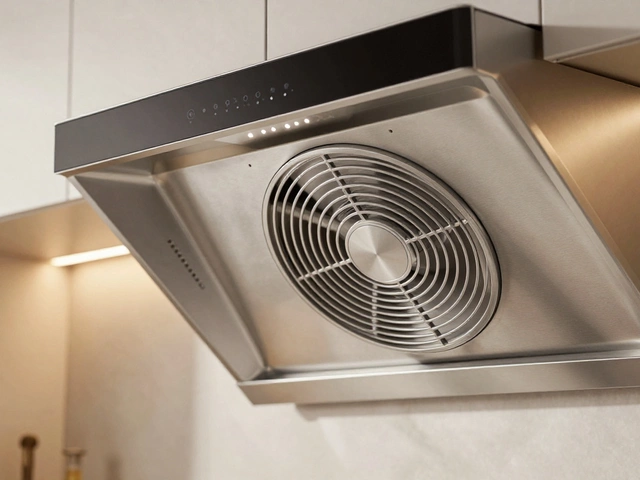
Staring at a blank wall in your kitchen or bathroom, you might wonder: who actually puts that extractor fan in place? Is it the guy who fixes your leaky tap, or the one who wires up your lights? Getting this wrong can lead to double charges, scheduling nightmares, and worse-safety hazards. An extractor fan is a mechanical device used to remove stale air, moisture, and odors from indoor spaces isn't just a box with blades; it's an electrical appliance that often requires ductwork.
The short answer? It depends on where the fan goes and what kind of home you live in. In most cases, you need two different professionals working together, or one very skilled multi-trade technician. Let’s break down exactly who does what, so you don’t get stuck with a non-compliant installation or a bill that doubles because you called the wrong person first.
The Electrician: The Mandatory Safety Expert
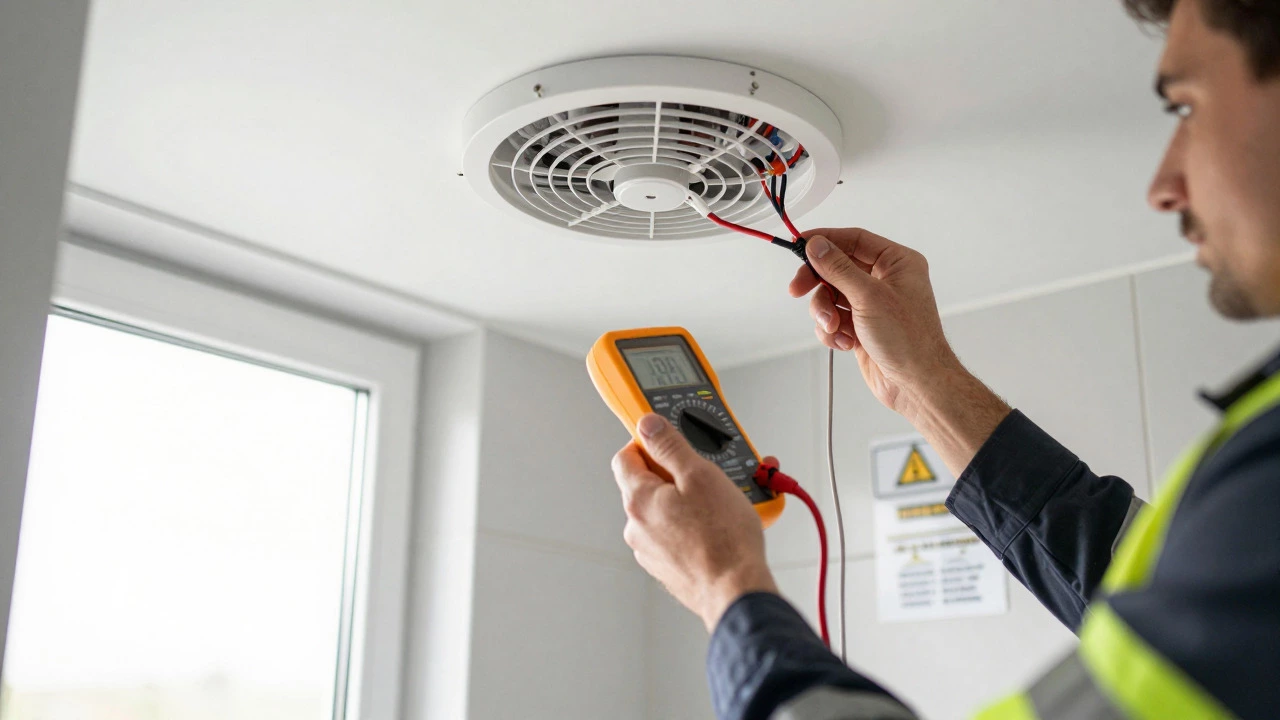
If there is one trade you absolutely cannot skip, it is the electrician is a qualified professional responsible for installing, maintaining, and repairing electrical wiring and equipment. Why? Because every extractor fan needs power. Whether it plugs into a standard socket or hardwires directly into your home’s circuit board, electricity is involved. And electricity, when mixed with water vapor (which is exactly what these fans handle), demands strict safety standards.
In many regions, including the UK and parts of Europe, regulations like Part P of the Building Regulations require that any fixed electrical work be carried out by a certified electrician. If you’re installing a fan near a shower, bath, or sink, the rules tighten even further. You’ll need specific zones considered-Zone 0, Zone 1, and Zone 2-and only a licensed pro knows how to wire safely within those constraints. A DIY plug-in fan might seem easy, but if the outlet isn’t rated for damp environments or lacks proper grounding, you’re risking electrocution or fire.
An electrician will ensure the fan connects to the correct circuit, install any necessary switches (like humidity sensors or timer switches), and verify that the earth connection is solid. They don’t usually drill holes through walls or cut into ceilings, but they make sure the power side of the equation is bulletproof.
The Plumber: Not Always Involved, But Sometimes Essential
Here’s where people get confused. Does a plumber is a tradesperson who specializes in installing and repairing systems used in plumbing for potable water drainage and sanitation fit extractor fans? Generally, no. Plumbers deal with pipes, drains, and water supply lines. An extractor fan moves air, not liquid. So why do some homeowners call plumbers?
Because in older homes or complex renovations, the space above the ceiling or behind the wall might already be occupied by plumbing stacks. A plumber might have installed the vent pipe for your soil stack, which could run parallel to where you want to route your new ducting. Or perhaps your bathroom layout was designed with shared chases for both waste pipes and ventilation. In those rare cases, a plumber helps identify safe pathways.
But here’s the truth: unless your extractor fan is part of a larger wet-room system involving heated floors or underfloor heating controls tied into plumbing circuits, you likely don’t need a plumber for the fan itself. Calling one just for the fan installation is usually a waste of time and money.
The Carpenter or Builder: Who Makes the Hole?
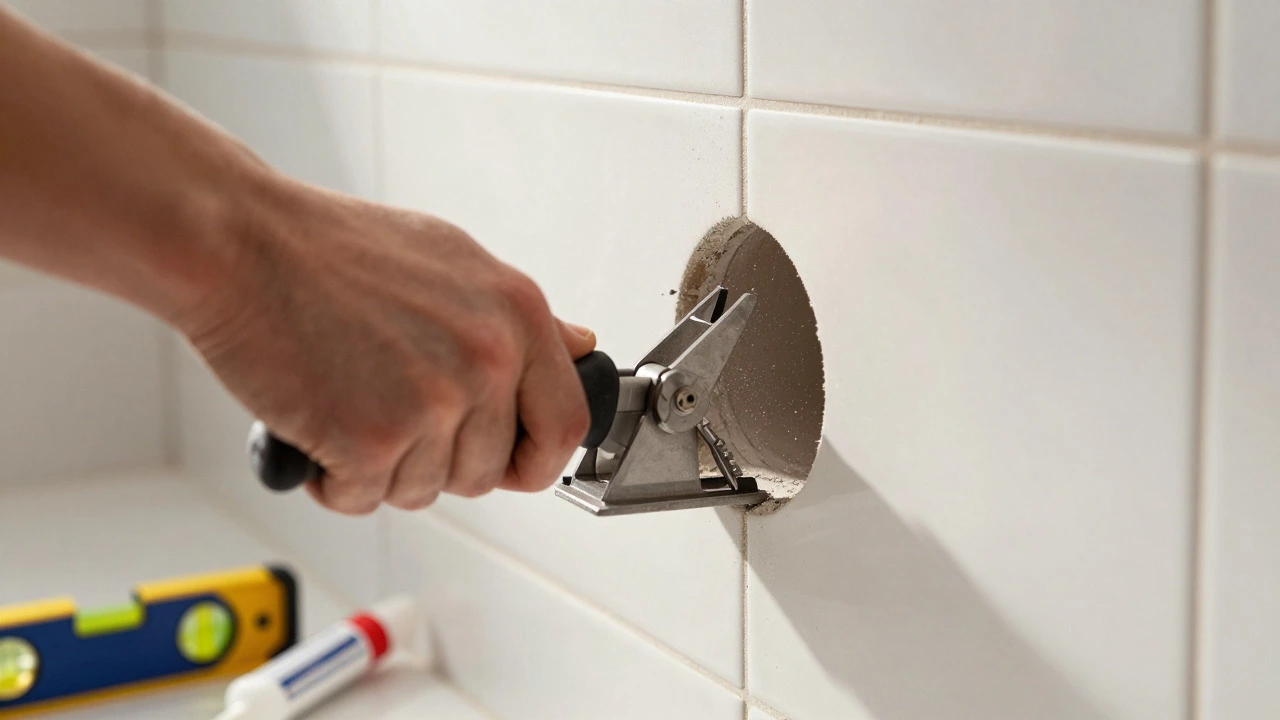
Now we come to the physical labor. Someone has to cut the hole in the wall or ceiling. Someone has to frame around the unit if it’s being recessed. That’s where a carpenter is a skilled worker who constructs and repairs wooden structures and fixtures or general builder comes in. If you’re fitting a fan into a tiled bathroom wall, you’ll need someone who can carefully score and cut ceramic tiles without cracking them. If it’s a plasterboard ceiling, you’ll need precise cutting and reinforcement to support the weight of the unit.
This step is critical because a poorly cut opening leads to gaps, drafts, and noise leakage. Air escapes around the edges instead of being pulled through the fan, reducing efficiency by up to 30%. A good carpenter ensures the aperture matches the fan’s dimensions perfectly, seals it properly, and integrates it cleanly with surrounding surfaces.
In loft conversions or attic installations, builders may also reinforce joists to bear the vibration load of continuous fan operation. This structural consideration is often overlooked but vital for long-term performance.
The HVAC Specialist: For Whole-House Systems
If you’re not just replacing a single bathroom fan but upgrading your entire home’s ventilation strategy, you might need an HVAC specialist is a technician trained in heating, ventilation, and air conditioning systems design and installation. These pros handle balanced airflow across multiple rooms, ensuring that negative pressure doesn’t pull cold air in through windows or cause backdrafts in flues.
HVAC technicians understand static pressure, duct sizing, and airflow rates measured in cubic feet per minute (CFM). They calculate how much air needs to move based on room volume and occupancy. For example, a typical bathroom should exchange its air six times per hour, while a kitchen hood might require ten exchanges due to cooking fumes.
They also manage integration with smart home systems, allowing remote control via apps or voice assistants. If you’re building a new house or doing a major renovation, hiring an HVAC expert upfront prevents costly retrofits later.
Who Should You Call First? A Decision Tree
| Installation Scenario | Primary Trade Needed | Secondary Support | Estimated Cost Range |
|---|---|---|---|
| Plug-in fan in dry area | DIY or Handyman | None | $50-$150 |
| Hardwired fan in bathroom/kitchen | Certified Electrician | Carpenter (for hole) | $200-$500 |
| Ducted external exhaust | Electrician + Carpenter | HVAC Consultant (optional) | $400-$800 |
| Whole-house ventilation upgrade | HVAC Specialist | Builder/Electrician | $1,500+ |
Common Mistakes Homeowners Make
One big error? Assuming “it’s just a fan.” People buy cheap units online, plug them in, and expect miracles. But without proper ducting, the moist air recirculates inside the cavity, leading to mold growth within weeks. Another mistake is ignoring local codes. Some cities mandate minimum CFM ratings for bathrooms over certain sizes. Non-compliance means failed inspections and potential insurance issues.
Also, never assume a handyman can do everything. While many handymen are versatile, electrical work often requires licensing. Check your local requirements before signing off on a quote. And always ask for proof of certification-look for badges from recognized bodies like NICEIC (UK) or NECA (US).
When Can You Do It Yourself?
If you’re comfortable drilling, mounting brackets, and connecting low-voltage components, you might tackle a simple plug-in model yourself. Just ensure the socket is GFCI-protected (Ground Fault Circuit Interrupter) and located outside splash zones. Use silicone sealant around the rim to prevent moisture ingress. Keep the duct path as straight as possible-every elbow adds resistance and reduces airflow.
But if you’re touching mains voltage, cutting into load-bearing walls, or dealing with asbestos-containing materials (common in pre-1980s buildings), step back and hire help. Your safety matters more than saving $200.
Can I install an extractor fan myself if it plugs into a socket?
Yes, provided the socket is already installed, properly grounded, and located away from direct water sources. Always use a GFCI outlet in bathrooms or kitchens. Avoid extension cords-they’re tripping hazards and degrade performance.
Do I need a permit to install an extractor fan?
In most residential areas, no permit is needed for basic replacements. However, new hardwired installations, especially those involving exterior ducting or changes to existing electrical circuits, may require approval. Check with your local building department.
How much does it cost to hire an electrician for fan installation?
Expect to pay between $75 and $150 per hour. Most jobs take 1-2 hours, totaling $150-$300 plus materials. Complex setups with custom wiring or switch upgrades can exceed $500.
What happens if I install the fan incorrectly?
Improper installation can cause poor ventilation, increased energy bills, mold growth, or electrical faults. In severe cases, faulty wiring may trigger fires or void your home insurance policy.
Should I choose a quiet fan or a powerful one?
Balance is key. Look for models rated under 1 sone (quietness) with at least 50 CFM for small bathrooms or 100+ CFM for kitchens. High-power fans aren’t always better if they’re noisy or inefficient.