Bathroom Fan Repair Advisor
Diagnose your bathroom extractor fan issue and get immediate advice on who should fix it.
Recommended Action
Why this recommendation?
Estimated Cost (AUD)
Safety Warning
Next Steps
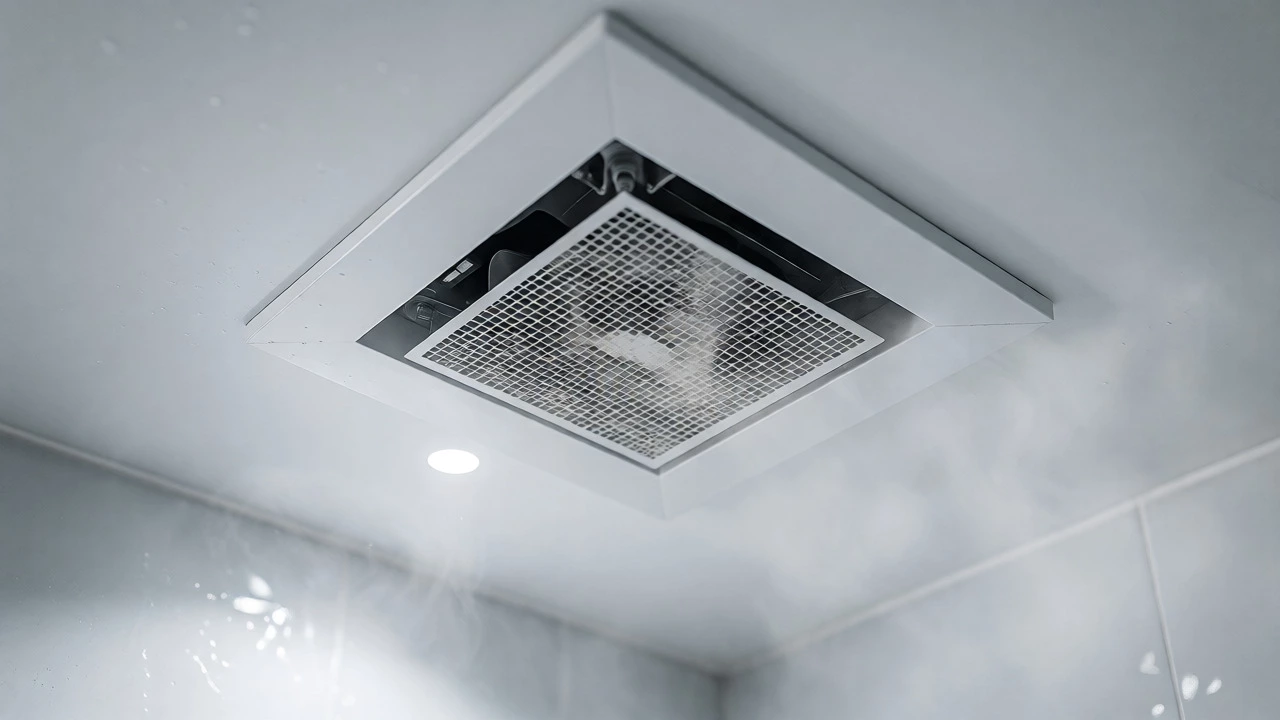
You’re standing in the shower, steam rising, and you realize your bathroom extractor fan is making a sound like a dying lawnmower-or worse, it’s completely silent while the room fills with moisture. It’s a common annoyance, but here’s the tricky part: deciding who fixes it isn’t always straightforward. Do you call a handyman? An electrician? Or do you grab a screwdriver and hope for the best?
The answer depends entirely on what’s actually broken. Because these units sit at the intersection of plumbing (ventilation), carpentry (ceiling access), and electricity (wiring), three different trades might be involved. Getting this wrong can lead to shock hazards or voided warranties. Let’s break down exactly who handles which part of the problem, so you don’t waste money calling the wrong person.
The Critical Safety Check: Electricity vs. Mechanics
Before you pick up a phone, look at the symptoms. This determines whether you need a mechanical fix or an electrical one.
- Noise or poor airflow: The fan runs, but it rattles, squeaks, or doesn’t pull air well. This is usually mechanical-dust buildup, worn bearings, or a loose motor mount.
- Fan won’t turn on: You flip the switch, and nothing happens. This could be a faulty switch, a blown fuse, bad wiring, or a dead motor capacitor. This is often electrical territory.
- Burning smell or tripped breaker: If the circuit breaker trips when you turn the fan on, stop using it immediately. This indicates a short circuit or overheating motor. Call an electrician immediately.
In Australia, strict electrical safety standards apply. While some minor repairs are DIY-friendly, anything involving opening the junction box or rewiring the unit generally requires a licensed professional to ensure compliance with local codes.
When to Call a Handyman
A handyman is your go-to for non-electrical maintenance and simple replacements. They are typically cheaper than electricians and faster to schedule for minor jobs.
What they can fix:
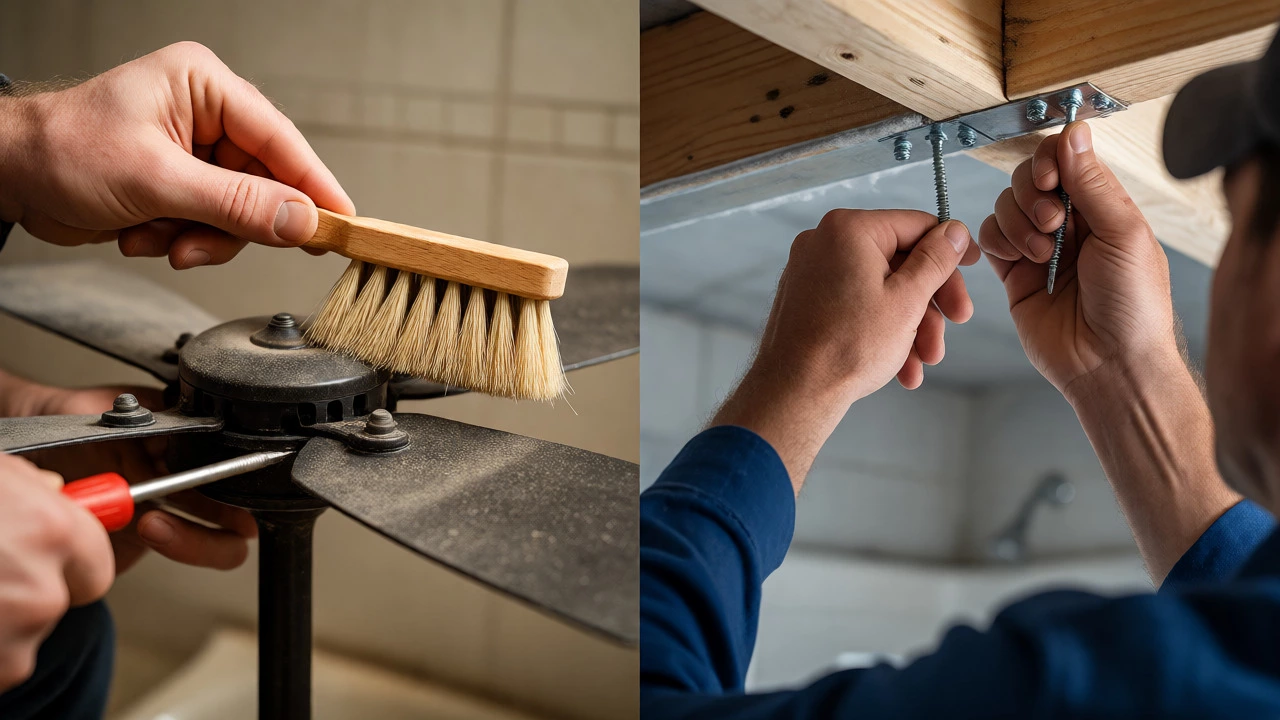
- Cleaning and lubrication: Over time, fans accumulate thick layers of dust and grime on the blades and housing. A handyman can remove the cover, clean the impeller, and lubricate the motor shaft if accessible.
- Replacing the cover or grille: If the plastic cover is cracked or discolored, swapping it out is a purely cosmetic task requiring no electrical knowledge.
- Loose mounting screws: Vibration can loosen the screws holding the fan to the ceiling joists. Tightening these eliminates rattling noises without touching wires.
- Simple swap-outs: If you have bought a new fan that uses the exact same wiring configuration as the old one (plug-and-play), a competent handyman can handle the physical installation. However, they cannot legally alter the wiring.
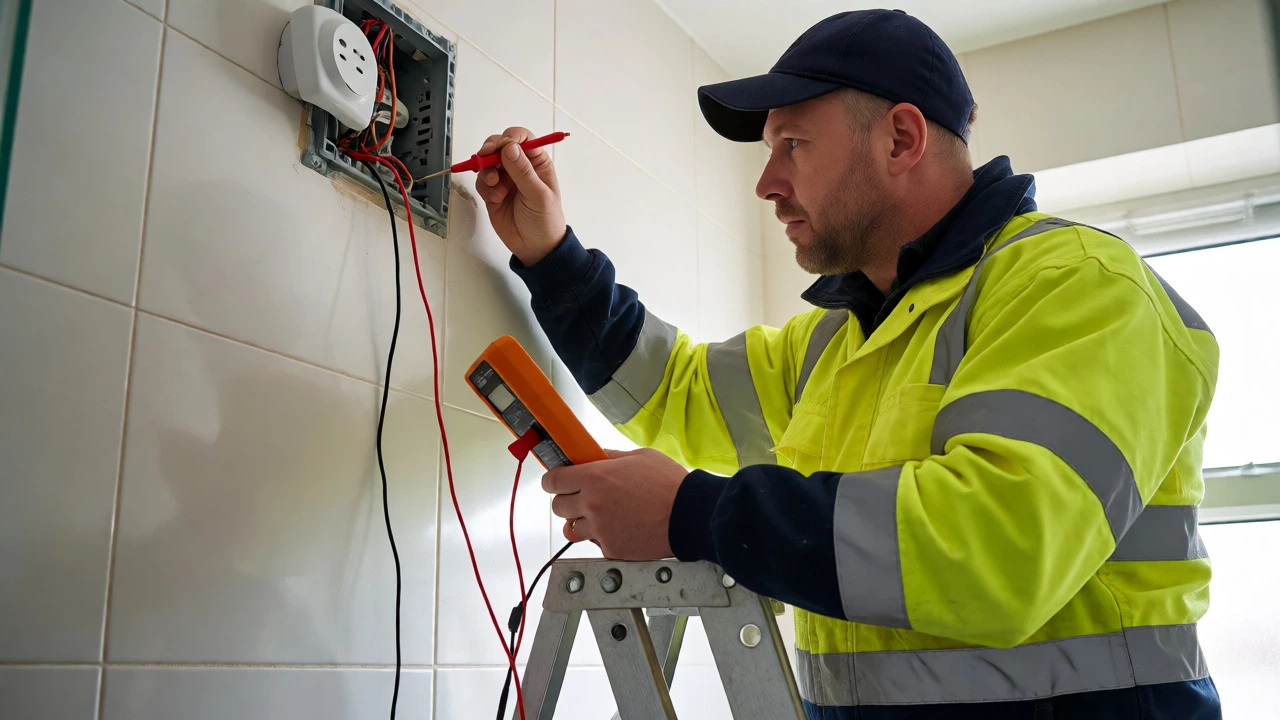
Pro Tip: Ask your handyman if they carry basic multimeters. If the fan still doesn’t work after cleaning, they can quickly check if power is reaching the unit before you spend more on an electrician.
When You Need a Licensed Electrician
If the problem involves the flow of electricity, you need a licensed electrician. In Brisbane and across Queensland, only registered electrical contractors can perform fixed wiring work. This protects you from insurance issues and safety risks.
What they must handle:
- Wiring faults: Loose connections, burnt terminals, or damaged cables inside the ceiling cavity.
- Switch replacement: If the wall switch controlling the fan is broken, replacing it involves working with live circuits behind the faceplate.
- New installations: If you’re installing a fan where there wasn’t one before, or running new cable from the switchboard, this is strictly electrical work.
- Hardwired replacements: Most older fans are hardwired directly into the home’s circuit. Disconnecting and reconnecting these wires safely requires electrical certification.
- Diagnosing motor failure: If the motor burns out, an electrician can determine if it’s worth repairing or if a full unit replacement is more cost-effective.
Expect to pay a call-out fee plus hourly rates. For a standard diagnostic and minor repair, budget between $150 and $300 AUD depending on complexity and location.
Can You Fix It Yourself? The DIY Checklist
Many homeowners successfully tackle extractor fan repairs. But success depends on knowing your limits. Here’s a quick self-assessment.
| Symptom | DIY Friendly? | Required Skill Level | Risk Factor |
|---|---|---|---|
| Dusty blades / slow spin | Yes | Beginner | Low (ensure power off) |
| Rattling noise | Yes | Beginner | Low (tighten screws) |
| Fan won't start (switch works elsewhere) | Maybe | Intermediate | Medium (test with multimeter) |
| Tripping circuit breaker | No | N/A | High (short circuit) |
| Installing new fan | No | N/A | High (legal compliance) |
The Golden Rule for DIY: Always turn off the power at the main switchboard, not just the light switch. Use a non-contact voltage tester to confirm the wires are dead before touching anything. If you see any signs of scorching, melted insulation, or water damage, stop and call a pro.
Why Your Fan Broke: Common Causes
Understanding why it failed helps prevent future headaches. Most failures fall into three categories:
- Lack of Maintenance: Dust acts as an insulator and increases friction. In humid climates like Brisbane, moisture combines with dust to create a sludge that clogs the motor. Cleaning the fan every 6-12 months extends its life significantly.
- Motor Burnout: Continuous operation (running the fan for hours) wears out bearings. Cheap fans often have sealed motors that cannot be lubricated, meaning once they seize, the whole unit must be replaced.
- Vent Blockage: If the external vent flap is stuck closed by paint or debris, the fan pushes against resistance. This strains the motor and reduces efficiency. Check the outside wall vent annually.
Repair vs. Replace: Making the Financial Decision
Should you fix the old fan or buy a new one? Here’s a simple rule of thumb based on current market prices in Australia.
- Repair Cost > 50% of Replacement Cost: Replace it. New energy-efficient fans cost between $80 and $250 for the unit alone. Labor for replacement is often comparable to complex repairs.
- Age of Unit: If the fan is over 10 years old, replace it. Modern fans are quieter (under 1.5 sones) and move more air (higher CFM) than models from a decade ago.
- Availability of Parts: Many manufacturers discontinue spare parts for fans older than 7 years. If you can’t find a matching motor or blade set, replacement is the only option.
Also consider upgrading features. Newer models come with humidity sensors that automatically turn the fan on when moisture levels rise, preventing mold growth without you having to remember to flip a switch.
Hiring the Right Pro: Questions to Ask
When you decide to hire someone, vet them properly. Don’t just take the first quote.
- "Are you licensed?" For electrical work, ask for their Electrical Contractor License number. Verify it online via the Office of Fair Trading website in Queensland.
- "Do you offer a warranty on labor?" Reputable tradespeople stand by their work for at least 12 months.
- "Is the quote inclusive of parts?" Clarify if the price includes the new fan unit or just the labor. Surprise material costs are common.
- "How long will the job take?" A standard replacement should take 45 minutes to 1 hour. If they estimate half a day, ask why.
Getting quotes from three different providers ensures you get a fair market rate. Beware of quotes that seem suspiciously low-they may indicate unlicensed workers or hidden fees.
Can I replace a bathroom extractor fan myself?
You can replace the fan unit yourself if it is a plug-in model or if you are confident handling wiring. However, in Australia, connecting fixed wiring to the mains usually requires a licensed electrician to comply with safety regulations. If you are unsure about turning off the correct circuit or identifying live wires, hire a professional to avoid electrical shock hazards.
Why is my bathroom extractor fan so loud?
Loud noises are typically caused by dust accumulation on the blades, worn-out motor bearings, or loose mounting screws vibrating against the ceiling frame. First, try cleaning the fan thoroughly and tightening all visible screws. If the noise persists, the motor bearings may be failing, which often signals the end of the unit's lifespan.
How much does it cost to fix a bathroom extractor fan?
Minor repairs like cleaning or tightening screws might cost $80-$120 if hired out. Electrical diagnostics and switch repairs range from $150-$250. Full replacement including labor and a mid-range fan unit typically costs between $300 and $500 AUD. Prices vary based on accessibility and regional labor rates.
Does a handyman need to be an electrician to fix a fan?
No, a handyman does not need to be an electrician for mechanical tasks like cleaning, changing covers, or tightening mounts. However, if the repair involves altering wiring, replacing switches, or connecting new fixed wiring, a licensed electrician is legally required in most Australian states to ensure code compliance.
How often should I clean my bathroom extractor fan?
Clean your fan every 6 to 12 months. In high-humidity environments or homes with pets, cleaning every 6 months is recommended. Removing dust prevents motor strain, reduces noise, and improves ventilation efficiency, helping to prevent mold growth in your bathroom.