Dishwasher Standing Water Troubleshooter
Answer these simple questions to find out why your dishwasher isn't draining.
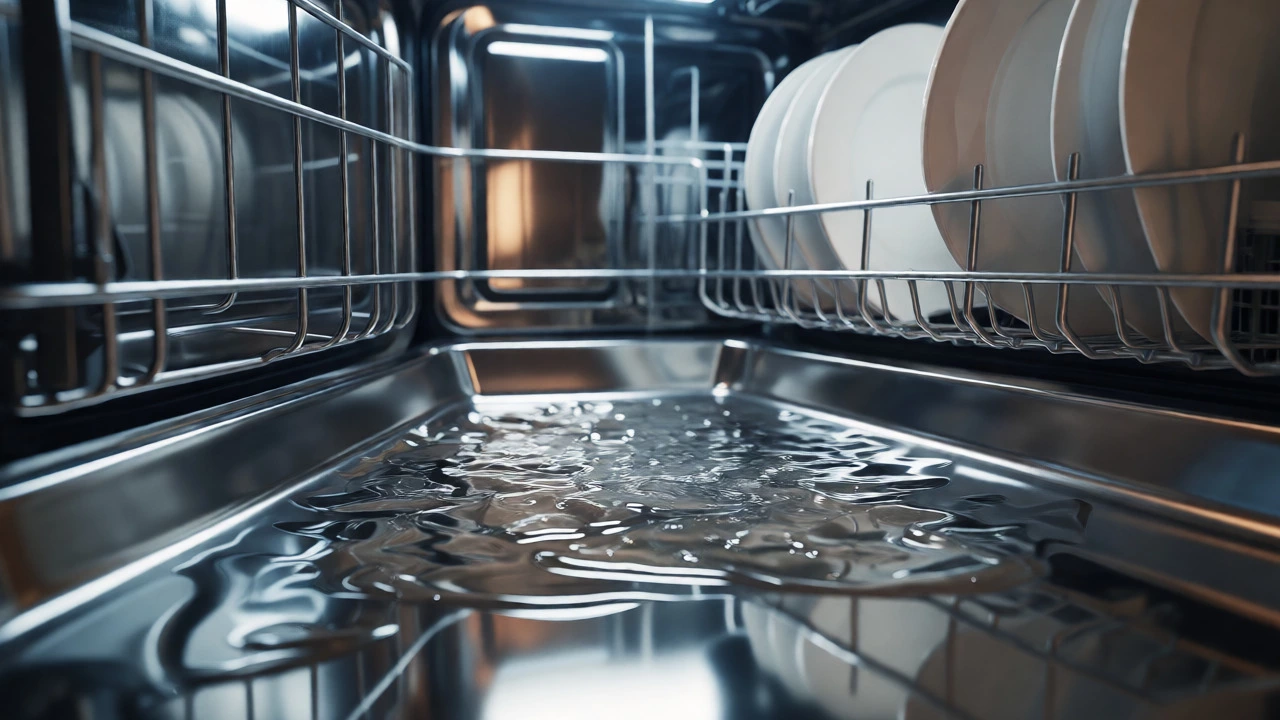
You open your dishwasher after a cycle, expecting clean, dry plates. Instead, you find a pool of murky water sitting at the bottom, right where your forks and spoons were supposed to be. It’s annoying, it smells, and it raises an immediate panic: is my dishwasher broken beyond repair?
Before you call a technician or start buying parts, take a breath. In most cases, dishwasher standing water isn't a catastrophic mechanical failure. It’s usually a simple blockage or a maintenance oversight that you can fix in ten minutes with nothing more than a screwdriver and some patience.
The Usual Suspect: A Clogged Filter
Let’s start with the most common culprit because it solves about 80% of these cases. Your dishwasher has a filter system designed to catch food particles so they don’t recirculate onto your clean dishes. Over time, grease, bone fragments, and plastic bits accumulate there.
If this filter gets clogged, water cannot drain properly. The pump tries to push water out, but it hits a wall of debris. The result? Stagnant water remains in the tub.
How to check it:
- Remove the bottom rack to access the base of the tub.
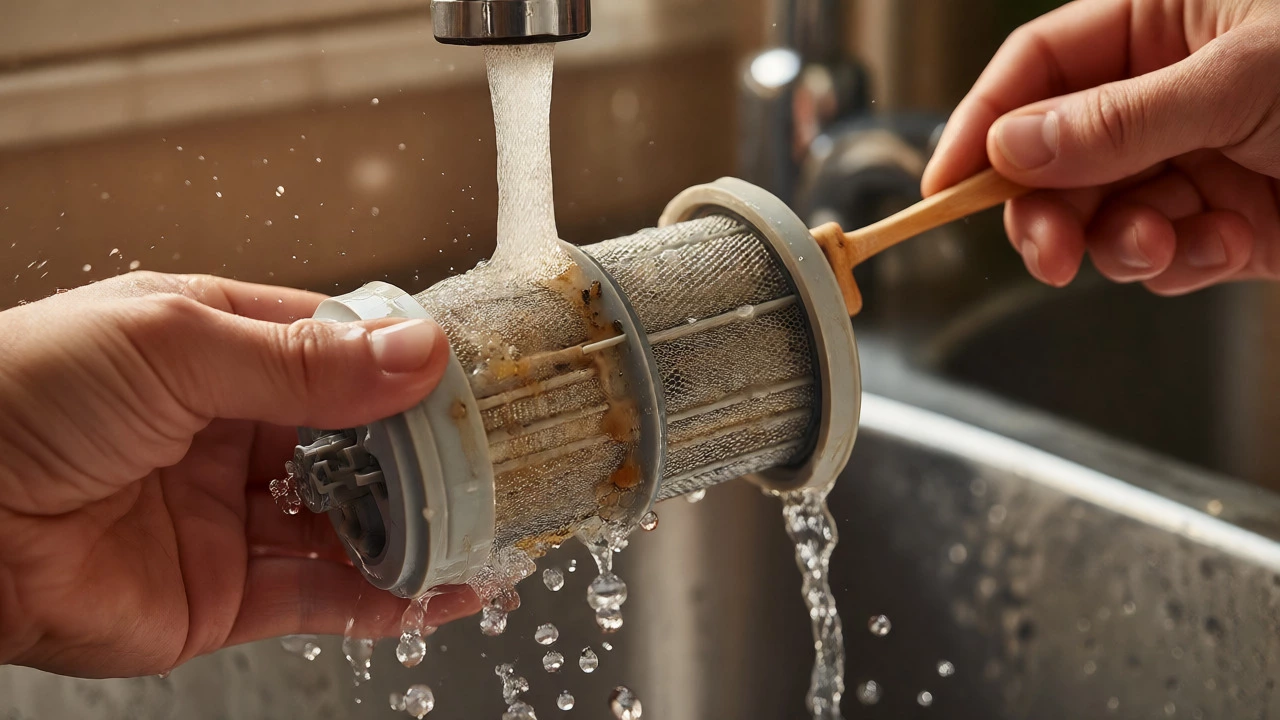
- Locate the cylindrical filter assembly (usually gray or white plastic).
- Twist it counter-clockwise to unlock it and lift it out.
- Rinse it under hot running water. Use an old toothbrush to scrub away greasy residue.
- Check the sump area underneath for larger debris like glass shards or pits.
If the water drains immediately after cleaning the filter, you’re done. If not, keep reading.
The Air Gap: That Weird Cylinder on Your Sink
Do you have a small, cylindrical device mounted on your countertop or sink deck near the faucet? That’s an air gap. Its job is critical: it prevents dirty sink water from siphoning back into your clean dishwasher. Many people ignore it, thinking it’s just decorative.
When the air gap gets clogged, the drain path is restricted. Water backs up, often causing the dishwasher to fill with water even if the internal components are fine.
The fix is surprisingly easy:
- Unscrew the cap of the air gap (usually by twisting it off).
- You’ll see two tubes inside. Check both for gunk.
- Use a pipe cleaner or a thin wire to clear any blockages.
- Run water through the air gap while holding a cloth over the opening to flush out debris.
If you don’t have an air gap, your model might use a high-loop hose instead. We’ll get to that next.
The Drain Hose: Kinks and Loops
Your dishwasher connects to your sink plumbing via a drain hose. For gravity to help drain the water effectively, this hose must have a "high loop." This means the hose should rise up as high as possible under the sink cabinet before looping down to connect to the garbage disposal or drain pipe.
If the hose is kinked, crushed by other pipes, or installed without a high loop, water can flow back into the dishwasher from the sink. Worse, if the connection to the garbage disposal is blocked, the dishwasher simply cannot push its water out.
Troubleshooting steps:
- Open the cabinet under the sink.
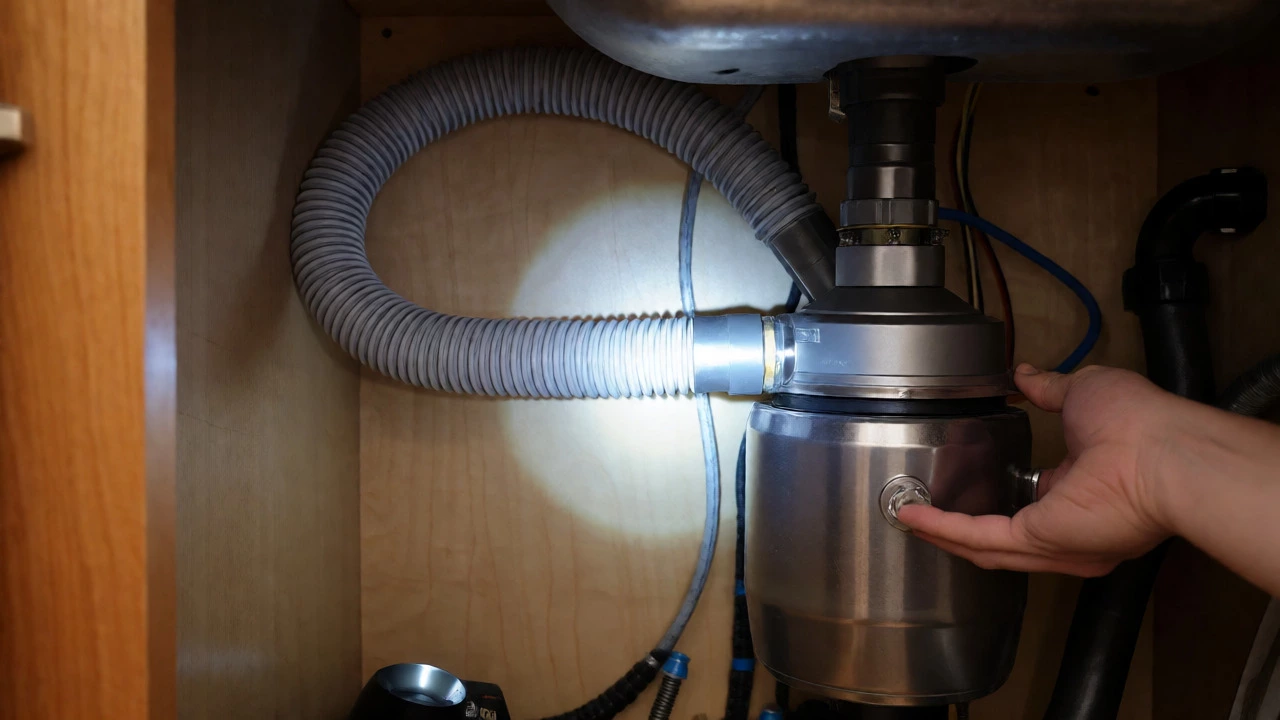
- Trace the grey corrugated hose from the dishwasher to the plumbing.
- Ensure it loops up at least 20 inches above the floor level.
- Disconnect the hose from the disposal unit (place a bucket underneath first!).
- Check the port on the disposal for a knock-out plug. New disposals come with a solid plastic plug that must be knocked out with a hammer and screwdriver before connecting the dishwasher.
A missing knock-out plug is a classic installation error that causes persistent standing water.
Garbage Disposal Blockages
Since the dishwasher drains into the garbage disposal, a jammed disposal directly impacts your dishwasher. If the disposal is full of compacted food waste, it acts like a cork in a bottle.
Try running the disposal for a few seconds. If it hums but doesn’t spin, it’s jammed. Turn off the power, insert an Allen wrench into the hex hole at the bottom of the disposal, and manually rotate the blades to free them. Once the disposal runs freely, run a short rinse cycle on the dishwasher to see if the water clears.
The Drain Pump: When It’s Not Just Debris
If you’ve cleaned the filter, cleared the air gap, checked the hose, and ensured the disposal is working, but water still sits there, we need to look at the motor. The drain pump is responsible for physically pushing water out of the machine.
Symptoms of a bad pump:
- You hear no sound during the drain phase of the cycle.
- You hear a humming noise, but no water moves.
- The pump makes grinding noises (indicating something is stuck in the impeller).
To test the pump, you’ll need a multimeter. Unplug the dishwasher, access the pump (usually behind the lower front kickplate), and disconnect the wiring harness. Set your multimeter to resistance (Ohms). Touch the probes to the pump terminals. You should see a reading between 180 and 400 Ohms. If you get infinite resistance (open circuit) or zero (short circuit), the pump motor is dead and needs replacement.
| Cause | Likelihood | DIY Difficulty | Fix Time |
|---|---|---|---|
| Clogged Filter | High | Easy | 5-10 mins |
| Clogged Air Gap | Medium | Easy | 5 mins |
| Kinked Drain Hose | Medium | Easy | 10 mins |
| Disposal Knock-out Plug Missing | Low (New Installs) | Easy | 15 mins |
| Failed Drain Pump | Low | Moderate | 30-60 mins |
Drain Valve Solenoid Failure
Some dishwashers use a solenoid valve to control when water enters and exits. If the valve gets stuck closed, water can’t leave the tub. This is less common than pump failures but worth checking if the pump seems to be running but no water comes out of the hose.
You can test the solenoid with a multimeter just like the pump. Look for continuity. If the coil is burned out, replacing the solenoid kit is cheaper than replacing the whole pump assembly.
Float Switch Issues
The float switch tells the dishwasher how much water is inside. If it gets stuck in the "up" position, the machine thinks it’s full and won’t add more water, but it also might prevent proper draining logic depending on the model’s control board programming. Conversely, if it’s stuck down, the machine might overfill.
Gently move the float arm up and down. It should move freely without resistance. If it feels gritty or stuck, clean the shaft with warm soapy water.
Control Board Glitches
In rare cases, the electronic control board fails to send the signal to the drain pump. Try resetting the dishwasher. Unplug it from the wall outlet for five minutes. This resets the computer. Plug it back in and run a drain-only cycle. If the water pumps out, it was just a glitch. If not, the relay on the board might be burnt out.
Prevention Tips to Avoid Future Puddles
Once you’ve fixed the current issue, here is how to keep your dishwasher draining smoothly:
- Scrape, don’t rinse: Modern dishwashers rely on enzymes in detergent to break down food. Rinsing plates beforehand removes those enzymes, leaving sticky residues that clog filters faster.
- Run the disposal first: Before starting the dishwasher, run the garbage disposal for a few seconds to ensure it’s clear of recent food waste.
- Clean the filter monthly: Make it a habit. A two-minute clean once a month saves hours of troubleshooting later.
- Check the high loop: Every time you work under the sink, glance at the drain hose to ensure it hasn’t been pushed down by new pipes or boxes.
Standing water in your dishwasher is rarely a sign that you need a new appliance. It’s almost always a drainage issue. Start with the filter, move to the air gap, then check the hose. Only when those are clear should you worry about the pump or electronics. By following this logical order, you save money and avoid unnecessary service calls.
Is it safe to run the dishwasher with standing water?
It is generally not recommended. Running the machine with standing water can cause mold growth, unpleasant odors, and potentially damage the heating element if it cycles on while submerged incorrectly. It may also lead to electrical issues if the water reaches sensitive components.
How do I manually drain a dishwasher?
You can use a turkey baster or a cup to scoop out the water. Alternatively, create a siphon using a piece of flexible tubing. Put one end in the dishwasher tub and suck on the other end until water starts flowing, then direct it into a bucket outside.
Why does my dishwasher smell like sewage?
This usually indicates a blocked air gap or a missing high loop in the drain hose, allowing sewer gases from the sink drain to travel back into the dishwasher. Cleaning the air gap and securing the hose loop usually fixes the odor.
Can I use vinegar to unclog the dishwasher drain?
Vinegar helps remove mineral buildup and odors but is unlikely to clear a hard physical blockage like a bone fragment or thick grease plug. It is best used as a maintenance cleaner rather than a cure for severe drainage issues.
How much does it cost to replace a dishwasher drain pump?
The part itself typically costs between $50 and $150. If you hire a professional, labor adds another $75 to $150, bringing the total to roughly $125 to $300. DIY replacement takes about an hour for most models.